

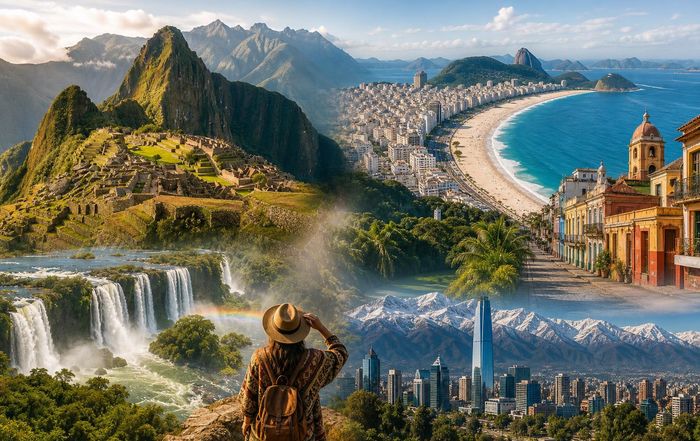
Best South American Destinations for Nature and City Breaks
South America has long captivated travelers with its contrast of wild landscapes and sophisticated cities, and in recent years it has evolved into one of the most compelling regions for those seeking experiences that combine nature, culture, gastronomy, and innovation. For plane hopping fans of WorldWeTravel, the continent offers an inspiring spectrum of journeys, from rainforest lodges and Andean retreats to design-forward urban hotels and waterfront neighborhoods that rival any global metropolis. As travel infrastructure improves and sustainable initiatives expand across the region, it has become easier than ever to weave together nature escapes and city breaks in a single, seamless itinerary.
This article explores some of the most notable destinations across South America where travelers can experience both sides of that equation: vibrant urban centers paired with extraordinary natural environments within reach. The focus is on positive developments, practical inspiration, and trustworthy guidance, drawing on verifiable sources and the growing expertise of regional and international organizations that support responsible travel.
For more practical guidance on planning multi-stop journeys across continents, readers can also explore the daily curated destination overviews at WorldWeTravel's global destinations hub and the broader travel inspiration pages.
Buenos Aires and Argentine Patagonia: Culture, Tango, and the Edge of the World
The capital of Argentina, Buenos Aires, is often described by travel writers and cultural historians as one of the most European-feeling cities in the Americas, a reputation supported by its architecture, café culture, and literary heritage. Neighborhoods such as Recoleta, Palermo, and San Telmo combine Belle Époque mansions, contemporary art galleries, and a culinary scene that has expanded well beyond the country's famous steaks to include sophisticated vegetarian, Mediterranean, and Asian-inspired offerings. The city's cultural institutions, including the Teatro Colón opera house and the Museo Nacional de Bellas Artes, are widely recognized as among the most important in Latin America, with information readily available through organizations such as UNESCO and regional cultural bodies.
Buenos Aires has also invested in urban green spaces and waterfront regeneration, notably in the Puerto Madero district, where nature reserves along the Costanera Sur Ecological Reserve offer birdwatching and walking trails directly adjacent to the city skyline. According to the Buenos Aires City Government's official tourism site, the reserve protects wetlands and native vegetation that attract more than 300 bird species, making it a rare example of urban biodiversity on this scale in the region. Travelers who want to understand how large cities can integrate conservation and recreation can find additional context through the International Union for Conservation of Nature and similar organizations that document urban nature projects worldwide.
From Buenos Aires, nature-focused travelers frequently extend their journey to Patagonia, the vast region shared by Argentina and Chile. On the Argentine side, hubs like El Calafate and Ushuaia provide access to glaciers, steppe, and subpolar forests. The Perito Moreno Glacier in Los Glaciares National Park, described by UNESCO as one of the world's most dynamic and accessible ice fields, offers boardwalk viewpoints and guided trekking experiences that are tightly regulated to reduce environmental impact. Further south, Ushuaia markets itself as the "End of the World," serving as a departure point for Antarctic cruises and for hiking in Tierra del Fuego National Park, where visitors can explore coastal trails, peat bogs, and beech forests.
Travelers planning to combine the cosmopolitan life of Buenos Aires with Patagonian wilderness can consult WorldWeTravel's hotel recommendations for both urban boutique properties and remote lodges, as well as family travel ideas for multi-generational trips that blend city museums with accessible nature walks. For in-depth ecological context, independent organizations such as WWF and National Geographic offer overviews of Patagonian ecosystems, climate challenges, and conservation initiatives that help travelers choose operators aligned with best practices.
Rio de Janeiro and Brazil's Atlantic Forest: Iconic Cityscapes and Coastal Biodiversity
Few urban images are as instantly recognizable as Rio de Janeiro, framed by granite peaks, tropical forests, and long Atlantic beaches. The city's topography is not only visually striking; it also makes Rio one of the clearest examples of a metropolis embedded within a biodiverse biome. The Tijuca National Park, a reforested urban rainforest within the city limits, is frequently cited by environmental researchers as one of the world's largest urban forests, and it has been the subject of multiple academic studies on reforestation and ecosystem restoration that can be accessed through databases such as Google Scholar.
Visitors ascending to Christ the Redeemer or hiking to viewpoints such as Pedra Bonita experience not only iconic panoramas but also an immersion in Atlantic Forest vegetation, which conservation organizations including Conservation International describe as one of the planet's most threatened biodiversity hotspots. While some statistics on deforestation and species loss vary between sources, there is broad agreement that only a fraction of the biome's original cover remains, making protected areas around Rio and along the coast especially significant.
Within the city, Rio has seen a gradual expansion of cultural and gastronomic offerings that complement its natural appeal. The Museum of Tomorrow (Museu do Amanhã) in the revitalized Porto Maravilha district, for instance, focuses on sustainability, climate, and future-oriented science, and has been profiled by outlets such as The Guardian for its innovative architecture and programming. Neighborhoods like Santa Teresa and Lapa host art studios, live music venues, and heritage buildings that show another side of the city beyond the beaches of Copacabana and Ipanema.
For travelers who wish to deepen their nature experience, the coastal state of Rio de Janeiro and neighboring states such as São Paulo and Espírito Santo offer access to Atlantic Forest reserves, marine parks, and island archipelagos. The Ilha Grande region, for example, has been recognized for its mix of rainforest-covered hills and clear bays, while the Serra dos Órgãos National Park is known among Brazilian hikers for its dramatic peaks and well-maintained trails. Reliable information on park regulations, safety, and conservation can be found through Brazil's official parks agency ICMBio and international partners that support protected area management.
Readers of WorldWeTravel interested in balancing Rio's urban energy with quieter coastal retreats can explore eco-focused travel insights and health and wellness ideas, which often highlight how beach destinations and forest lodges in Brazil integrate yoga, hiking, and low-impact marine activities into their offerings. Those planning longer itineraries that combine Brazil with other South American countries may find additional logistical guidance through the global travel overview and regional transportation tips from organizations like the International Air Transport Association.
Santiago, Valparaíso, and the Chilean Andes: Wine, Design, and High-Altitude Adventure
Chile's slender geography, stretching from the Atacama Desert in the north to the fjords of Patagonia in the south, gives it an extraordinary diversity of landscapes within a relatively coherent infrastructure framework. The capital, Santiago, has emerged over the past two decades as a modern, business-oriented city with a growing creative and culinary scene, often highlighted in regional rankings produced by media outlets such as Bloomberg and The Economist. Glass towers in the financial district contrast with historic neighborhoods like Lastarria and Bellavista, where museums, theaters, and street art provide a more bohemian atmosphere.
Santiago's proximity to both the Andes and the Pacific coast is one of its greatest advantages for travelers who want to combine urban experiences with nature. Within a short drive, visitors can reach Cajón del Maipo, a canyon region that offers hiking, hot springs, and high-altitude reservoirs. During the Southern Hemisphere winter, ski resorts such as Valle Nevado and La Parva attract both local and international visitors, and their operations and snow conditions are regularly documented by regional tourism boards and ski associations. While climate change has introduced greater variability in snowfall patterns, as reported by organizations like the World Meteorological Organization, the area continues to offer winter sports within easy reach of the city.
To the west, the port city of Valparaíso, a UNESCO World Heritage Site, provides a fascinating counterpoint to Santiago. Its steep hills, funiculars, and colorful houses have made it a favorite among photographers and artists, while its role as a historic port has influenced Chile's economic and cultural development. UNESCO's official listing for Valparaíso emphasizes its 19th-century urban fabric and maritime heritage, and travelers can access detailed background on the city's architecture and history through the UNESCO World Heritage Centre.
Between Santiago and the coast lies one of Chile's most celebrated assets: its wine valleys. Regions such as Maipo, Colchagua, and Casablanca produce wines that have gained international recognition, and many wineries now offer tastings, vineyard tours, and even boutique accommodation. For oenophiles seeking reliable information on producers and vintages, sources such as Wine Spectator and Decanter provide independently reviewed insights, while national bodies like Wines of Chile highlight sustainability certifications and environmental initiatives.
Travelers who wish to integrate city breaks with nature and wine tourism in Chile can look to WorldWeTravel's business travel section and work-focused travel resources, which increasingly address how professionals combine remote work with extended stays in destinations that offer both connectivity and outdoor recreation. For broader context on Chile's economic and environmental policies, including its leadership in renewable energy and conservation, independent analysis from organizations like the International Energy Agency and OECD is widely available.
Lima, Cusco, and Machu Picchu: Gastronomy, Heritage, and High-Andean Landscapes
Peru offers one of South America's most compelling combinations of urban sophistication and world-renowned archaeological sites. Lima, the capital, has become a global reference point for gastronomy, with several of its restaurants regularly appearing in international rankings compiled by organizations such as The World's 50 Best Restaurants. The city's culinary scene is grounded in a fusion of Indigenous, Spanish, African, Chinese, and Japanese influences, and has been documented extensively by food scholars and travel journalists. Neighborhoods like Miraflores and Barranco host a dense concentration of innovative restaurants, cafés, and bars, alongside galleries and street art that reflect a broader cultural renaissance.
Beyond its food, Lima offers coastal views over the Pacific, pre-Columbian archaeological sites such as Huaca Pucllana, and museums including the Museo Larco, which is recognized by art historians and institutions like Smarthistory for its extensive collection of pre-Columbian ceramics and textiles. The city's seafront parks and paragliding experiences over the Costa Verde provide a subtle bridge between urban life and nature, illustrating how coastal cities can integrate recreation and landscape.
From Lima, most travelers head to Cusco, the former capital of the Inca Empire, and the nearby Sacred Valley as a gateway to Machu Picchu. Cusco's historic center, with its blend of Inca stonework and colonial architecture, is listed by UNESCO as a World Heritage Site and has been the subject of extensive archaeological and historical research accessible through academic publications and institutions such as Harvard's Dumbarton Oaks. The altitude of Cusco, around 3,400 meters, makes acclimatization an important health consideration, and travelers are advised by medical sources such as the U.S. Centers for Disease Control and Prevention to plan gradual ascents and to be aware of altitude sickness symptoms.
Machu Picchu itself remains one of the world's most iconic archaeological sites, and its management has evolved over the years in response to concerns about over-tourism and environmental impact. The Peruvian Ministry of Culture and SERNANP (the national service of protected areas) have implemented timed entry slots, mandatory guide requirements in certain areas, and limits on daily visitor numbers, measures that are reported by both government sources and international bodies like UNESCO. Travelers can consult official Peruvian tourism portals and reputable travel advisories for the most up-to-date regulations, as policies have occasionally been adjusted in response to conservation assessments and social considerations.
For readers of WorldWeTravel, this region offers a powerful combination of cultural depth and physical adventure, from day hikes in the Sacred Valley to multi-day treks such as the Inca Trail or alternative routes like Salkantay. Those interested in wellness and reflective travel can explore retreat-oriented content, which often highlights Andean locations that integrate traditional healing practices, yoga, and slow travel approaches. Meanwhile, travel tips resources can help visitors prepare for altitude, variable weather, and the logistics of train and bus connections between Cusco, Ollantaytambo, and Machu Picchu.
Bogotá, Medellín, and Colombia's Coffee and Caribbean Regions: Reinvention and Biodiversity
Colombia has undergone a widely documented transformation in its international image over the past two decades, with cities like Bogotá and Medellín frequently cited in urban studies and media reports as examples of social and infrastructural innovation. Bogotá, the capital, combines a historic center in La Candelaria with a growing network of bike lanes and public spaces, and its weekly Ciclovía, during which major roads are closed to cars and opened to cyclists and pedestrians, has inspired similar initiatives in cities worldwide. Organizations such as the World Resources Institute and C40 Cities have documented Bogotá's transport and sustainability policies, providing context for travelers interested in urban planning and environmental issues.
Medellín, once associated internationally with conflict, has been highlighted by outlets like BBC and MIT Technology Review for its use of cable cars, outdoor escalators, and library parks to connect hillside communities and improve public life. Neighborhoods such as El Poblado and Laureles now host design hotels, co-working spaces, and a lively café culture, making the city attractive to both short-term visitors and longer-stay remote workers. The integration of technology and public space in Medellín offers a compelling case study for readers interested in how cities can reinvent themselves, a theme that aligns closely with WorldWeTravel's technology and travel insights.
Beyond the cities, Colombia's Coffee Cultural Landscape, recognized by UNESCO, provides a lush, mountainous environment where travelers can visit coffee farms, stay in traditional haciendas, and hike in cloud forests. Towns such as Salento and Filandia have become popular bases for exploring the Cocora Valley, known for its towering wax palms, Colombia's national tree. Conservation organizations and academic studies have highlighted the region's biodiversity and the challenges of balancing agricultural production with environmental protection, making it an instructive destination for those who want to understand sustainable rural tourism.
On the Caribbean coast, Cartagena de Indias combines a walled colonial city with nearby beaches and islands. Its historic center, another UNESCO World Heritage Site, is characterized by colorful facades, plazas, and churches, while the nearby Rosario Islands offer snorkeling and relaxation. Travelers should be aware, however, that sources sometimes differ on the environmental health of certain marine areas, with some NGOs raising concerns about coral degradation and waste management. Reliable information can be found through marine research institutions and conservation groups such as The Nature Conservancy, which work in coastal ecosystems across Latin America.
For those planning to mix urban exploration with nature in Colombia, WorldWeTravel's culture-focused pages provide context on music, festivals, and regional identities, while the economy section often touches on how tourism contributes to local development. Health-conscious travelers can also benefit from WorldWeTravel's health resources and from official guidance by entities such as the World Health Organization on vaccinations and mosquito-borne diseases in tropical regions.
Quito and the Ecuadorian Andes and Amazon: High-Altitude Heritage and Rainforest Gateways
Ecuador, though smaller in area than some of its neighbors, offers an impressive concentration of ecosystems and cultural sites, making it particularly suitable for travelers who wish to experience both nature and city life without long internal journeys. Quito, the capital, sits high in the Andes and boasts a historic center recognized by UNESCO as one of the best-preserved in the Americas, with baroque churches, plazas, and narrow streets. The city's urban development and cultural programming have been documented by organizations such as UN-Habitat, which use Quito as a case study in sustainable urbanization in the Global South.
From Quito, travelers can access multiple natural regions. The Avenue of the Volcanoes, a term popularized by explorers and travel writers and now commonly used by tourism authorities, stretches southward and includes peaks like Cotopaxi and Chimborazo. National parks and reserves in this corridor offer hiking, climbing, and high-altitude paramo landscapes, while lodges and haciendas provide comfortable bases with views of snow-capped summits. Reliable mountaineering information, including safety considerations and weather patterns, is available through alpine clubs and meteorological services, as well as through international climbing organizations.
To the east, the Ecuadorian Amazon can be reached via short flights or overland journeys to towns like Coca and Tena, from which travelers continue by boat to rainforest lodges. The region's biodiversity has been studied extensively by scientists, and institutions such as the Smithsonian Tropical Research Institute and various universities provide open-access research on species richness and conservation challenges. Many lodges collaborate with local Indigenous communities and focus on low-impact tourism, with independent verification of best practices often available through certification programs like those supported by the Global Sustainable Tourism Council.
Ecuador is also home to the Galápagos Islands, a destination that stands somewhat apart due to its unique natural history and strict conservation regulations. While this article focuses on mainland combinations of cities and nature, it is worth noting that Galápagos trips typically begin in Quito or Guayaquil, making the capital a natural starting point for those who wish to explore both Andean culture and one of the world's most important marine reserves. Information on Galápagos conservation and visitor guidelines can be obtained from the Galápagos National Park Directorate and research organizations such as the Charles Darwin Foundation.
For WorldWeTravel readers, Ecuador exemplifies how a relatively compact country can offer a rich blend of experiences. The platform's eco-travel section often highlights destinations where biodiversity, community engagement, and thoughtful infrastructure intersect, and Ecuador features prominently in that conversation. Travelers considering multi-activity itineraries can also draw on WorldWeTravel's broader travel planning resources, which emphasize practical tips for combining high-altitude cities with rainforest humidity and equatorial sun.
Balancing Nature and City Breaks in South America: Practical and Ethical Considerations
Across South America, the interplay between urban growth, tourism, and environmental stewardship is complex and evolving. Major cities such as São Paulo, Buenos Aires, Bogotá, and Santiago continue to expand, while nearby natural areas face pressures from development, agriculture, and climate-related events. Reputable organizations, including the Intergovernmental Panel on Climate Change, have produced extensive reports on how climate change is affecting glaciers, rainforests, and coastal zones in the region, and these findings underscore the importance of responsible travel choices.
For travelers seeking to combine nature and city breaks, several themes emerge as particularly relevant. First, the importance of supporting operators and accommodations that adhere to recognized sustainability standards, which can often be verified through independent bodies like the Global Sustainable Tourism Council or regional certification programs. Second, the value of learning about local cultures and environmental issues before arrival, using sources such as national park services, local NGOs, and international organizations. Third, the need to remain flexible and informed, as weather patterns, park regulations, and health considerations can evolve.
In this context, super hot and original sites like WorldWeTravel play a growing role by curating trustworthy information, highlighting destinations that align with responsible practices, and offering insights that bridge inspiration with practicality. Through sections dedicated to destinations, family travel, hotels and lodging, and travel tips, the site aims to help travelers design journeys that are enriching for themselves and beneficial for the communities and environments they visit.
As of this decade, South America stands at a pivotal moment, with expanding aviation links, digital connectivity, and a growing emphasis on sustainability shaping how visitors experience its cities and landscapes. From the tango halls of Buenos Aires to the cloud forests above Medellín, from the Andean plazas of Cusco to the Atlantic beaches of Rio, the continent invites travelers to move fluidly between urban sophistication and wild nature. Those who approach it with curiosity, respect, and a commitment to informed, ethical choices will find that South America offers not just memorable vacations, but deeper insights into how humanity can live in closer harmony with the natural world.