

How to Travel More Comfortably on Long-Haul Flights
Long-haul flying has become an integral part of modern life, connecting families across continents, enabling global business, and opening up extraordinary destinations to curious travelers. Yet even as aircraft become more efficient and route networks more extensive, the experience of spending eight, ten, or fifteen hours in the air can still feel daunting. For frequent flying readers of WorldWeTravel, who often combine a passion for discovery with a desire to travel well, comfort on these journeys is not a luxury but a key ingredient in making every trip memorable for the right reasons.
This in-depth guide brings together current research, expert recommendations, and practical insights from aviation medicine, ergonomics, sleep science, and hospitality to help travelers transform long flights from an ordeal into a more restorative and even enjoyable part of the journey. While airlines, airports, and aircraft manufacturers continue to innovate, individual choices before, during, and after a flight remain the most powerful tools for comfort and well-being.
Understanding the Long-Haul Experience
Long-haul flights, often defined as journeys lasting more than six to eight hours, introduce a cluster of challenges that interact in complex ways. Reduced cabin humidity, lower air pressure, prolonged sitting, disruption to circadian rhythms, and the social environment of a crowded cabin can each affect how a traveler feels during and after the flight.
Organizations such as the International Air Transport Association (IATA) and the World Health Organization (WHO) have published guidance on air travel health, emphasizing that for most healthy passengers, flying is safe, but certain risks increase with duration. Prolonged immobility can contribute to discomfort, swelling, and in rare cases deep vein thrombosis (DVT). Low humidity can dry skin, eyes, and airways. Time zone changes can disturb sleep cycles, leading to jet lag, fatigue, and impaired concentration. Reading overviews from institutions like the Mayo Clinic and NHS helps travelers understand these mechanisms and adopt evidence-based strategies rather than relying on myths or unverified tips.
For WorldWeTravel readers planning complex itineraries, a solid grasp of these underlying factors can inform everything from seat selection to schedules, ultimately improving experiences across their chosen destinations.
Pre-Flight Preparation: Comfort Begins on the Ground
Comfort on a long flight is shaped hours or even days before boarding. Frequent travelers who consistently arrive feeling comparatively fresh tend to approach long-haul trips as a process rather than a single event, focusing on rest, hydration, movement, and logistics in advance.
Sleep specialists at institutions such as Harvard Medical School's Division of Sleep Medicine emphasize the importance of "sleep banking" before major time zone shifts. Going into a long journey already sleep-deprived amplifies jet lag and makes minor discomforts feel much worse. Allowing at least two or three nights of regular, high-quality sleep before departure, reducing late-night screen exposure, and avoiding last-minute packing marathons can significantly improve resilience in the air.
Hydration also begins before takeoff. Cabin air is typically much drier than most indoor environments, and research summarized by the Air Transport Action Group suggests that this low humidity can contribute to mild dehydration, particularly on longer flights. Drinking water regularly throughout the day before departure, while moderating alcohol and excessive caffeine, creates a better baseline. Travelers with specific medical conditions should follow individual guidance from their healthcare providers, and reputable sources such as the U.S. Centers for Disease Control and Prevention (CDC) offer detailed advice on flying with chronic illnesses and medications.
From a logistical standpoint, thoughtful planning with WorldWeTravel's general travel resources can reduce stress, which is itself a major contributor to discomfort. Choosing flight times that align as closely as possible with natural sleep windows, allowing adequate connection times without excessive layovers, and positioning overnight flights when one would normally be sleeping can all make a noticeable difference. When traveling with children or older relatives, additional buffer time at the airport, pre-booked seats together, and early boarding options can help the entire family settle more easily into the journey, complementing the family insights shared in WorldWeTravel's dedicated family travel section.
Choosing Airlines, Cabins, and Seats for Comfort
While budget and route availability set broad parameters, thoughtful choices among airlines, cabin classes, and specific seats can dramatically alter the comfort of a long-haul experience. Independent platforms such as Skytrax and SeatGuru provide seat maps, pitch and width data, and traveler reviews, enabling passengers to compare layouts across carriers and aircraft types.
Many airlines in regions popular with WorldWeTravel readers, including Singapore Airlines, Qatar Airways, Emirates, Qantas, Lufthansa, ANA, and Delta Air Lines, have invested heavily in long-haul comfort, particularly in premium cabins. Business class products on some newer aircraft offer direct aisle access, lie-flat beds, and enhanced privacy, while premium economy has emerged as an intermediate option, offering more legroom, wider seats, and upgraded meals without the full cost of business class. Reports from sources like The Points Guy and Aviation Week track these developments and can guide travelers weighing the value of an upgrade versus other trip expenses.
Seat location matters even within the same cabin. Many travelers find that seats closer to the front experience slightly less noise and vibration, while seats over the wings may feel more stable in turbulence. Aisle seats allow easier movement and access to lavatories, beneficial for those who stretch frequently, whereas window seats support sleeping against the wall and offer more control over light exposure, which can help with jet lag management. Consulting detailed seat maps before selecting a seat can reveal potential drawbacks such as limited recline, proximity to galleys or lavatories, or misaligned windows.
For travelers booking hotels through WorldWeTravel's hotels guide, aligning accommodation check-in times with long-haul arrivals and considering early check-in options can further smooth the transition from cabin to room, preserving the benefits of a carefully chosen seat and cabin.
What to Wear and Pack for In-Flight Comfort
Clothing and personal items, while seemingly small details, play an outsized role in long-haul comfort. Aviation medicine experts and travel health resources such as TravelHealthPro and Cleveland Clinic commonly recommend loose, layered clothing made from breathable fabrics. Airplane cabins can fluctuate between warm and cool, and layers allow travelers to adapt without frequent requests for blankets or constant discomfort.
Compression socks or stockings, when properly fitted and used by travelers without contraindications, are supported by several studies as a simple measure that can reduce leg swelling and may lower the risk of DVT on long flights. Guidance from the American College of Chest Physicians and related professional bodies underscores that for most healthy passengers, the absolute risk of DVT is low, but those with additional risk factors should discuss preventive strategies with a physician.
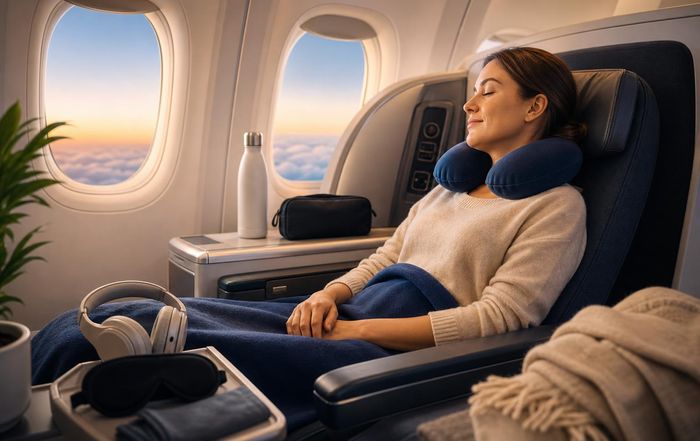
A compact in-flight comfort kit can transform a seat into a more personalized, restful space. Many experienced travelers carry a high-quality neck pillow, noise-cancelling headphones or earplugs, an eye mask, lip balm, moisturizer, and a refillable water bottle (filled after security). Reputable consumer review outlets such as Wirecutter and Consumer Reports regularly evaluate travel accessories, helping travelers avoid gimmicks and select products that genuinely enhance comfort.
For families, especially those traveling with young children or infants, tailored packing is crucial. Familiar snacks, small toys, comfort blankets, and child-sized headphones can significantly reduce stress and restlessness. Resources within WorldWeTravel's family travel hub complement pediatric guidance from organizations like the American Academy of Pediatrics, which offers detailed advice on flying with children, including considerations around ear pressure, sleep, and nutrition.
Hydration, Nutrition, and In-Flight Health
Once on board, habits around drinking, eating, and moving can either support or undermine comfort. Multiple health authorities, including the CDC and WHO, advise drinking water regularly throughout the flight, roughly a glass every hour or two, while recognizing that individual needs vary based on body size, health status, and cabin conditions. Excessive alcohol consumption is discouraged, as alcohol can contribute to dehydration, impair sleep quality, and worsen jet lag. Moderate caffeine intake may help some travelers stay alert at appropriate times, but heavy use close to desired sleep periods can be counterproductive.
Airline meals have improved significantly on many carriers, with a growing emphasis on fresh ingredients, special dietary options, and lighter dishes better suited to long flights. Nutrition experts at institutions such as Johns Hopkins Medicine suggest choosing balanced meals that avoid excessive salt and heavy, rich sauces, which can contribute to bloating and discomfort at altitude. Bringing simple, familiar snacks such as nuts, fruit, or whole-grain crackers can help bridge gaps between meal services without relying solely on processed options.
Movement is another central component of in-flight health. Guidance from the American Heart Association and national health services recommends standing up and walking the aisle periodically, flexing and rotating ankles while seated, and avoiding crossing legs for extended periods. While evidence on specific exercise routines is mixed, most experts agree that regular, gentle movement helps reduce stiffness and supports circulation. Travelers with known cardiovascular or clotting conditions should consult their physicians before flying and follow individualized advice, which may include medications or more structured movement plans.
For WorldWeTravel readers who value wellness-focused travel, integrating in-flight nutrition and movement with broader health-oriented itineraries, such as spa breaks or wellness retreats discovered through the platform's retreat section, can create a more holistic approach to long-haul comfort.
Sleep and Jet Lag: Aligning Body and Journey
Perhaps the greatest challenge of long-haul flying is managing sleep and circadian rhythms. Jet lag results from the misalignment between the body's internal clock and the external time at the destination, and its severity depends on the number of time zones crossed, direction of travel, and individual sensitivity. Research compiled by organizations like the Sleep Foundation and National Institute of Neurological Disorders and Stroke indicates that eastbound travel, which requires advancing the body clock, is often more disruptive than westbound travel, which aligns more naturally with staying up later.
Before departure, gradually shifting sleep and wake times by one or two hours toward the destination time zone can ease the transition. During the flight, travelers aiming to sleep should minimize bright light exposure from screens, use eye masks, and choose soothing audio or silence over stimulating entertainment. Those needing to stay awake should do the opposite, opening window shades when possible and using cabin lighting and screen brightness strategically.
The role of melatonin supplements remains an area of active research. Some studies, including analyses referenced by the Cochrane Library, suggest that appropriately timed melatonin can modestly reduce jet lag symptoms for some travelers, particularly on eastbound flights crossing multiple time zones. However, dosing, timing, and individual responses vary, and reputable medical sources emphasize the importance of consulting a healthcare professional before use, especially for children, pregnant travelers, or those on other medications.
Upon arrival, synchronizing quickly with local time-seeking daylight, eating meals at local hours, and avoiding long daytime naps-can accelerate adaptation. For travelers using WorldWeTravel to plan complex, multi-stop global itineraries, building in light activity and flexible schedules on the first day can accommodate expected fatigue while still allowing meaningful engagement with the new environment.
Technology and Innovation: How Modern Aviation Enhances Comfort
Technological advances in aircraft design and cabin environments have quietly transformed the long-haul experience over the past decade. Newer widebody aircraft such as the Boeing 787 Dreamliner and Airbus A350 feature higher cabin humidity, lower cabin altitude, improved air filtration, and dynamic LED lighting, all of which are intended to reduce fatigue and jet lag. Manufacturers highlight these features on their official sites, including Boeing and Airbus, and independent reviews from aviation analysts generally support the perception of improved comfort, though individual experiences vary.
In-flight entertainment systems have become more sophisticated, offering extensive libraries of films, television, music, podcasts, and even guided meditation or stretching programs. Some airlines partner with wellness brands and apps, integrating breathing exercises and sleep content into seatback screens. Reliable technology publications such as The Verge and CNET have documented these trends, noting that while content breadth is impressive, the real value lies in travelers using these tools intentionally-choosing calming content before sleep, educational programming early in the flight, and perhaps destination-focused documentaries closer to arrival.
Connectivity has also improved, with many airlines offering Wi-Fi on long-haul routes. For business travelers using WorldWeTravel's business travel insights, this can enable productive work sessions, reducing pressure to catch up immediately upon landing. However, constant connectivity can also interfere with rest, so setting boundaries-such as designated offline periods-can protect sleep and mental recovery.
On the ground, technology supports comfort planning as well. Digital tools like airline apps, real-time seat maps, and airport navigation aids help travelers manage connections, request special meals, or monitor upgrade availability. Within WorldWeTravel's own updated technology section, readers can explore how emerging innovations, from biometric boarding to personalized travel planning, are reshaping the end-to-end journey.
Sustainable Comfort: Eco-Conscious Choices in Long-Haul Travel
Comfort on long flights increasingly intersects with sustainability, as travelers seek to minimize their environmental footprint while still exploring the world. Organizations such as the International Civil Aviation Organization (ICAO) and IATA provide overviews of aviation's climate impact and industry efforts to reduce emissions, including the adoption of sustainable aviation fuels (SAF), more efficient aircraft, and optimized flight paths. Publications like Carbon Brief and International Energy Agency (IEA) analyze these developments, highlighting both progress and remaining challenges.
From a traveler's perspective, eco-conscious decisions can align with comfort. Choosing non-stop flights where feasible reduces total fuel burn per journey and also limits the physical strain of multiple takeoffs, landings, and airport transits. Packing lighter not only makes airport navigation easier but also marginally reduces aircraft weight and associated emissions. Opting for airlines that invest in newer, more efficient fleets and transparent sustainability reporting can support broader industry shifts.
WorldWeTravel's super eco travel section encourages readers to integrate environmental responsibility into each stage of their trips, from flight selection to on-the-ground transportation and accommodation. Travelers can offset emissions through reputable programs, though experts at organizations like Gold Standard and UN Environment Programme stress the importance of high-quality, verified projects and emphasize that offsets should complement, not replace, direct reductions in flying or emissions intensity where possible.
By framing comfort within a broader ethic of care-for one's own health and for the planet-long-haul travelers can transform necessary journeys into more meaningful, aligned experiences.
Arrival and Recovery: Extending Comfort Beyond the Cabin
The hours and days after a long-haul flight are critical for consolidating the benefits of all the comfort strategies employed in the air. Medical and wellness organizations, including Stanford Health Care and Cleveland Clinic, generally recommend continuing to hydrate, engaging in gentle physical activity such as walking or light stretching, and seeking natural light exposure as soon as practical. These measures support circulation, reduce stiffness, and help reset circadian rhythms.
Choosing accommodations that facilitate recovery can be particularly impactful. A hotel with comfortable bedding, effective blackout curtains, quiet rooms, and flexible check-in policies can turn the first night into a powerful reset. Many properties in major hubs across the United States, Europe, and Asia now market features specifically designed for jet-lagged guests, such as dedicated wellness floors, on-site spas, and healthy room service menus. WorldWeTravel's top curated hotel recommendations can guide travelers toward options that prioritize rest and well-being.
For travelers combining long-haul flights with wellness-focused stays, integrating spa treatments, yoga sessions, or nature walks during the first days can further ease the transition. Organizations like the Global Wellness Institute document the growing intersection of travel and wellness, noting that travelers increasingly view the journey as part of a broader health experience rather than a disruption. This perspective aligns closely with the ethos of WorldWeTravel, which encourages readers to see each trip as an opportunity to support long-term physical and mental health.
Practical Tips, Trusted Information, and the WorldWeTravel Perspective
Across regions as diverse as North America, Europe, Asia, Africa, and South America, the core principles of comfortable long-haul travel remain consistent, even as specific routes, airlines, and cultural contexts vary. Adequate rest before departure, thoughtful seat and cabin selection, appropriate clothing and packing, mindful hydration and nutrition, regular movement, strategic light exposure, and a balanced use of technology together form a robust toolkit for enhancing comfort.
Travelers seeking additional practical guidance can explore WorldWeTravel's dedicated tips and advice section, which complements authoritative external resources such as IATA's passenger guidance, WHO's travel health recommendations, and national health portals like Health Canada and Australia's Smartraveller. When information conflicts, particularly around topics like supplements, in-flight exercise routines, or specific medical devices, consulting a trusted healthcare professional remains the most reliable course.
Ultimately, long-haul comfort is not about eliminating every inconvenience but about stacking small, evidence-based advantages that collectively transform the experience. For some travelers, that may mean investing in a premium cabin; for others, it might involve carefully structured sleep schedules, family-friendly packing strategies, or sustainability-focused airline choices. By approaching each journey with foresight and informed intention, travelers can arrive more rested, healthier, and ready to engage deeply with the cultures, landscapes, and people that await them.
As WorldWeTravel continues to expand its new unique and daily coverage of global travel, work and business journeys, and the evolving intersection of travel, health, and technology, the platform remains committed to empowering readers with trustworthy, current, and actionable insights. Long-haul flights will likely remain a reality of international exploration for years to come, but with the right knowledge and preparation, they can become a more comfortable, sustainable, and even inspiring part of the adventure.