

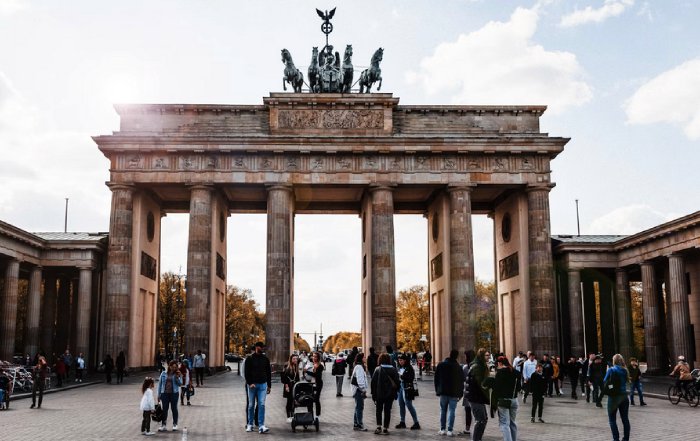
Germany's Expanding Role in European and Global Travel
Germany's position within European and global travel networks has deepened considerably by 2026, transforming the country from a traditionally strong tourism and business hub into a reference model for sustainability, digital mobility, cultural depth, and resilient hospitality. For WorldWeTravel.com, whose readers span the United States, the United Kingdom, Germany, Canada, Australia, Asia, and beyond, Germany's trajectory provides a practical framework for understanding how travel is evolving across Europe and the wider world, and how individuals, families, and businesses can design smarter, more meaningful journeys in response to those changes.
Germany as Europe's Core Mobility Connector
In 2026, Germany's central geographic position in Europe is reinforced by an increasingly sophisticated transport ecosystem that shapes how travelers from North America, Asia, the Middle East, and Africa navigate the continent. Major aviation gateways such as Frankfurt Airport, Munich Airport, and Berlin Brandenburg Airport have consolidated their role as primary entry and transfer points for intercontinental routes, with airlines from the United States, the United Kingdom, the Gulf region, and East Asia concentrating capacity there to feed extensive European networks. As long-haul carriers refine their hub-and-spoke strategies in response to fuel prices, environmental regulation, and shifting demand, these German airports have become critical nodes that influence not only where people land, but also how they sequence multi-country itineraries across Europe. Travelers planning complex journeys through tools and inspiration from WorldWeTravel Destinations increasingly use German cities as strategic anchor points from which to access Scandinavia, Central and Eastern Europe, the Mediterranean, and the Benelux region.
Germany's rail infrastructure, led by Deutsche Bahn, has further strengthened the country's role as the backbone of European overland mobility. High-speed ICE services and cross-border connections link Germany seamlessly with France, the Netherlands, Switzerland, Austria, Denmark, the Czech Republic, and beyond, offering journey times that are frequently competitive with short-haul flights once airport transfers and security processes are considered. Supported by policy frameworks from the European Union, which promotes modal shifts from air to rail on certain intra-European routes in line with climate objectives, Germany has become a living laboratory for integrated, low-carbon mobility. Travelers who value environmental performance and comfort increasingly design rail-based routes that treat Germany as both transit corridor and destination, using planning resources from organizations such as the European Union Agency for Railways and the broader guidance found on WorldWeTravel Travel.
Sustainability Leadership and the Maturation of Eco-Conscious Travel
Germany's influence on European travel trends is particularly visible in the sustainability arena, where long-standing national commitments to climate policy and energy transition have translated into tangible shifts in how cities, regions, and tourism businesses operate. The country's Energiewende has accelerated investments in renewable energy and efficiency, and these structural changes are increasingly reflected in the travel sector, from low-emission public transport fleets in major cities to eco-certified accommodations and regenerative tourism projects in rural regions. Urban centers such as Berlin, Hamburg, and Munich continue to expand cycling lanes, tram networks, and low-emission zones, encouraging both residents and visitors to adopt cleaner modes of movement, while regions like Bavaria, the Black Forest, and the North Sea and Baltic coasts position themselves as destinations where outdoor recreation, biodiversity protection, and local community benefits are intertwined.
Travelers who prioritize environmental impact now routinely consult resources from the European Environment Agency and global frameworks such as the UN Environment Programme when assessing destinations and travel modes, and Germany frequently appears in these discussions as a case study in how to align tourism with national climate objectives. This evolution mirrors the growing interest among WorldWeTravel.com readers in eco-conscious itineraries, low-impact accommodation, and responsible mobility choices, areas that are explored in depth on WorldWeTravel Eco. National and regional organizations such as Germany Travel and VisitBerlin have responded by curating and promoting certified green hotels, extended-stay city programs, and rail-linked nature itineraries that encourage travelers from the United States, the United Kingdom, Scandinavia, and Asia to stay longer, travel slower, and engage more deeply with local communities. Those seeking to understand how sustainability integrates into broader business and policy decisions increasingly turn to institutions like the World Economic Forum to learn more about sustainable business practices and their implications for travel.
Business Travel, Trade Fairs, and the Evolution of Bleisure in 2026
By 2026, Germany's status as Europe's premier business travel hub remains firmly intact, yet the nature of that travel has changed in step with global shifts toward hybrid work, digital collaboration, and more purposeful corporate mobility. Cities including Frankfurt, Düsseldorf, Hanover, Stuttgart, and Cologne continue to host some of the world's most influential trade fairs and congresses, such as Frankfurt Book Fair, Hannover Messe, and IAA Mobility, drawing decision-makers from North America, the United Kingdom, China, Japan, South Korea, and the broader Asia-Pacific region. These events function not simply as transactional gatherings, but as recurring ecosystems where innovation, investment, and partnership discussions unfold over multiple years, reinforcing Germany's centrality in global supply chains and knowledge networks.
In parallel, the "bleisure" model has matured from a trend into a standard expectation for many professionals. Corporate travelers flying into Frankfurt, Munich, or Berlin frequently extend their stays to include leisure time in the Rhine Valley, Bavaria, Saxony, or neighboring countries, taking advantage of Germany's dense rail network and cultural diversity. Companies are increasingly formalizing policies that support such extensions, recognizing their role in employee well-being and retention, while still maintaining a focus on carbon accounting and cost control. For readers of WorldWeTravel Business and WorldWeTravel Work, German cities now serve as prime examples of how to blend meetings, conferences, and remote work with meaningful local experiences, from museum visits and culinary exploration to nature escapes and wellness retreats.
Organizations such as the Global Business Travel Association and consultancies including McKinsey & Company and Boston Consulting Group have repeatedly highlighted Germany in their analyses of post-pandemic travel recovery, hybrid meeting formats, and the recalibration of corporate travel programs toward fewer but more impactful trips. These insights are complemented by aviation and tourism data from bodies like the International Air Transport Association and the UN World Tourism Organization, which underscore Germany's continued role as a benchmark against which other European business destinations-from the Netherlands and Switzerland to the Nordics-measure their own performance and offerings.
Digital Innovation, Smart Mobility, and Travel Technology
Germany's industrial heritage and engineering expertise have long shaped European mobility, but by 2026 the country's influence increasingly flows through digital channels, platforms, and data-driven services that redefine how travelers plan and experience journeys. Berlin has established itself as one of Europe's leading startup ecosystems, with a thriving travel-tech and mobility-tech community working on AI-powered itinerary engines, multimodal journey planners, predictive demand analytics, and dynamic pricing solutions for airlines, hotels, and rail operators. Reports from organizations such as Startup Genome and advisory firms like PwC and Deloitte frequently rank Germany among the top European innovation hubs, particularly in sectors that bridge physical and digital mobility.
Across German cities, integrated mobility apps allow users to combine rail, metro, bus, bike-sharing, e-scooters, and car-sharing in a single interface, supported by contactless payment and real-time data. International visitors from markets such as the United States, Canada, Australia, and Singapore often encounter in Germany a level of interoperability and user experience that surpasses what they are accustomed to at home, resetting expectations for convenience and reliability in other European destinations. Readers interested in how technology is reshaping travel behaviors and business models find Germany a rich case study within WorldWeTravel Technology, where examples from German cities illustrate how digital tools can reduce friction, support sustainability, and personalize travel at scale.
Germany's automotive leaders, including BMW, Mercedes-Benz, Volkswagen, and Audi, continue to drive innovation in electric mobility, connectivity, and autonomous driving, with direct implications for European road travel and car rental markets. The rapid expansion of charging infrastructure across Germany and neighboring countries, supported by EU policy and national investment, has made electric vehicle road trips increasingly practical for visitors from the United Kingdom, France, the Netherlands, Scandinavia, and beyond. Organizations such as the International Energy Agency and the European Commission track these developments closely, highlighting Germany's role in advancing low-emission transport solutions that are gradually becoming the default rather than the exception.
Hospitality, Hotels, and a New Definition of Value
Germany's accommodation landscape, historically associated with reliability and solid mid-range offerings, has evolved into a nuanced mix of traditional grand hotels, global chains, lifestyle properties, serviced apartments, and alternative lodging options that collectively set new standards for value, flexibility, and experience in Europe. Cities like Munich, Hamburg, Berlin, and Frankfurt feature a dense concentration of hotels catering to business travelers, families, and leisure guests, with an increasing emphasis on design, local character, and sustainability credentials. For visitors comparing options through WorldWeTravel Hotels, German properties stand out for their blend of predictable quality, competitive pricing relative to some Western European peers, and growing attention to wellness, remote-work readiness, and eco-certification.
Lifestyle and boutique hotels across Germany now routinely incorporate local art, regionally sourced gastronomy, and neighborhood partnerships into their concepts, appealing to travelers from the United States, the United Kingdom, Italy, Spain, and Asia who seek distinctive stays rather than standardized experiences. At the same time, data from companies such as Booking Holdings and Airbnb indicate sustained demand for extended stays and apartment-style accommodation in German cities and resort regions, reflecting both the rise of digital nomadism and the continued popularity of multi-generational family travel. Industry analysts at STR, HVS, and the Hotel Investment Conference Europe frequently reference Germany as a bellwether for European hospitality performance, given its large domestic base, diversified demand profile, and strong events calendar.
As inflation, energy prices, and labor market constraints reshape hotel economics, German operators have experimented with dynamic pricing, tiered service models, subscription-style loyalty programs, and wellness-oriented packages that integrate spa access, fitness, and mental health offerings. These innovations are watched closely by hoteliers across Europe, from France and Switzerland to the Nordic countries, and provide WorldWeTravel.com readers with early insight into emerging hospitality concepts that may soon define value and experience in other markets.
Cultural Capital, Heritage, and Deep Experiential Travel
Germany's cultural and historical assets have always been a draw, but by 2026 the country exerts a broader influence on European travel through the way it curates and interprets culture as an immersive, multi-layered experience. Cities such as Berlin and Hamburg are recognized globally for their creative industries, music scenes, and contemporary art, while Munich, Dresden, Heidelberg, and Weimar attract visitors with their architectural heritage, museums, and literary and intellectual histories. Regions including the Rhine Valley, Bavaria, Saxony, and the Moselle combine vineyards, castles, landscapes, and local traditions in ways that appeal to culture-focused travelers from the United Kingdom, France, Scandinavia, North America, and East Asia who increasingly seek depth and context rather than checklist sightseeing.
Institutions such as the Goethe-Institut, Museum Island in Berlin, the Pinakothek museums in Munich, and numerous regional cultural centers contribute to Germany's reputation as a country where heritage and contemporary creativity coexist dynamically. Global frameworks like UNESCO's World Heritage program and cultural policy work by the Council of Europe often highlight German sites and initiatives as models for conservation, interpretation, and community engagement. For readers exploring cultural journeys via WorldWeTravel Culture, Germany provides a compelling example of how museums, festivals, architecture, and everyday urban life can be woven into coherent narratives that reward repeat visits and longer stays.
Germany's approach to confronting and presenting its complex 20th-century history through memorials, documentation centers, and educational programs has also influenced how other countries in Europe address difficult heritage. Many families and educational institutions now integrate German cities into itineraries designed to foster historical understanding, civic awareness, and intergenerational dialogue, a pattern that aligns closely with the interests of those using WorldWeTravel Family to plan meaningful, learning-rich trips for children and teenagers. This emphasis on depth and reflection differentiates Germany in a global travel landscape where superficial experiences are increasingly scrutinized and where authenticity and responsibility are core components of destination appeal.
Health, Wellness, and the Modern Retreat Experience
Germany's long-standing spa and medical retreat tradition has gained fresh relevance in an era where travelers prioritize physical health, mental well-being, and preventive care. Historic spa towns such as Baden-Baden, Bad Ems, Bad Kissingen, and Bad Reichenhall have modernized their infrastructure and services to combine evidence-based medical diagnostics and therapies with contemporary wellness offerings, yoga, mindfulness, and nature immersion. This blend attracts visitors from across Europe, the Middle East, and Asia who seek structured programs that go beyond superficial relaxation to address lifestyle-related health concerns and long-term resilience.
The strength of Germany's healthcare system, regularly analyzed by organizations such as the World Health Organization and the OECD, underpins the credibility of its health and wellness tourism offerings. Travelers considering medical check-ups, rehabilitation, or specialized treatments increasingly view Germany as a destination where high clinical standards, regulatory oversight, and hospitality intersect. For those exploring wellness journeys and restorative breaks on WorldWeTravel Health and WorldWeTravel Retreat, German destinations often appear as benchmarks for how to integrate science-based care with spa traditions, forest bathing, and active outdoor pursuits.
Germany's extensive network of hiking and cycling routes-from the Black Forest and Harz Mountains to the Bavarian Alps and long-distance paths along the Danube and Rhine-supports a broader European shift toward active wellness travel. Urban professionals from London, Paris, Amsterdam, Zurich, and Nordic capitals increasingly seek long weekends or week-long breaks in German nature regions where they can disconnect from digital overload, engage in physical activity, and access high-quality wellness facilities. This model is influencing how other European countries design and market their own retreat offerings, reinforcing Germany's role as a trendsetter in health-focused travel.
Economic Resilience, Regional Diversity, and Domestic Travel Dynamics
Germany's economic weight within Europe continues to underpin a robust domestic travel market that provides stability in an environment marked by geopolitical uncertainty, inflationary pressures, and shifting global demand patterns. Even as international arrivals fluctuate in response to currency movements or global events, German residents maintain high levels of domestic travel, supporting hotels, restaurants, cultural institutions, and attractions from the North Sea and Baltic coasts to the lakes of Bavaria and the wine regions of Rhineland-Palatinate. Data from the German Federal Statistical Office and the European Travel Commission regularly highlight Germany as a key indicator for broader European tourism performance, particularly regarding seasonality, average spend, and the balance between domestic and inbound demand.
The country's regional diversity-encompassing industrial powerhouses like North Rhine-Westphalia, financial hubs such as Hesse, tourism-intensive regions in Bavaria and Baden-Württemberg, and emerging cultural centers in eastern states-ensures that travel-related economic benefits are widely distributed. Regional governments and local tourism boards have increasingly integrated tourism strategies with broader economic development plans, emphasizing connections between travel, manufacturing, gastronomy, creative industries, and sustainability initiatives. Readers following macro trends via WorldWeTravel Economy can observe in Germany a concrete example of how tourism policy, infrastructure investment, and regional branding interact to support long-term resilience.
As countries across Europe-from Spain and Italy to Sweden, Norway, and Denmark-seek to strengthen their own domestic and regional tourism sectors, many draw lessons from German practices in areas such as rail connectivity, coordinated marketing, and support for small and medium-sized tourism enterprises. This diffusion of ideas further amplifies Germany's influence on European travel patterns, as concepts developed in German regions are adapted in other national contexts and then reintroduced into the global travel conversation.
Practical Takeaways for Global Travelers and Decision-Makers
For the international audience of WorldWeTravel.com, spanning North America, Europe, Asia, Africa, and South America, Germany's expanding influence on travel carries clear practical implications. Travelers designing multi-country European itineraries often find that routing through Germany offers not only convenient flight and rail connections but also access to a wide range of experiences, from cutting-edge urban culture in Berlin to alpine landscapes in Bavaria and wine tourism along the Rhine and Moselle. A journey that links New York, Frankfurt, and Singapore for business, or London, Berlin, and Prague for culture, or Toronto, Munich, and Rome for family exploration, can be structured more efficiently when Germany serves as a central hub, a concept explored in broader context on WorldWeTravel Global.
Families planning summer holidays, school breaks, or educational trips often prioritize Germany for its combination of safety, infrastructure, child-friendly museums and attractions, and easy onward access to neighboring countries such as France, Switzerland, Austria, the Netherlands, and Denmark. Corporate travel managers and event planners, informed by research from the UN World Tourism Organization, IATA, and leading consultancies, frequently use Germany as the anchor for European meetings, incentives, conferences, and exhibitions, building regional programs around the country's trade fair cities and transport nodes. Meanwhile, remote workers and digital nomads are drawn to Berlin, Munich, Leipzig, and smaller university towns for their coworking ecosystems, cultural vibrancy, and relatively competitive cost of living compared with some other Western European capitals, a trend supported by practical advice and insights on WorldWeTravel Tips.
Across these varied use cases, Germany's emphasis on sustainability, digital integration, cultural richness, wellness, and economic stability influences expectations not just for travel within Germany, but for travel across Europe as a whole. Other destinations increasingly benchmark themselves against German standards in public transport, hotel quality, event infrastructure, and cultural programming, meaning that understanding Germany's trajectory helps travelers and planners anticipate broader shifts in the European travel landscape.
Germany and the Future of Travel in Europe and Beyond
Looking beyond 2026, Germany appears set to maintain and even expand its role as a standard-setter in European and global travel. Continued investments in green infrastructure, including high-capacity rail corridors, renewable energy for transport and hospitality, and urban climate adaptation, will deepen its position as a model for low-carbon mobility and resilient destination management. Ongoing advances in travel technology, from AI-enhanced planning tools to integrated mobility-as-a-service platforms, are likely to keep German cities at the forefront of user-centric, data-informed travel experiences that international visitors come to expect elsewhere. Cultural institutions and creative industries will continue to reinterpret Germany's heritage and contemporary identity for new generations, reinforcing its appeal across priority markets including the United States, the United Kingdom, Canada, Australia, China, Japan, South Korea, Singapore, and the wider European and global audience.
For WorldWeTravel.com, Germany functions not only as a destination to be featured, but as a lens through which to understand how travel can better serve individuals, families, businesses, and societies. By examining Germany's policies, infrastructure investments, business travel ecosystems, cultural initiatives, and wellness offerings, readers gain insight into the forces that are reshaping travel worldwide-from the evolution of hybrid work and bleisure to the rise of sustainable and regenerative tourism, from the integration of technology at every stage of the journey to the renewed focus on authenticity, health, and environmental responsibility.
Those seeking to translate these insights into concrete plans-whether crafting a multi-stop European family holiday, organizing a pan-regional corporate event, planning a wellness retreat, or mapping out a long-term remote work itinerary-can find tailored guidance and analysis across WorldWeTravel.com. In this way, Germany's expanding influence on European travel trends in 2026 becomes more than an abstract narrative; it becomes a practical roadmap that helps travelers from around the world design journeys that are more connected, more sustainable, and ultimately more rewarding.