

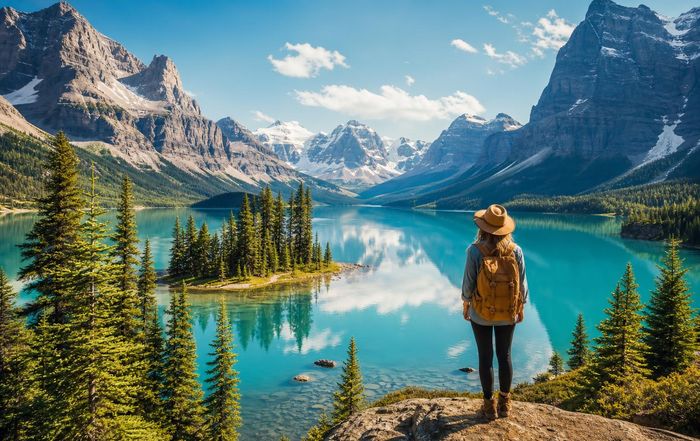
Canada Travel Guide to Lakes and Mountain Scenery
Canada's High Country: A World of Water, Rock, and Sky
Canada's lakes and mountains form one of the most compelling landscapes on Earth, stretching from the Atlantic to the Pacific and far into the Arctic, with an immense variety of alpine ranges, glacier-fed lakes, boreal forests, and rugged coastlines. For travelers planning journeys with us, this vast geography offers an unparalleled canvas for adventure, family discovery, wellness retreats, cultural exploration, and sustainable travel experiences. From the storied peaks of the Canadian Rockies to the quiet shield lakes of Ontario and Quebec, from the dramatic fjords of British Columbia to the wild highlands of Newfoundland and Labrador, the country's high landscapes have become a global benchmark for outdoor beauty, environmental stewardship, and accessible nature-based tourism.
In recent years, Canadian federal and provincial agencies, along with Indigenous communities and conservation organizations, have significantly expanded protected areas and enhanced visitor infrastructure, allowing travelers to access remote scenery with increasing ease while maintaining ecological integrity. Parks Canada, provincial park systems, and Indigenous guardianship programs have collectively elevated the standards for managing sensitive alpine and freshwater ecosystems. As a result, Canada's lake and mountain destinations stand at the intersection of recreation and responsibility, a balance that lies at the heart of the positive thinking travel philosophy promoted by WorldWeTravel and highlighted throughout its curated destinations coverage.
The Canadian Rockies: Iconic Peaks and Turquoise Lakes
The Canadian Rockies are often the first images that come to mind when travelers think of Canada's mountains. Straddling the border between Alberta and British Columbia, this portion of the North American Cordillera encompasses legendary national parks such as Banff National Park, Jasper National Park, Yoho National Park, and Kootenay National Park, which together form part of the Canadian Rocky Mountain Parks UNESCO World Heritage Site. This region is celebrated for its turquoise lakes, towering limestone and shale peaks, and accessible glaciers, and it has been a cornerstone of Canadian tourism for more than a century.
Lake Louise and Moraine Lake, both within Banff National Park, have become global icons of alpine scenery, thanks to their vivid color caused by rock flour suspended in glacial meltwater. To manage growing visitor numbers and protect fragile shorelines and wildlife habitat, Parks Canada has implemented timed access systems and expanded shuttle services, a trend reflective of broader efforts to balance access and conservation. Travelers researching transportation, seasonal conditions, and lodging options can find practical planning advice through WorldWeTravel's dedicated always updated travel resources, which emphasize responsible visitation and off-peak travel strategies.
Beyond the famous viewpoints, the Rockies reward those who venture deeper into backcountry trails and lesser-known valleys. Jasper National Park offers expansive networks of hiking and backpacking routes around Maligne Lake and the Tonquin Valley, where visitors encounter hanging glaciers, subalpine meadows, and abundant wildlife that may include elk, mountain goats, and, with appropriate caution and distance, black and grizzly bears. Safety guidance from organizations such as Avalanche Canada and Parks Canada's visitor safety program is essential for those exploring shoulder seasons or winter conditions, and contemporary travelers increasingly integrate such information into their itineraries via digital tools and apps.
Western Canada's Coastal and Interior Ranges
Beyond the Rockies, Western Canada's mountains extend in a complex series of ranges that shape British Columbia's interior and Pacific coastline. The Coast Mountains, stretching from the Alaska Panhandle through British Columbia and into the northwestern United States, create a dramatic interface between ocean and alpine terrain. This region is characterized by deep fjords, temperate rainforests, and heavily glaciated peaks, and it offers some of the most striking lake and mountain combinations in the country.
Near Vancouver, Garibaldi Provincial Park is renowned for its namesake Garibaldi Lake, a brilliant turquoise basin encircled by volcanic peaks and accessible via a well-maintained but demanding hiking trail. The park has become a focal point for discussions about visitor capacity, trail erosion, and wildlife disturbance, leading to evolving management approaches by BC Parks, which publishes up-to-date advisories and planning information on its official website. Such examples illustrate how Canadian jurisdictions are moving toward reservation systems and quota-based backcountry management, aligning with broader global best practices.
Farther north, the remote fjordlands of the Great Bear Rainforest and the coastal mountains of northwestern British Columbia offer opportunities for expedition-style travel, often in partnership with Indigenous-owned operators. Organizations such as Indigenous Tourism Association of Canada highlight experiences that integrate traditional ecological knowledge, wildlife viewing, and cultural immersion, reinforcing the trend toward journeys that support local communities and conservation outcomes. Travelers seeking to combine these experiences with more classic lake and mountain itineraries can explore WorldWeTravel's global travel inspiration, which increasingly showcases Indigenous-led tourism as a model for ethical exploration.
Central Canada's Shield Lakes and Gentle Highlands
While the towering summits of the West tend to dominate postcards, central Canada's lake landscapes are equally compelling, particularly for families and travelers seeking quieter, more contemplative experiences. Ontario and Quebec are underlain largely by the ancient rocks of the Canadian Shield, a geological formation that has created tens of thousands of lakes, forested ridges, and low mountains that rise modestly yet offer expansive views and tranquil settings.
Algonquin Provincial Park in Ontario, established in the nineteenth century and one of Canada's oldest protected areas, is a classic canoe-tripping destination where interconnected lakes and portages allow multi-day journeys through relatively undisturbed boreal and mixed forests. The park is also a hub for wildlife research and monitoring, with long-standing studies on wolves, moose, and forest ecology. The Ontario Parks agency provides detailed maps, reservation systems, and guidelines for low-impact camping, and its educational materials emphasize Leave No Trace principles that align with the sustainable travel values promoted by WorldWeTravel in its eco-focused guidance.
In Quebec, regions such as the Laurentians and the Charlevoix highlands offer rolling mountains, clear lakes, and a blend of Francophone culture and outdoor recreation. Resorts and small inns around Mont-Tremblant and Lac Sacacomie have become popular for European and North American visitors alike, combining lakefront relaxation with hiking, cycling, skiing, and wellness services. Health-oriented travelers increasingly choose these destinations for nature-based retreats that emphasize forest bathing, spa therapies, and culinary experiences grounded in local produce and traditions, trends that resonate with the wellness and retreat content curated by WorldWeTravel at its dedicated retreat section.
Eastern Highlands and Atlantic Coastal Mountains
Canada's eastern provinces, though less elevated than the Rockies or Coast Mountains, feature distinctive highland and coastal mountain landscapes that frame some of the country's most scenic drives and coastal hiking routes. In Nova Scotia, the Cape Breton Highlands rise abruptly from the Gulf of St. Lawrence, creating a dramatic backdrop for the Cabot Trail, a celebrated driving route that combines ocean vistas, forested plateaus, and access to cliffside walking paths. Cape Breton Highlands National Park protects a significant portion of this landscape, and ongoing conservation efforts aim to restore forest health and support species such as moose and boreal birds that are sensitive to climate and habitat changes.
Farther north and east, Newfoundland and Labrador's Gros Morne National Park, another UNESCO World Heritage Site, showcases a rare combination of fjords, exposed mantle rocks, and highland plateaus shaped by glaciation. Western Brook Pond, a long, narrow freshwater fjord encircled by steep cliffs, has become one of the most photographed lake-like bodies of water in the region, accessible via boat tours and hiking trails that are carefully regulated to minimize ecological disturbance. The park is also a significant site for geological education, with interpretive programs that explain plate tectonics and Earth history, illustrating how mountain and lake tourism can support scientific literacy and appreciation for deep time.
These Atlantic highland regions, with their mix of coastal communities, fishing heritage, and emerging creative industries, provide visitors with opportunities to connect landscape and culture in a holistic way. WorldWeTravel often highlights such destinations for travelers who wish to combine scenic drives and hiking with music, culinary traditions, and village life, an approach that aligns with the platform's emphasis on cultural travel as a pathway to deeper understanding.
Northern Canada: Remote Ranges and Arctic Lakes
Northern Canada, encompassing Yukon, Northwest Territories, and Nunavut, offers some of the most remote and least disturbed mountain and lake environments on the planet. For experienced travelers and those working with specialized outfitters, this region provides opportunities for expedition-style journeys that engage directly with wilderness, Indigenous cultures, and rapidly changing Arctic ecosystems.
In Yukon, Kluane National Park and Reserve, together with adjacent protected areas in Alaska and British Columbia, forms part of the Kluane/Wrangell-St. Elias/Glacier Bay/Tatshenshini-Alsek UNESCO World Heritage Site, recognized for its extensive icefields, high peaks including Mount Logan, and wild river systems. Glacial lakes and braided rivers here are dynamic, shaped by ice melt and seasonal flows, and they serve as laboratories for understanding climate-related changes in hydrology and landscape processes. Similarly, Nahanni National Park Reserve in the Northwest Territories, centered on the South Nahanni River and its canyons, hot springs, and karst landscapes, showcases the interplay between water and rock in a subarctic mountain setting.
Farther north, Nunavut's Auyuittuq National Park on Baffin Island features granite peaks, ice caps, and glacial valleys, with rivers and small lakes that remain frozen for much of the year. Access is challenging and usually requires guided support, but the experiences available-such as trekking the Akshayuk Pass-embody the frontier of adventure tourism. The Government of Nunavut and Parks Canada provide essential guidance on safety, cultural protocols, and environmental considerations, reflecting a strong emphasis on partnership with Inuit communities and the integration of Inuit Qaujimajatuqangit (traditional knowledge) into park management.
These northern landscapes invite reflection on the responsibilities of travel in a warming world, as shrinking glaciers, thawing permafrost, and changing wildlife patterns become increasingly visible. WorldWeTravel encourages travelers interested in such regions to engage with up-to-date scientific information from sources like Environment and Climate Change Canada and to plan journeys that contribute positively to local economies and conservation efforts.
Families and Multigenerational Travel in Canada's Lake and Mountain Regions
For families and multigenerational groups, Canada's lakes and mountains offer a rare combination of accessibility and adventure. Many national and provincial parks include well-marked, short trails, interpretive centers, and family-friendly campgrounds or lodges, making it possible to introduce children and older travelers to alpine and lakeside environments without requiring technical skills or extreme fitness. WorldWeTravel's family travel insights emphasize this balance, helping families design itineraries that combine scenic drives, gentle hikes, canoe outings, and educational experiences.
In the Rockies, short trails around Lake Louise, Johnston Canyon, and Maligne Canyon offer dramatic views with relatively modest elevation gain, while gondolas and aerial trams in Banff, Jasper, and Whistler provide access to high viewpoints that would otherwise require strenuous climbs. In Ontario and Quebec, lakefront cottages and cabins, often available for weekly rentals, allow families to experience swimming, paddling, and stargazing in quiet settings, complemented by visits to nearby nature centers and small-town museums. Safety education around water, wildlife, and weather is increasingly integrated into park programming, reflecting a broader trend toward experiential learning in nature.
For urban-based families from the United States, United Kingdom, Germany, and other frequently visiting countries, these Canadian experiences can serve as a counterpoint to more crowded beach or city vacations, fostering resilience, curiosity, and environmental awareness in younger travelers. Organizations such as Nature Canada and Canadian Parks and Wilderness Society provide resources and campaigns aimed at encouraging families to spend more time outdoors, and many of their principles align closely with the family-oriented travel ethos that WorldWeTravel promotes.
Sustainable and Eco-Conscious Travel in Fragile Landscapes
Sustainability has moved from a niche concern to a central pillar of travel planning, particularly in sensitive lake and mountain environments where visitor pressure, climate change, and habitat fragmentation intersect. In Canada, this shift is evident in the expansion of conservation areas, the development of Indigenous-led stewardship programs, and the growing prevalence of certifications and standards for accommodations and tour operators.
Many lodges and resorts near major lake and mountain destinations now emphasize sustainable practices such as renewable energy use, waste reduction, and locally sourced food. Travelers can explore these trends and learn how to identify credible sustainability claims through resources like the Global Sustainable Tourism Council and national initiatives highlighted by Destination Canada. Within this context, WorldWeTravel's eco travel section serves as a guide for readers who wish to align their accommodation and activity choices with measurable environmental and social benefits.
On the ground, practical steps such as using established trails, respecting wildlife viewing distances, minimizing noise, and adhering to fire regulations have become standard expectations rather than optional suggestions. Educational campaigns from Parks Canada and provincial agencies, often shared through visitor centers and official apps, reinforce these behaviors. At the same time, discussions continue among scientists, policymakers, and local communities about the appropriate limits to growth in heavily visited areas, reflecting an ongoing search for equilibrium between tourism-driven economic benefits and the preservation of ecological integrity.
Health, Wellness, and Retreat Experiences in Nature
The relationship between time spent in natural settings and physical and mental health has been increasingly documented by research institutions and public health organizations worldwide. In Canada, this understanding has translated into initiatives that encourage outdoor activity as a component of wellness, from urban green space programs to nature-based retreats in lake and mountain regions. Studies referenced by organizations such as the Canadian Mental Health Association and ParticipACTION emphasize the benefits of regular exposure to green and blue spaces, including reduced stress, improved mood, and enhanced cardiovascular fitness.
In response, many Canadian destinations now integrate wellness-oriented offerings-such as guided forest bathing walks, yoga sessions by lakeshores, thermal spa experiences, and mindfulness retreats in mountain lodges-into their tourism portfolios. Quebec's Nordic spa culture, British Columbia's coastal and alpine wellness centers, and Ontario's lakeside retreat properties are prominent examples. WorldWeTravel highlights such experiences in its health-focused coverage, encouraging travelers to view lake and mountain journeys not only as opportunities for sightseeing but also as investments in long-term well-being.
For professionals seeking restorative breaks from demanding work environments, structured retreats in these settings provide a chance to disconnect from digital overload and reconnect with physical rhythms, whether through hiking, paddling, or simply observing the changing light on a mountain lake. This trend intersects with broader discussions about work-life balance, remote work flexibility, and the role of travel in sustaining productivity and creativity, themes that WorldWeTravel explores in its work and business travel sections and business travel insights.
Practical Considerations: Seasons, Safety, and Accommodation
Planning a journey through Canada's lake and mountain regions requires careful attention to seasonality, safety, and lodging options. Conditions can vary dramatically across provinces and elevations, and travelers must account for factors such as snowpack, wildfire risk, and daylight hours. The WeatherCAN service from Environment and Climate Change Canada provides localized forecasts and alerts, while provincial agencies and Parks Canada publish seasonal advisories on trail conditions, road closures, and wildlife activity.
Summer typically offers the broadest range of accessible hiking, paddling, and camping experiences, while shoulder seasons can provide quieter trails but may involve unpredictable weather and lingering snow at higher elevations. Winter opens opportunities for skiing, snowshoeing, and ice skating on frozen lakes, but also demands heightened awareness of avalanche risk, hypothermia, and limited daylight, making guidance from organizations like Avalanche Canada indispensable for backcountry enthusiasts.
Accommodation options span a wide spectrum, from luxury mountain resorts and boutique lakeside hotels to rustic cabins, campgrounds, and backcountry huts. WorldWeTravel's curated hotel and lodging resources help travelers compare experiences that match their comfort levels, budgets, and sustainability priorities. In popular areas such as Banff, Jasper, Whistler, and Mont-Tremblant, advance booking is often essential, especially during peak seasons and holiday periods. In more remote regions, working with reputable tour operators and verifying safety standards, emergency procedures, and insurance coverage is crucial, a point underscored by industry associations and consumer protection agencies across Canada and internationally.
Canada's Lakes and Mountains as a Global Inspiration
Canada's lake and mountain landscapes occupy a distinctive place in the global imagination, representing not only physical beauty but also a set of values related to conservation, access to nature, and cultural diversity. For travelers who turn to WorldWeTravel in search of destinations that inspire, challenge, and restore, these regions offer an invitation to experience vastness and intimacy simultaneously: vastness in the scale of mountain ranges, icefields, and interconnected lake systems, and intimacy in the quiet moments of watching alpenglow on a distant peak, hearing loons call across a still bay, or sharing stories around a campfire under northern stars.
As environmental and social challenges continue to shape travel choices worldwide, Canada's approach to managing its freshwater and alpine resources-through protected areas, Indigenous partnerships, scientific research, and evolving visitor management-provides a living example of how tourism can contribute to, rather than compromise, the resilience of natural systems. Travelers who engage thoughtfully with these landscapes, guided by up-to-date information from organizations such as Parks Canada, provincial park agencies, and conservation groups, become participants in a broader story of stewardship.
For website readers planning their next journey, exploring WorldWeTravel's comprehensive and 100% original travel insights, regional destination guides, and practical travel tips can serve as a starting point for crafting itineraries that honor both personal aspirations and the places visited. Whether the goal is a family canoe trip on a quiet Ontario lake, a high-altitude trek in the Rockies, a wellness retreat in Quebec's Laurentians, or an expedition into the remote ranges of the North, Canada's lakes and mountains remain an enduring source of positive news and inspiration for travelers around the world.