

New Transportation Ideas in Europe: How Innovation Is Reshaping Global Travel
Europe's Mobility Transformation and Its Global Relevance
Europe's transportation landscape has moved from experimentation to execution, with large-scale projects, regulatory frameworks, and digital platforms converging into a coherent new mobility ecosystem that is reshaping how people travel for business, leisure, family commitments, and work. High-speed rail networks now link more metropolitan regions, urban mobility platforms have matured from pilots into mainstream services, and sustainability requirements have become a central design principle rather than an aspirational add-on. For the global audience of worldwetravel.com, which includes business leaders, families, digital professionals, and frequent travelers from the United States, United Kingdom, Germany, Canada, Australia, and across Asia, these developments matter not simply as regional innovations but as practical tools that influence how they plan, budget, and experience international journeys. As cross-border travel continues to recover and expand, understanding Europe's transport evolution has become a strategic element of effective travel planning, whether someone is designing a multi-country holiday, organizing a pan-European business roadshow, or structuring a long-term remote work arrangement.
Europe's leadership in climate policy, digital infrastructure, and multimodal integration means that many of the solutions being implemented today are likely to inform global standards in the coming decade. Travelers from North America, Asia-Pacific, Africa, and South America already encounter these systems when they land in London, Frankfurt, Paris, Amsterdam, Zurich, or Barcelona, and they increasingly benchmark other regions against the European experience. For worldwetravel.com, which positions itself as a trusted guide to destinations and mobility across continents, this shift has prompted a deeper focus on experience-based analysis of European transport, linking policy and technology developments to the concrete decisions travelers must make about routes, timing, accommodation, and cost.
High-Speed Rail and Night Trains: A Mature Continental Backbone
By 2026, the high-speed rail renaissance that accelerated in the early 2020s has become a defining feature of European mobility. The continued expansion of the Trans-European Transport Network (TEN-T), under the guidance of the European Commission, has strengthened links between key economic and cultural hubs in France, Germany, Italy, Spain, the Netherlands, Belgium, Switzerland, and beyond, with new and upgraded lines shortening journey times and improving reliability. Travelers who once saw rail as a secondary option to air now routinely compare high-speed services from SNCF, Deutsche Bahn, Trenitalia, Renfe, and other operators against short-haul flights, recognizing that city-center to city-center travel, the absence of lengthy security procedures, and the ability to work productively onboard often make trains more efficient for routes under roughly 1,000 kilometers. Those seeking detailed information on European rail policy and infrastructure increasingly consult resources from the European Union Agency for Railways and the International Union of Railways (UIC), which provide technical and strategic insights into how the network is evolving.
The revival of night trains, once regarded as a nostalgic niche, has matured into a structured and expanding offer. Operators such as ÖBB Nightjet and new international partnerships now connect cities including Vienna, Berlin, Paris, Rome, Zurich, Amsterdam, Stockholm, and Copenhagen with modern sleeper rolling stock designed for both comfort and productivity. Private cabins, reliable Wi-Fi, improved sound insulation, and flexible configurations for families and small groups have transformed overnight rail from a compromise into a premium choice that effectively combines transport and accommodation. Travelers who used to book late-night flights and early-morning hotel check-ins are increasingly opting to sleep on board and arrive directly in city centers ready for meetings or sightseeing. For families designing multi-stop holidays, this model is particularly attractive, and readers of worldwetravel.com planning family-oriented journeys across Europe frequently integrate night trains to reduce daytime travel stress and lower their environmental impact.
Seamless Urban Mobility: From Fragmented Services to Integrated Journeys
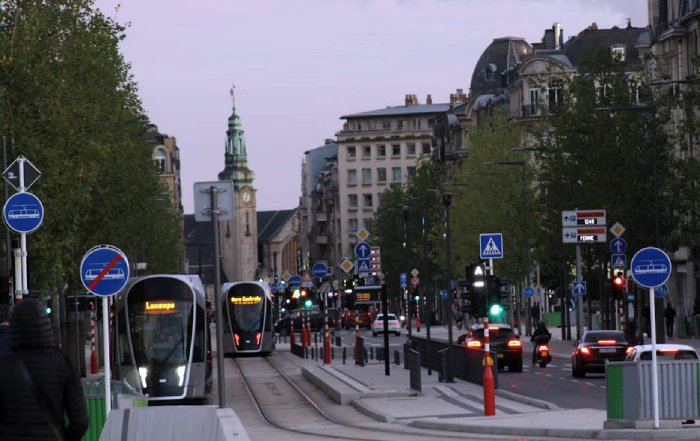
European cities have continued to refine and scale Mobility as a Service (MaaS), moving beyond isolated pilots to integrated platforms that unify public transport, micromobility, ride-hailing, and shared vehicles. Cities such as Helsinki, Berlin, Barcelona, Vienna, and Amsterdam now offer residents and visitors digital interfaces that allow them to plan, book, and pay for multimodal journeys through a single app, with real-time data on congestion, delays, and vehicle availability. Inspired by early innovators like Whim and guided by policy discussions at organizations such as the International Transport Forum, these platforms have become core infrastructure for urban life, not just optional travel tools. Travelers can move from airport to hotel, from coworking space to client meeting, and from museum district to restaurant without navigating multiple ticketing systems or language barriers, using a combination of metro, tram, bus, shared bikes, scooters, and on-demand shuttles.
For international visitors, especially those arriving from the United States, Canada, Singapore, Japan, and Australia, this integrated mobility landscape significantly reduces friction in unfamiliar environments. They can assess route options by cost, travel time, and carbon footprint, and they can rely on consistent digital experiences across multiple cities. Data from Eurostat and the Organisation for Economic Co-operation and Development (OECD) helps travelers and corporates gauge the quality and sustainability of urban transport systems, which increasingly factor into decisions about where to hold conferences, establish regional offices, or base remote work periods. As worldwetravel.com expands coverage of global urban destinations, the platform highlights these mobility ecosystems as a key differentiator, encouraging readers to view transport not only as a logistical necessity but as a core part of a city's value proposition for both short-term visits and longer stays.
Electric Mobility and the Infrastructure of a Low-Carbon Continent
Electric mobility has moved from early adoption to mainstream expectation in many parts of Europe, particularly in Norway, Sweden, the Netherlands, Germany, the United Kingdom, and increasingly France and Italy. By 2026, electric vehicles (EVs) account for a significant share of new car sales, supported by national incentives, corporate fleets, and expanding charging networks. Travelers renting vehicles in these markets often find that EVs are the default option, with major rental firms and mobility platforms offering a range of models suitable for solo business trips, family road journeys, and group travel. The growth of high-speed charging corridors, driven by companies such as Ionity and complemented by national initiatives, has made it possible to drive across large parts of Europe with minimal range anxiety, planning stops around both charging availability and points of interest.
Hotel groups and independent accommodations, recognizing the importance of EV-ready infrastructure for both leisure and corporate guests, have invested heavily in on-site charging, sometimes integrating this into loyalty programs or meeting packages. International analysis from the International Energy Agency and guidance from the United Nations Environment Programme help travelers and businesses learn more about sustainable business practices, including how electrified transport contributes to emissions reduction targets. For the audience of worldwetravel.com, this shift intersects with hotel selection, route design, and destination choice, as those planning road trips through Scandinavia, the Alps, or the Iberian Peninsula increasingly filter options based on charging infrastructure, local emissions regulations, and the broader environmental policies of host countries.
Aviation Innovation: Cleaner Skies, Connected Hubs, and Smarter Operations
Despite the growth of rail and electric mobility, aviation remains essential for intercontinental and many intra-European journeys, particularly for travelers coming from North America, Asia, the Middle East, and the Southern Hemisphere. Recognizing both its indispensability and its environmental impact, European airlines and regulators have intensified efforts to decarbonize and modernize air travel. Major carriers such as Lufthansa, Air France-KLM, British Airways, Iberia, and SAS are progressively integrating sustainable aviation fuels (SAF) into their operations, renewing fleets with more efficient aircraft, and adopting advanced air traffic management solutions. Frameworks developed by the International Air Transport Association (IATA) and regulatory guidance from the European Union Aviation Safety Agency (EASA) underpin these initiatives, providing standards for safety, emissions reporting, and fuel certification that are gradually influencing global practice.
European airports, including hubs in Frankfurt, Munich, Amsterdam, London, Paris, Zurich, Madrid, and Rome, are evolving from transit gateways into multimodal mobility centers. Many now feature direct connections to high-speed and regional rail, enabling travelers to combine air and rail segments within a single itinerary, and they deploy biometric identification, automated border control, and sophisticated baggage tracking to streamline the passenger journey. The Airports Council International (ACI) documents how these hubs are reducing their own operational emissions, improving energy efficiency, and enhancing resilience. For corporate travel planners and executives who rely on worldwetravel.com to optimize business travel strategies, the choice of gateway airport increasingly involves evaluating not only flight schedules and fares but also the quality of intermodal connectivity, digital services, and sustainability credentials, especially when planning multi-city itineraries that combine meetings in the United Kingdom, Germany, France, Italy, and Spain.
Autonomous, Shared, and On-Demand Mobility: Europe's Emerging Ecosystem
Autonomous and shared mobility, while still in a developmental phase, has advanced considerably across Europe by 2026, particularly in controlled environments and specific urban districts. Pilot projects in Germany, France, the United Kingdom, the Netherlands, and the Nordic countries are testing autonomous shuttles in business parks, university campuses, residential neighborhoods, and tourist zones, often in collaboration with local authorities, technology firms, and research institutions. These initiatives, tracked and analyzed by organizations such as the World Economic Forum, aim to understand how self-driving vehicles can provide first- and last-mile connectivity, complement public transport, and reduce congestion and emissions.
At the same time, ride-hailing, car-sharing, and micromobility services have become more integrated into city transport strategies, with regulatory frameworks encouraging data sharing, responsible fleet management, and alignment with public transport rather than direct competition. In cities from Stockholm and Copenhagen to Milan, Lisbon, and Brussels, travelers can rely on a sophisticated mix of shared bikes, scooters, e-mopeds, and car-share vehicles to cover short and medium distances without resorting to private car rental. For visitors from regions where such ecosystems are less advanced, this can be a transformative experience, enabling them to move flexibly without the cost and complexity of owning or renting a car. As worldwetravel.com deepens its coverage of technology in travel, it provides practical guidance on using these services safely and efficiently, helping readers from the United States, Canada, Singapore, South Korea, Japan, and Australia adapt quickly to European mobility norms and take full advantage of the options available.
Health, Well-Being, and Human-Centered Mobility Design
Health and well-being have become central considerations in European transport planning, influenced by public health research, urban design trends, and changing traveler expectations. Cities across Scandinavia, the United Kingdom, Germany, the Netherlands, and Southern Europe are prioritizing active mobility, clean air, and noise reduction, guided in part by evidence from the World Health Organization on the health impacts of air pollution, sedentary lifestyles, and traffic-related stress. Low-emission zones, car-free districts, expanded cycling networks, and pedestrianized historic centers are now common features in cities such as Paris, Rome, Barcelona, Amsterdam, Copenhagen, Oslo, and Zurich, fundamentally changing how both residents and visitors experience urban spaces.
For travelers, this shift means that walking and cycling are often not just possible but optimal ways to explore city centers, with dedicated infrastructure, bike-sharing schemes, and clear signage supporting safe and enjoyable movement. Long-distance operators have also integrated health considerations into their service design, improving ventilation systems, seating ergonomics, lighting, and onboard food options to reduce fatigue and support well-being on extended journeys. Readers of worldwetravel.com who prioritize health-conscious travel and wellness-oriented itineraries can use this information to choose destinations and routes that align with personal or family health goals, whether they are planning a restorative rail journey through the Swiss Alps, a cycling-centric exploration of the Netherlands and Denmark, or a city break in a low-traffic district of Vienna or Stockholm that emphasizes quiet streets and access to green spaces.
Culture, Tourism, and Mobility-Driven Itineraries
Europe's reimagined transportation systems are closely intertwined with evolving tourism strategies that seek to balance visitor demand with the protection of cultural heritage and local quality of life. Countries such as Italy, Spain, France, Switzerland, Austria, and Portugal have strengthened regional and local rail and bus links to encourage travelers to explore beyond the most visited capitals, distributing economic benefits to smaller towns and rural regions while easing pressure on heavily touristed centers. The work of UNESCO in highlighting the importance of sustainable access to World Heritage Sites has influenced policies that restrict private car access, enhance public transport options, and promote walking and cycling routes around historic districts and natural landscapes.
For culturally motivated travelers, this alignment between mobility and tourism policy opens new possibilities for deeper, more authentic experiences. Instead of focusing solely on metropolitan hubs such as London, Paris, Berlin, and Rome, itineraries increasingly incorporate secondary cities and regions-Lyon, Seville, Bologna, Bilbao, Salzburg, Ghent, or Porto-connected by efficient regional trains and buses. River corridors such as the Rhine and Danube, coastal routes in the Mediterranean and Baltic, and scenic mountain lines in the Alps and Pyrenees provide frameworks for slow travel that integrates local culture, cuisine, and landscapes. As worldwetravel.com expands its coverage of culture-rich journeys, it emphasizes how transport choices shape the depth and character of travel, encouraging readers to view trains, ferries, and regional buses as integral components of storytelling rather than merely functional links between famous landmarks.
Eco-Conscious Travel, Corporate Responsibility, and the Evolving Economy
The transformation of European transportation is inseparable from broader economic shifts driven by environmental, social, and governance (ESG) priorities. European policymakers, financial institutions, and corporations are aligning more closely with the Paris Agreement and related climate frameworks, and transport is a central focus given its significant share of greenhouse gas emissions. Business travelers and corporate travel managers are increasingly required to measure and report the carbon impact of journeys, supported by methodologies and tools from organizations such as the World Resources Institute and the CDP (formerly Carbon Disclosure Project).
This shift has concrete implications for corporate travel policy and budgeting. High-speed rail is increasingly favored over short-haul flights where practical, electric vehicle fleets are prioritized for ground transport, and airlines and hotels are evaluated not only on cost and service but also on emissions performance and transparency. For companies in the United States, United Kingdom, Germany, the Nordics, and Asia with substantial European operations, travel decisions are now intertwined with ESG reporting and stakeholder expectations. Readers who rely on worldwetravel.com for insights into work-related travel and the economic context of mobility can use this evolving landscape to align personal travel habits with corporate sustainability objectives, choosing routes and suppliers that support both business outcomes and environmental commitments.
Practical Navigation of Europe's New Mobility Landscape
While Europe's transport ecosystem offers more options and higher quality than ever, the complexity of choices makes informed planning essential. Travelers must decide when high-speed rail is preferable to air, how to access and use integrated urban mobility platforms, what to consider when booking night trains, how to approach electric car rentals, and how to interpret local regulations on low-emission or congestion zones in cities across the United Kingdom, Germany, France, Italy, Spain, and Scandinavia. Official resources from the European Commission's transport portal and national transport ministries provide up-to-date information on infrastructure, regulations, and consumer rights, while national tourism organizations such as VisitBritain, Germany Travel, and Atout France increasingly integrate mobility guidance into their destination information, helping visitors understand local norms and options. The World Tourism Organization (UNWTO) offers broader context on how sustainable mobility aligns with global tourism trends and policy objectives.
For the global audience of worldwetravel.com, these resources are most valuable when combined with practical, experience-based advice tailored to specific traveler profiles, from families with young children and multigenerational groups to solo digital nomads and senior executives. The platform's dedicated section on travel tips and planning curates and interprets this information, offering concrete recommendations on booking windows, transfer strategies, luggage considerations, and contingency planning for multi-country itineraries. Readers planning extended workations or retreats in Europe can also draw on specialized content related to retreat and wellness travel and eco-conscious choices, ensuring that the way they move through the continent reflects both personal values and practical constraints.
Looking Ahead: Europe's Transport Future and the Role of World We Travel
By 2026, it has become evident that Europe's new transportation ideas are not temporary responses to crisis or isolated technological experiments; they represent a structural redefinition of how mobility supports economic activity, cultural exchange, and individual lifestyles. The convergence of high-speed and night rail, electrified road transport, integrated urban mobility, evolving aviation models, autonomous and shared services, and health-centered design is creating a mobility environment that is more connected, more sustainable, and more attuned to the needs of travelers. This transformation is already influencing how destinations position themselves in the global tourism and business landscape, how companies design their location strategies and workforce policies, and how individuals think about cross-border careers, remote work, and multi-country living arrangements.
For worldwetravel.com, this ongoing evolution reinforces a clear mission: to provide travelers with authoritative, experience-driven guidance that links transport innovation to broader questions of lifestyle, work, family, and global mobility. By closely tracking developments across Europe and relating them to emerging trends in North America, Asia, Africa, and South America, the platform acts as a bridge between complex policy and technology narratives and the real-world decisions its readers must make every time they book a trip. Whether a traveler is planning a high-speed rail circuit across Western Europe, evaluating low-carbon options for transatlantic business travel, selecting a wellness retreat in the Alps accessible primarily by train, or designing a year-long remote work plan that rotates between European and non-European cities, worldwetravel.com aims to deliver the insight, context, and practical tools required to move confidently and responsibly.
As transportation systems continue to evolve, the ability to understand and leverage these changes will increasingly distinguish travelers, families, and businesses that are resilient, efficient, and sustainability-minded. Europe's mobility transformation offers both a preview of the future and a practical framework that can be applied today. By combining in-depth analysis with on-the-ground experience, worldwetravel.com remains committed to helping its global community navigate this new era of travel, turning complex mobility ecosystems into clear, actionable choices that enhance every journey.