

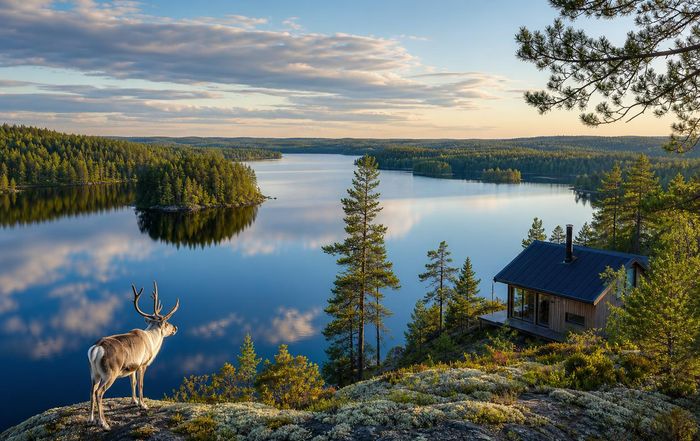
Finland Travel Guide to Lakes, Forests and Northern Escapes
A Northern Escape Shaped by Water, Forest and Light
Finland is often described through superlatives-one of the world's happiest nations, one of the greenest, one of the safest-but for travelers, its most striking quality is the way nature, design and everyday life are woven together into a seamless, quietly inspiring experience. From the island-dotted lakes of the Lakeland region to the endless forests of Karelia and the snow-draped stillness of Lapland, the country offers a rare combination of wilderness, comfort and understated sophistication that aligns closely with the values and aspirations of the WorldWeTravel community.
Situated between Sweden and Russia and extending well into the Arctic Circle, Finland presents four distinct seasons that dramatically transform the travel experience. In summer, the midnight sun bathes lakes and forests in a soft, almost dreamlike light, while in winter, snow and ice reshape the landscape into a serene white canvas, illuminated by the aurora borealis. Spring and autumn, though shorter, offer vivid colors, fewer crowds and a strong sense of local life in transition, making them particularly attractive for culturally curious travelers seeking authenticity and calm.
For those planning journeys through global destinations with WorldWeTravel, Finland stands out as a country where modern infrastructure, digital convenience and high safety standards support deeply nature-based experiences. This guide explores the country's lakes, forests and northern escapes, focusing on destinations, accommodations, family travel, wellness retreats and sustainable practices that reflect both Finland's own ethos and the priorities of discerning travelers worldwide.
Lakes: The Blue Heart of Finland
Finland is often called the "Land of a Thousand Lakes," though the true number is closer to 188,000, depending on the definition used. The Finnish Lakeland region, which stretches across central and eastern parts of the country, forms one of Europe's largest lake districts, a labyrinth of water, islands and peninsulas that invites slow exploration rather than rushed sightseeing. According to Visit Finland, the official tourism organization, this region is among the country's most popular domestic holiday areas, especially for summer cottage stays and nature activities.
The Lakeland area is anchored by large bodies of water such as Lake Saimaa, Finland's largest lake and one of the biggest in Europe. Saimaa's shoreline is famously fragmented, creating countless coves and inlets that make it ideal for kayaking, canoeing and multi-day boating routes. Travelers can explore routes via the Saimaa Geopark, recognized by UNESCO's Global Geoparks Network, which highlights the geological and cultural significance of the region. Cruises from towns like Savonlinna and Lappeenranta offer gentle introductions to the lake's scale and beauty, while independent travelers can rent houseboats or lakefront cabins for more immersive stays.
One of the region's most distinctive attractions is the endangered Saimaa ringed seal, a freshwater seal found only in Lake Saimaa. Conservation efforts led by organizations such as the WWF Finland and Finnish environmental authorities have contributed to a slow population increase, though the species remains vulnerable. Responsible seal-watching excursions, conducted at a distance and following strict guidelines, allow visitors to learn about this unique species without disturbing its habitat. Those planning wildlife-focused itineraries can cross-check current regulations and recommended operators via sources such as WWF Finland's official site and Metsähallitus, the Finnish state forest and parks agency.
Summer in Lakeland is synonymous with cottage life, or "mökki" culture. Many Finnish families own or rent simple lakeside cabins, often with their own saunas and jetties, where days are spent swimming, fishing, picking berries and preparing meals outdoors. International visitors can participate in this tradition by booking cottages through reputable platforms or local agencies, with options ranging from rustic off-grid cabins to design-forward villas. For travelers using WorldWeTravel to plan stays, the hotels and stays section is increasingly relevant not just for city hotels but also for curated rural lodgings that combine comfort with proximity to nature.
While Lakeland is most famous in summer, winter brings its own charm. Frozen lakes become natural playgrounds for cross-country skiing, snowshoeing and ice skating, and in some areas, safe ice roads allow drivers to cross between islands. Local authorities monitor ice conditions carefully, and travelers are strongly advised to follow official guidance from sources such as the Finnish Meteorological Institute and local tourism boards. This seasonal duality-water in summer, ice in winter-makes Lakeland a versatile destination for repeat visits and multi-season itineraries.
Forests: Green Cathedrals of Silence and Wellbeing
Forests cover roughly three-quarters of Finland's land area, one of the highest proportions in Europe, and they are central to both the economy and the national identity. The concept of "Everyman's Right" (jokamiehenoikeus) allows people to roam freely in most natural areas, pick wild berries and mushrooms, and camp temporarily, provided they respect nature and private property. This tradition, deeply embedded in Finnish culture, underpins much of the country's outdoor recreation and is carefully explained by authorities such as Metsähallitus and Finland's official environmental administration.
For travelers, Finnish forests function as both adventure playgrounds and sanctuaries of calm. National parks like Nuuksio, located within easy reach of Helsinki, and Repovesi, known for its dramatic cliffs and lakes, offer well-marked trails, fire pits and lean-to shelters that make day hikes and overnight stays accessible even for those with limited wilderness experience. Information on routes, safety and services is available on the National Parks Finland portal, which is maintained by Metsähallitus and is widely regarded as an authoritative resource.
Beyond hiking, Finland has embraced the global trend toward nature-based wellbeing, sometimes referred to as "forest bathing," with a distinctly local twist. Research from institutions such as the Finnish Institute for Health and Welfare and universities including the University of Helsinki has explored the health benefits of time spent in natural environments, echoing findings from countries like Japan, where "shinrin-yoku" has been studied for decades. While specific health outcomes can vary and are still being investigated, there is broad agreement among researchers that regular exposure to green spaces is associated with reduced stress, improved mood and enhanced overall wellbeing.
This scientific backdrop supports a growing ecosystem of guided forest experiences, from mindful walks to multi-day retreats that combine yoga, sauna and nature immersion. Travelers interested in wellness-focused itineraries can explore such offerings through WorldWeTravel's health and wellness section and related retreat-focused content, which increasingly highlight Nordic and Arctic destinations. Many Finnish operators emphasize small groups, local guides and low-impact practices, aligning with broader sustainable tourism principles promoted by organizations like the Global Sustainable Tourism Council and referenced in policy documents from the European Commission.
Autumn, when forests blaze with shades of gold and red, is a particularly rewarding time for forest travel. Berry and mushroom picking, a cherished Finnish pastime, becomes a hands-on way for visitors to connect with the land, though it is important to follow guidance on species identification and harvesting limits. Local tourism offices and nature centers often provide workshops or guided foraging excursions, and travelers can cross-reference information with reputable sources such as the Natural Resources Institute Finland to ensure responsible practices.
Northern Escapes: Lapland, Midnight Sun and Aurora
Finland's northernmost region, Lapland, occupies a special place in the global imagination. Known for its snow-covered landscapes, reindeer herding traditions and association with Santa Claus, it has evolved into a year-round destination that combines Arctic adventure with high-quality hospitality. Towns like Rovaniemi, Levi, Ylläs, Saariselkä and Inari serve as gateways to vast wilderness areas, including Urho Kekkonen National Park and Pallas-Yllästunturi National Park, which are among Finland's most visited protected areas, according to Metsähallitus statistics.
Winter remains the peak season in Lapland, drawing visitors from Europe, Asia, North America and beyond for activities such as husky sledding, snowmobiling, ice fishing and skiing. Reindeer safaris, operated by local herders and tourism companies, offer insights into Sámi culture, though travelers are encouraged to choose operators that collaborate directly with Sámi communities and respect cultural protocols. The Sámi Parliament of Finland and organizations such as the International Work Group for Indigenous Affairs provide context on Sámi rights and cultural preservation, which can help visitors make informed choices.
One of Lapland's most sought-after experiences is viewing the northern lights. The region's location within or near the auroral oval, combined with long winter nights and relatively low light pollution, creates favorable conditions for aurora sightings between roughly late August and April, although exact timing depends on solar activity and weather. Tools such as the Space Weather Prediction Center and local aurora forecast services help travelers manage expectations, but even under ideal conditions, sightings can never be guaranteed. Many tour operators emphasize this uncertainty, offering alternative activities if the sky remains cloudy.
In recent years, Lapland has become synonymous with innovative accommodation concepts that allow guests to experience the Arctic environment in comfort. Glass igloos, aurora cabins with panoramic windows, and architecturally striking boutique hotels have received international media coverage, though travelers are advised to verify details such as location, services and sustainability credentials through official sites and trusted review platforms. For curated overviews of such stays, the WorldWeTravel hotels and retreats pages can serve as valuable starting points, especially for those seeking combinations of design, privacy and nature immersion.
Summer in Lapland, often overlooked by first-time visitors, offers a very different but equally compelling experience. The midnight sun, which keeps the sky bright for weeks, enables long hikes, mountain biking, canoeing and fishing in an almost ethereal light. Mosquitoes can be numerous in some areas, particularly near wetlands, but proper clothing and repellents mitigate most issues. This season also highlights the resilience and adaptability of northern communities, as reindeer herding, tourism and other livelihoods adjust to changing daylight patterns and evolving climate conditions, topics that have been studied by Finnish research institutes and international bodies such as the Arctic Council.
Cities as Gateways: Helsinki, Tampere and Beyond
While Finland's lakes, forests and northern regions are the primary draw for nature-focused travelers, its cities function as essential gateways and destinations in their own right. Helsinki, the capital, blends maritime charm with modern architecture, design and a flourishing food scene. Neighborhoods like Punavuori, Kallio and the waterfront areas around the Oodi Central Library and Amos Rex museum showcase the city's commitment to public space, culture and innovation. Visitors can explore these urban experiences as part of broader itineraries curated on WorldWeTravel's travel hub, which frequently highlights multi-destination journeys.
Helsinki's location on the Baltic Sea makes it a natural starting point for trips to the archipelago, where thousands of islands offer opportunities for kayaking, sailing and cabin stays. The Vallisaari and Suomenlinna islands, accessible by ferry, combine nature with history; Suomenlinna is a UNESCO World Heritage Site that illustrates centuries of maritime fortification. The UNESCO World Heritage Centre provides detailed background on this and other Finnish sites, which can enrich visits with historical and cultural context.
Inland, cities like Tampere and Jyväskylä connect travelers to the Lakeland region while offering their own cultural attractions. Tampere, known for its industrial heritage and evolving creative scene, has positioned itself as a family-friendly destination with museums, amusement parks and lakeside recreation. Jyväskylä, closely associated with the work of architect Alvar Aalto, attracts design enthusiasts who can explore buildings and environments shaped by his modernist vision. The Alvar Aalto Foundation offers detailed information on key sites, enabling architecture-focused itineraries that complement nature-based travel.
These urban centers also serve as nodes in Finland's efficient transport network, which includes extensive rail connections, domestic flights and well-maintained roads. The national railway company VR and regional transport authorities provide up-to-date schedules and ticketing options, while the Finnish Transport Infrastructure Agency shares information on infrastructure and safety. For international visitors, this connectivity simplifies multi-stop journeys that move fluidly from city experiences to lakes, forests and northern escapes, a style of travel that aligns well with the flexible itineraries often featured on WorldWeTravel's tips page.
Family Travel: Safe, Educational and Nature-Rich
Finland's reputation as a family-friendly destination rests on several pillars: high safety standards, child-centered public facilities, abundant nature and a strong culture of outdoor activity. International comparisons, such as those compiled by the OECD and UNICEF, often highlight Finland's education system and child wellbeing indicators, which in turn shape how public spaces and services are designed. For traveling families, this translates into accessible playgrounds, child-friendly museums, reliable public transport and a general societal acceptance of children in most settings.
Nature plays a central role in family travel experiences. Short, well-marked trails in national parks, many of which are suitable for strollers or young walkers, allow families to experience forests and lakes without demanding physical exertion. Fire pits and shelters, typically equipped with wood and sometimes grills, encourage outdoor picnics and simple cooking, though families should always follow local fire safety guidelines and any restrictions in place during dry periods. The National Parks Finland site provides clear indications of which routes and facilities are family-oriented.
In winter, activities such as sledding, beginner-friendly skiing and visits to reindeer or husky farms create memorable experiences for children, while indoor attractions like science centers and aquariums offer alternatives during harsh weather. Rovaniemi's Santa-themed attractions, including Santa Claus Village, are particularly popular with families from Europe and Asia, though experiences can vary depending on season and crowd levels. Parents are encouraged to research options carefully via multiple sources, including official tourism sites and independent reviews, to align expectations with reality.
For families planning multi-country trips that include Finland, WorldWeTravel's family travel section at worldwetravel.com/family.html offers inspiration on combining Finnish nature experiences with urban stays in cities like Stockholm, Tallinn or Copenhagen, connected by ferries and short flights. This regional approach allows families to balance adventure with comfort, culture with rest, and structured activities with unstructured time in nature.
Sustainable and Eco-Conscious Travel in Finland
Sustainability is not an add-on in Finland; it is deeply integrated into national policy, business practices and everyday life. The country has set ambitious climate and biodiversity targets, documented in official strategies available through the Finnish Government's website, and has invested in renewable energy, circular economy initiatives and sustainable forestry. For travelers, this policy backdrop creates a context in which eco-conscious choices are both possible and encouraged.
The tourism sector has increasingly aligned with these goals. Visit Finland promotes the Sustainable Travel Finland program, a certification scheme that helps tourism companies and destinations systematically adopt and communicate sustainable practices. Participants are evaluated on criteria such as environmental management, cultural preservation and community engagement. Travelers can learn more about these frameworks and identify certified operators via Visit Finland's official channels and related resources, which are regularly updated and cross-checked with broader sustainability standards.
Finland's extensive network of national parks and protected areas is managed with a focus on balancing access and conservation. Visitor numbers, trail maintenance and infrastructure development are monitored by Metsähallitus, and management plans are often developed in consultation with local communities and stakeholders. International bodies such as the International Union for Conservation of Nature (IUCN) recognize Finland's contributions to protected area management, while also noting ongoing challenges related to climate change and land use.
For travelers using WorldWeTravel's eco-focused resources at worldwetravel.com/eco.html, Finland offers concrete examples of how sustainable tourism can function in practice. Many accommodations feature energy-efficient design, local materials and seasonal, locally sourced cuisine. Public saunas and swimming areas often adhere to strict water quality and hygiene standards, monitored by municipal authorities and documented by agencies such as the Finnish Institute for Health and Welfare. Travelers can support these efforts by choosing certified businesses, minimizing waste, respecting marked trails and learning about local customs and environmental guidelines before arrival.
Practical Tips for Planning a Finnish Nature Journey
Planning a trip to Finland's lakes, forests and northern regions involves attention to seasonality, logistics and personal preferences. Summers are generally mild to warm, with long days and comfortable temperatures in most regions, though heatwaves have become more frequent in recent years, a trend documented by the Finnish Meteorological Institute and international climate assessments such as those by the Intergovernmental Panel on Climate Change (IPCC). Winters are cold and snowy, particularly in the north and east, requiring appropriate clothing and awareness of driving and outdoor safety.
Public transport is reliable and extensive in southern and central Finland, with rail and bus networks connecting major towns and cities. In more remote areas, especially in Lapland and parts of Lakeland, a rental car or organized transfers can provide greater flexibility. Travelers should consult official sources like Fintraffic for real-time traffic and transport information, especially in winter. Those combining work and travel can explore digital-nomad-friendly options via WorldWeTravel's work and travel section, as Finland's strong digital infrastructure and widespread English proficiency make remote work feasible in many locations.
Accommodation options range from international hotel brands in cities to family-run guesthouses, cabins, farm stays and wilderness lodges in rural areas. Many properties highlight their environmental credentials, though travelers are encouraged to verify claims through recognized certifications or independent sources where possible. Booking well in advance is advisable for peak periods, particularly in Lapland during winter holidays and in popular lake regions during July, when many Finns take their main vacations.
Cultural etiquette in Finland tends toward modesty, punctuality and respect for personal space. Visitors are generally welcomed warmly but without excessive formality, and straightforward communication is appreciated. Saunas, an integral part of Finnish life, are opportunities to experience local culture; basic etiquette includes showering before entering, respecting quiet, and following any instructions provided. For those new to sauna culture, resources such as the Finnish Sauna Society offer background and guidance.
Finland with WorldWeTravel: Inspiration for the Years Ahead
For the WorldWeTravel audience, Finland offers a compelling blend of destinations, experiences and values that resonate strongly with contemporary travel aspirations. It is a country where lakes mirror endless skies, forests provide both adventure and solace, and northern escapes invite reflection under the glow of the midnight sun or the dance of the aurora. Its cities function as culturally rich gateways rather than overwhelming hubs, and its commitment to sustainability, education and public wellbeing creates a reassuring framework for responsible exploration.
As travelers in 2026 and beyond seek journeys that nourish body, mind and spirit, Finland stands out as a place where nature is not merely a backdrop but a living, integral part of daily life. Through WorldWeTravel's global inspiration pages, visitors can weave Finnish lakes, forests and northern landscapes into broader itineraries that span Europe, Asia, North America and beyond, creating travel narratives that are as meaningful as they are memorable.
Whether planning a family holiday by a quiet lake, a design-focused city break with nature at its doorstep, an Arctic adventure under winter skies or a restorative retreat in a forest cabin, travelers will find in Finland a destination that rewards curiosity, respects the environment and offers a quietly powerful reminder of how deeply human wellbeing is connected to the natural world.