

China Travel Guide to Ancient Cities and Natural Landscapes
China's vast geography and deep history create a rare combination of monumental cities, quiet temple towns, and some of the most dramatic landscapes on Earth. For travelers planning meaningful journeys with us, the country offers a chance to move seamlessly from imperial palaces to karst peaks, from Silk Road ruins to subtropical rice terraces, all while engaging with one of the world's most dynamic contemporary societies.
This guide brings together current travel insights, verified information from trusted international sources, and on-the-ground trends that shape how visitors experience China's ancient cities and natural wonders today. It is written for curious travelers, families, business visitors, and culture seekers who want to explore China responsibly and comfortably, with an eye toward authenticity, sustainability, and long-term value.
Planning a Trip to China Today
International travel to China has evolved significantly in recent years, with changes in visa policies, health protocols, and digital infrastructure. Before any journey, travelers are advised to consult their own government's latest guidance, such as the travel advice pages maintained by the U.S. Department of State on state.gov, the UK Foreign, Commonwealth & Development Office on gov.uk, or equivalent agencies in Canada, Australia, and across Europe, which regularly update entry requirements, security information, and regional advisories.
China has gradually relaxed many of the public health measures that affected international tourism earlier in the decade, though local rules can still change quickly and may vary between provinces. The World Health Organization provides an overview of global and regional health considerations on who.int, while the Centers for Disease Control and Prevention (CDC) maintains detailed health recommendations for China on cdc.gov. Travelers who prioritize wellness and preventive care can complement this information with destination-specific guidance on WorldWeTravel Health, which highlights practical tips for managing air quality, food safety, and active itineraries in urban and rural settings.
Digital payments and mobile apps are now central to daily life in Chinese cities. Services such as Alipay and WeChat Pay have expanded options for foreign bank cards, but cash is still advisable in smaller towns and remote scenic areas. For a broader overview of travel logistics, including mobile connectivity, transport, and travel insurance, visitors can explore WorldWeTravel's general travel resources, which help bridge the gap between global best practices and the specific realities of traveling in China.
Beijing: Imperial Capitals, Hutong Lanes, and Mountain Walls
Beijing remains the primary gateway for many international visitors and an essential starting point for understanding China's imperial heritage. The city's historic core is anchored by the Forbidden City, officially known as the Palace Museum, whose vast courtyards and ceremonial halls once formed the exclusive domain of Ming and Qing emperors. The museum's official website on dpm.org.cn offers up-to-date information on opening hours, timed entry tickets, and current exhibitions, which increasingly integrate digital interpretation and conservation research.
Directly south, Tiananmen Square and the surrounding government buildings reflect the political history of the People's Republic. While this area is carefully managed and subject to security checks, it remains accessible to visitors who approach with respect and awareness of local rules. To the north and west, the city's traditional hutong neighborhoods provide a more intimate perspective on Beijing life, where narrow lanes, courtyard homes, and small temples coexist with contemporary cafés and design studios. Preservation efforts in districts such as Nanluoguxiang and Shichahai are documented by organizations including UNESCO on unesco.org, which recognizes the Historic Centre of Beijing and its surrounding heritage.
No guide to Beijing would be complete without the Great Wall of China, whose most popular sections, such as Badaling and Mutianyu, are readily accessible by road or organized tour. More adventurous travelers may prefer the wilder stretches at Jinshanling or Gubeikou, where the wall's original stonework and mountain vistas are less crowded but require better fitness and preparation. Responsible travel practices, including staying on marked paths and avoiding graffiti or stone removal, are essential to protect this fragile monument, as emphasized by conservation groups and Chinese cultural authorities. Visitors seeking curated itineraries that combine Beijing's historic sites with family-friendly activities can find inspiration on family travel hub, which highlights practical routes and pacing for multi-generational journeys.
Xi'an and the Silk Road Legacy
To understand China's role in global history, travelers often turn westward to Xi'an, the former capital of multiple dynasties and the eastern terminus of the ancient Silk Road. The city is most famous for the Terracotta Army, a vast underground complex of life-sized warriors, horses, and chariots commissioned by Emperor Qin Shi Huang. The official museum site and detailed descriptions from institutions such as the British Museum on britishmuseum.org and the Metropolitan Museum of Art on metmuseum.org provide context on the site's discovery, ongoing excavations, and the sophisticated craftsmanship involved.
Within Xi'an itself, the intact city walls, Muslim Quarter, and Great Mosque illustrate centuries of cultural exchange between Central Asia, the Middle East, and China. The UNESCO Silk Roads program on unesco.org documents how trade and ideas moved along routes connecting Xi'an with Central Asia and beyond, influencing religion, cuisine, and architecture. Visitors walking or cycling atop the city walls today can trace these historic connections while taking in sweeping views of old and new districts.
For travelers crafting broader multi-country itineraries that follow Silk Road themes across Central Asia, the Middle East, and Europe, the global perspective offered on WorldWeTravel Destinations can help situate Xi'an's heritage within a larger network of trade cities from Samarkand to Istanbul, promoting a sense of continuity between different cultures and modern borders.
Suzhou, Hangzhou, and the Classical Water Towns
East of the historical capitals, the lower Yangtze region showcases a gentler, more introspective side of China's urban heritage. Suzhou, long celebrated for its classical gardens, canals, and silk industry, is home to several UNESCO-listed gardens such as the Humble Administrator's Garden and the Lingering Garden. These sites are renowned for their meticulous rockeries, pavilions, and water features that embody refined literati aesthetics. The UNESCO World Heritage listing on unesco.org offers a concise summary of their cultural significance and conservation status.
Nearby Hangzhou, centered on the iconic West Lake, has inspired poets, painters, and philosophers for centuries. The lake's causeways, islands, and surrounding tea fields create a landscape often described in classical Chinese literature, and modern visitors continue to enjoy boat rides, lakeside walks, and visits to nearby Longjing tea plantations. The China National Tourist Office and regional tourism boards maintain updated practical information on travelchina.org.cn, including seasonal events and transportation links between Hangzhou, Shanghai, and smaller water towns such as Wuzhen and Tongli.
For couples, families, and solo travelers seeking tranquil stays in boutique inns and garden hotels, this region offers an ideal balance between accessibility and serenity. WorldWeTravel's hotels guide can assist in comparing accommodation styles, from renovated courtyard residences to contemporary lakeside retreats, with particular attention to walkability, child-friendly amenities, and the proximity of cultural sites.
Guilin, Yangshuo, and the Karst Landscapes of Southern China
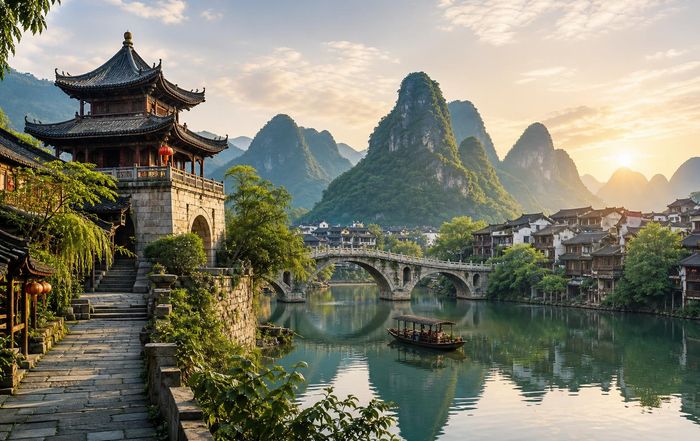
China's natural landscapes are as diverse as its cities, and among the most recognizable are the limestone karst formations of Guilin and Yangshuo in the Guangxi region. The dramatic peaks, winding Li River, and mist-shrouded valleys have been depicted in traditional ink paintings for centuries and are now a cornerstone of eco-oriented tourism. The Li River Scenic Area is highlighted by national tourism authorities and independent travel organizations, which stress the importance of managing boat traffic and shoreline development to preserve water quality and visual integrity.
River cruises from Guilin to Yangshuo offer an immersive introduction to the landscape, while cycling and hiking routes around Yangshuo allow visitors to explore villages, rice paddies, and hidden viewpoints at a slower pace. Outdoor enthusiasts can find reliable safety and route information through platforms such as China Highlights on chinahighlights.com and Lonely Planet on lonelyplanet.com, which emphasize seasonal considerations such as rainfall, humidity, and river levels.
Travelers interested in sustainable tourism will find that Guilin and Yangshuo are active laboratories for balancing visitor numbers with environmental stewardship, community livelihoods, and cultural integrity. Those wishing to deepen their understanding of eco-conscious travel in China can consult the eco travel section, which discusses low-impact transportation, community-based tourism, and responsible photography in rural settings.
Zhangjiajie, Huangshan, and China's Iconic Mountain Parks
For many visitors, the most memorable moments in China occur high above sea level, among the sandstone pillars, granite peaks, and cloud seas of its mountain parks. Zhangjiajie National Forest Park in Hunan province, part of the wider Wulingyuan Scenic and Historic Interest Area, has gained international recognition for its towering quartz-sandstone columns, some of which inspired fictional landscapes in popular films. Official park information, including current ticketing, cable car operations, and trail conditions, is available from local tourism authorities and is frequently summarized by reputable travel resources such as National Geographic Travel on nationalgeographic.com and CNN Travel on edition.cnn.com/travel.
Further east, Huangshan (Yellow Mountain) in Anhui province offers a different but equally celebrated mountain experience, with steep granite peaks, ancient pine trees, and hot springs. The area's status as a UNESCO World Heritage Site is documented on unesco.org, which notes its influence on Chinese art and literature. Visitors typically ascend via cable car and then explore a network of stone paths and viewpoints, sometimes staying overnight in mountain hotels to witness sunrise above the clouds.
Both Zhangjiajie and Huangshan require careful planning, as weather, altitude, and crowd levels can significantly affect the experience. WorldWeTravel's travel tips offer guidance on packing for variable mountain conditions, managing stair-intensive hikes, and choosing between guided tours and independent exploration, particularly for families or travelers with limited mobility.
Yunnan: Ethnic Diversity, Tea Routes, and High-Altitude Valleys
The southwestern province of Yunnan is often described as a microcosm of Asia, where tropical lowlands, snow-capped mountains, and highland plateaus converge. Cities such as Lijiang and Dali have become well-known among international travelers for their preserved old towns, traditional architecture, and vibrant markets. The Old Town of Lijiang is recognized by UNESCO on unesco.org for its Naxi heritage and unique water management system, though both Lijiang and Dali must balance preservation with the pressures of mass tourism and commercial development.
North of Lijiang, the Tiger Leaping Gorge trekking route offers one of China's most accessible multi-day hikes, with dramatic views over the Jinsha River, a major headwater of the Yangtze. Trekking conditions, guesthouse availability, and seasonal safety considerations are regularly updated by local operators and summarized by specialist hiking platforms such as Traildino and community-based forums. Further west and south, regions such as Xishuangbanna and Pu'er connect travelers to ancient tea routes, botanical gardens, and a rich mosaic of ethnic cultures, including Dai, Hani, and others recognized in China's official classification system.
Given Yunnan's ecological and cultural diversity, respectful engagement is particularly important. Travelers can explore broader discussions of community-based tourism, cultural sensitivity, and wellness-focused retreats in rural China through WorldWeTravel's retreat section, which highlights examples of yoga, meditation, and nature immersion programs that collaborate with local communities and emphasize environmental stewardship.
Tibet and the High Himalayan Plateau
The Tibetan Plateau, often referred to as the "Roof of the World," remains one of China's most sensitive and unique regions, both politically and environmentally. Travel to the Tibet Autonomous Region is subject to specific permit requirements and regulations, and foreign visitors are typically required to join organized tours arranged through authorized agencies. These rules are outlined by Chinese authorities and summarized by consular guidance from multiple countries, including detailed notes on travel.state.gov and gov.uk.
For those who do visit, Lhasa offers a deeply layered experience, anchored by the Potala Palace and Jokhang Temple, both of which are inscribed as UNESCO World Heritage Sites on unesco.org. Pilgrims circumambulating the Barkhor circuit, monks engaged in philosophical debate, and the interplay of traditional religious life with modern urban development create a complex, often moving atmosphere. Beyond Lhasa, routes leading toward Mount Everest (Qomolangma) on the Tibetan side, as well as to monasteries such as Ganden and Tashilhunpo, showcase the plateau's high-altitude landscapes and monastic heritage.
Due to the region's altitude and the potential for acute mountain sickness, travelers are strongly encouraged to review medical advice from sources such as the International Society for Mountain Medicine on ismm.org and the CDC on cdc.gov, and to integrate this knowledge with broader health planning for China via WorldWeTravel Health. Ethical considerations, including respect for local religious practices and sensitivity to political issues, are also important aspects of responsible travel in Tibet.
Jiuzhaigou, Sichuan, and the Western Nature Reserves
In western China, the province of Sichuan combines renowned cuisine with some of the country's most celebrated national parks and wildlife reserves. Jiuzhaigou Valley, a UNESCO World Heritage Site documented on unesco.org, is famous for its turquoise lakes, multi-tiered waterfalls, and autumn foliage. The area has experienced both rapid tourism growth and significant natural events, including earthquakes, which have led to ongoing restoration and infrastructure improvements. Official park websites and provincial tourism boards provide the latest information on which trails and scenic areas are open, as well as visitor caps designed to protect fragile ecosystems.
Nearby Huanglong Scenic and Historic Interest Area, also recognized by UNESCO, features travertine pools and high-altitude forests that complement Jiuzhaigou's more extensive valley system. For wildlife enthusiasts, Sichuan's giant panda reserves, including the Chengdu Research Base of Giant Panda Breeding, offer opportunities to learn about conservation efforts for this emblematic species. The research base's official site on panda.org.cn outlines breeding programs, visitor guidelines, and educational initiatives supported by Chinese and international partners.
Travelers combining nature excursions with culinary exploration can use WorldWeTravel Culture to learn about Sichuan's food traditions, tea houses, and performing arts, integrating visits to nature reserves with time in Chengdu's historic neighborhoods and contemporary cultural venues.
Coastal Cities, Modern Skylines, and Business Travel
While ancient cities and remote landscapes attract many leisure travelers, China's coastal metropolises remain central for business visitors and those interested in contemporary urban culture. Shanghai, with its Bund waterfront, art deco heritage, and futuristic Pudong skyline, has become a symbol of China's economic transformation. The city's museums, including the Shanghai Museum and the Power Station of Art, provide accessible introductions to Chinese art, archaeology, and design, with schedules and exhibitions listed on their respective official sites.
Further south, Shenzhen has evolved from a fishing town into a global technology hub, home to major companies such as Tencent and Huawei, and a thriving ecosystem of startups and design studios. Analysts at organizations like McKinsey & Company on mckinsey.com and the World Economic Forum on weforum.org frequently highlight the Pearl River Delta region as a critical node in global supply chains and innovation networks. Business travelers to these cities often combine meetings with short cultural excursions to nearby historic towns, temples, or coastal islands, illustrating how work and leisure increasingly intersect.
For professionals planning trips that blend conferences, factory visits, or client meetings with cultural exploration, WorldWeTravel Business and WorldWeTravel Work provide frameworks for designing balanced itineraries, selecting hotels with reliable connectivity and meeting facilities, and understanding local business etiquette in China's major commercial centers.
Sustainable and Wellness-Oriented Travel in China
As global travelers become more conscious of their environmental footprint and personal well-being, China has begun to develop a wider range of sustainable and wellness-oriented travel experiences. National and local authorities have promoted "all-for-one" tourism strategies, which aim to integrate urban planning, rural revitalization, and environmental protection, while organizations such as UNWTO on unwto.org track broader trends in sustainable tourism across Asia.
Eco-lodges in regions such as Yunnan, Guangxi, and Zhejiang, as well as wellness retreats near mountains and hot springs, cater to visitors seeking restorative experiences that align with traditional Chinese concepts of balance and harmony. Practices such as tai chi, qigong, and traditional Chinese medicine consultations are increasingly integrated into retreat programs, often supported by local practitioners and wellness professionals. Travelers researching these options can find curated overviews on WorldWeTravel Retreat and WorldWeTravel Eco, which emphasize transparent communication about environmental practices, community partnerships, and health standards.
In urban environments, initiatives to improve air quality, expand green spaces, and promote public transportation are reshaping how residents and visitors experience Chinese cities. Reports from organizations like The World Bank on worldbank.org and OECD on oecd.org analyze these changes in the context of long-term economic and environmental policy, providing valuable background for travelers who wish to understand the broader forces shaping the landscapes they explore.
Practical Tips for Experiencing China's Ancient Cities and Natural Landscapes
Navigating China's diversity requires thoughtful preparation and a flexible mindset. Language remains a key consideration, as Mandarin is widely spoken but English is less common outside major tourist centers and international hotels. Translation apps, phrasebooks, and, when appropriate, local guides can greatly enhance communication and cultural understanding. For families, structured itineraries that limit daily transit time and incorporate parks, interactive museums, and simple local foods can make the journey more enjoyable for children and older relatives alike, and resources on WorldWeTravel Family are tailored to these needs.
Transportation infrastructure, including high-speed rail, domestic flights, and long-distance buses, has expanded dramatically, connecting major cities with many secondary destinations. Reliable overviews of the rail network and ticketing options can be found through China Railway's official channels and practical guides on seat61.com, while broader travel planning tools on WorldWeTravel Travel help integrate these options into coherent multi-stop itineraries. Travelers are encouraged to book transportation and accommodations through reputable platforms, verify cancellation policies, and remain attentive to local holidays such as the Spring Festival and Golden Week, when travel volumes and prices typically surge.
Cultural sensitivity is another essential element of successful travel in China's ancient cities and natural landscapes. Respectful behavior at temples, mosques, and shrines, awareness of photography guidelines, and openness to local customs in food, greetings, and queuing all contribute to positive interactions. Learning about regional cuisines, music, festivals, and crafts through WorldWeTravel Culture can enrich these encounters and foster a deeper appreciation of China's internal diversity.
China with WorldWeTravel: A Continuing Journey
China's ancient cities and natural landscapes offer far more than a checklist of famous sights; they invite travelers into an ongoing conversation between past and present, human creativity and geological time, local traditions and global connections. From the alleyways of Beijing's hutongs to the terraces of Longsheng, from the prayer wheels of Lhasa to the glass walkways of Zhangjiajie, each journey reveals new dimensions of a country that continues to evolve while carrying one of the world's longest continuous cultural stories.
For people and travelers engaging with our site, China represents both a destination and a lens through which to consider broader questions about sustainable tourism, family travel, business mobility, and personal growth. By combining verified information from trusted international sources with practical insights drawn from contemporary travel practice, this guide aims to support confident, informed, and inspiring journeys across China's cities and landscapes, today and in the years to come.
Those ready to begin planning can explore more destination ideas on Destinations and stay informed about evolving travel conditions, cultural highlights, and eco-conscious opportunities through the wider resources here, building itineraries that honor both the traveler's curiosity and the places and people that make China's heritage so enduring.
That wraps up the China Travel Guide topic for today. Keep following the questions that interest you and continue exploring the ideas that matter most.