

The New Era of Smart Travel: How Mobile Apps Are Redefining Global Journeys in 2026
Travel in 2026 bears little resemblance to the fragmented, paper-heavy experience of a decade ago. For business leaders flying between New York, London, and Singapore, for families planning a first trip to Italy or Japan, and for digital professionals working remotely from Berlin or Bangkok, mobile apps have become the backbone of every journey. They do not simply book flights and hotels; they orchestrate entire travel ecosystems-integrating navigation, payments, health information, sustainability choices, and cultural discovery into a single, coherent experience.
As a global platform committed to helping travelers make smarter decisions, WorldWeTravel.com has observed first-hand how a relatively small group of high-impact apps now underpins most successful trips, whether across the United States, throughout Europe, or across emerging hubs in Asia, Africa, and South America. The following analysis explores ten of the most influential travel apps in 2026 and explains how they support more efficient, safer, and more sustainable journeys for both leisure and business travelers worldwide.
Google Maps: The Foundational Layer of Global Navigation
For most travelers, the first app opened in a new city is still Google Maps. Over the past few years, it has evolved from a simple navigation tool into a rich, context-aware travel companion that underpins almost every stage of a trip. In cities like London, Tokyo, Toronto, and Sydney, travelers can now see real-time public transport capacity, multimodal routing that combines walking, cycling, subway, and ride-hailing, and detailed indoor mapping for major airports, shopping districts, and transport hubs.
The app's ability to download extensive offline maps has become particularly important as travelers move between regions with variable connectivity, from rural Spain to national parks in the United States or remote islands in Thailand and New Zealand. Travelers use Google's Explore function to identify local restaurants, cultural venues, and lesser-known neighborhoods, relying heavily on aggregated user reviews to assess quality and safety. Learn more about the evolving capabilities of Google Maps on the official Google Maps platform.
For readers of WorldWeTravel.com, this has changed how destination research is done. Instead of relying solely on guidebooks, users now combine curated insights from our destinations hub with real-time mapping and location data, allowing them to validate routes, check opening hours, and plan neighborhood-by-neighborhood itineraries with a level of precision that was previously reserved for local residents.
Skyscanner: Dynamic Flight Discovery in a Volatile Market
Air travel pricing has become significantly more dynamic, influenced by fuel costs, demand shifts, and evolving sustainability regulations across regions such as the EU, United Kingdom, and Asia-Pacific. In this environment, Skyscanner has cemented its role as a core search engine for both leisure and corporate travelers who need transparent, flexible options.
Skyscanner's comparative engine scans hundreds of airlines and online travel agencies, presenting options not only by price but also by environmental impact, schedule reliability, and cabin class. Its "Everywhere" search remains a powerful tool for travelers in Germany, Canada, or Brazil who are open to opportunistic trips based on the best value available at a given time. Business travelers, meanwhile, use flexible-date features to optimize around lower fares while still meeting meeting or conference schedules. Explore Skyscanner's global search capabilities on its official site.
For organizations and professionals who regularly travel across North America, Europe, and Asia, Skyscanner has become an early-stage planning tool that is often combined with corporate policies and insights from our business travel section, enabling companies to align cost control, traveler wellbeing, and sustainability objectives without compromising schedule reliability.
Airbnb: Hybrid Lodging and the Rise of Extended Stays
The last several years have seen a significant rise in remote and hybrid work across regions such as the United States, United Kingdom, Netherlands, Sweden, and Singapore, and Airbnb has evolved accordingly. What began as a platform for short-term stays has become a critical infrastructure for extended trips, workcations, and family relocations.
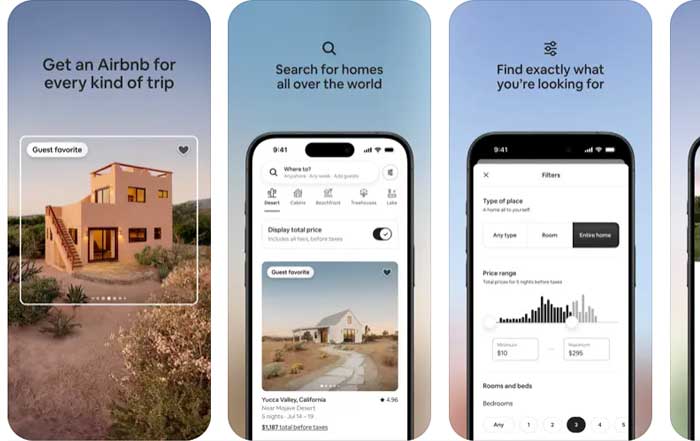
In 2026, Airbnb offers more structured categories for business-ready accommodations, family-friendly properties, and eco-conscious stays, allowing users to filter for high-speed internet, dedicated workspaces, proximity to financial districts, or access to outdoor retreats. This is particularly valuable in diverse markets like France, Italy, Japan, and South Korea, where local housing styles and regulations can vary significantly between cities and regions. Travelers can explore Airbnb's global inventory on the official Airbnb website.
For readers of WorldWeTravel.com, Airbnb supports a more flexible lifestyle, where a family might spend a month in Barcelona, a quarter in Melbourne, or a season in Cape Town, using our family travel insights and work and remote lifestyle guidance to choose destinations that balance education, safety, connectivity, and cultural exposure.
TripIt: Integrated Itinerary Management for Complex Travel
As trips become more multi-stop and multi-purpose-combining conferences in Frankfurt, client meetings in Zurich, and a short retreat in Norway or Finland-keeping track of all reservations has become a genuine operational challenge. TripIt addresses this by automatically consolidating confirmation emails for flights, hotels, rail segments, rental cars, and event registrations into a single, structured itinerary.
For executives and frequent travelers, TripIt's calendar integration ensures that travel plans are synchronized with work schedules across time zones, reducing the risk of missed meetings or overbooked days. The premium tier adds proactive alerts for gate changes, delays, and alternative routing, which is particularly useful in busy hubs such as Heathrow, JFK, Changi, and Incheon. Further details on TripIt's itinerary services are available on the TripIt website.
In the context of WorldWeTravel.com, TripIt serves as the operational backbone that supports the inspirational planning done on our travel planning pages. Travelers might use our curated guidance to design a multi-country itinerary across Europe or Asia, then rely on TripIt to keep all logistics organized, accessible, and shareable with colleagues, family members, or travel managers.
Booking.com: Scale, Reliability, and Corporate-Grade Accommodation
In 2026, Booking.com remains one of the most comprehensive accommodation platforms globally, covering everything from boutique hotels in Amsterdam and Copenhagen to resorts in Thailand and business hotels in Chicago, Toronto, and Shanghai. The platform's scale, combined with its extensive review base, gives both individual and corporate travelers a high level of confidence in availability, quality, and pricing.
Booking.com has also expanded into flights, airport taxis, and local attractions, creating a more end-to-end experience that complements dedicated corporate booking tools. For many small and medium-sized enterprises across Europe, Australia, and South Africa, Booking.com effectively functions as a lightweight travel management platform, particularly when paired with internal expense systems. Travelers can review accommodation and travel options via Booking.com's official portal.
Readers using WorldWeTravel.com to research global hotel options often use Booking.com as an execution layer, moving from our analysis of neighborhoods, price ranges, and safety considerations into concrete booking decisions that align with both budget and experience expectations.
Hopper: Data-Driven Decisions in an Uncertain Pricing Environment
The volatility of travel pricing in recent years has made timing more critical than ever. Hopper leverages large-scale historical and real-time data to predict future prices for flights and accommodations, advising travelers whether to book now or wait. This predictive insight is especially valuable for those planning long-haul trips between regions such as North America and Asia, or Europe and South America, where price swings can be significant.
Features such as "price freeze" and flexible cancellation options help travelers de-risk decisions, which is particularly important for families and businesses that must commit to travel months in advance. Hopper's analytics also help identify seasonality patterns in destinations such as Italy, Japan, Brazil, and Thailand, allowing travelers to balance cost, weather, and crowd levels more effectively. Further information on Hopper's forecasting approach is available on the Hopper website.
At WorldWeTravel.com, these predictive tools complement our coverage of global economic trends, enabling readers to connect macroeconomic conditions-such as currency fluctuations or fuel costs-to practical decisions about when and where to travel.
Roadtrippers: Structuring the Road Journey Experience
Interest in road-based travel has grown consistently across the United States, Canada, Australia, New Zealand, and parts of Europe, as travelers seek greater autonomy, access to nature, and the ability to explore smaller communities. Roadtrippers serves as a specialized planner for these journeys, mapping routes and highlighting points of interest, scenic byways, national parks, and cultural landmarks along the way.
The app allows users to design detailed itineraries that factor in fuel costs, driving times, and overnight stops, which is particularly important in large geographies such as the United States, Canada, and South Africa, where distances can be substantial and services sparse. Roadtrippers also surfaces user-generated recommendations for restaurants, attractions, and unusual stops, enriching the narrative of the journey itself. Travelers can explore route-planning features on the Roadtrippers platform.
For the WorldWeTravel.com audience, Roadtrippers is often paired with our content on retreats and wellness getaways and cultural exploration, enabling travelers to design road-based itineraries that combine natural landscapes, small-town culture, and restorative experiences outside major urban centers.
XE Currency: Financial Clarity Across Borders
In an era of multi-currency digital wallets and cross-border e-commerce, understanding exchange rates remains a core requirement for international travel. XE Currency provides real-time and historical exchange data for over one hundred currencies, supporting travelers moving between the eurozone, United Kingdom, United States, Japan, Singapore, Brazil, and beyond.
The app's offline functionality is particularly valuable when arriving in a new country without immediate data access, allowing travelers to calculate approximate costs for transport, meals, and accommodations. For business travelers, XE's historical charts and rate alerts also help finance teams and independent consultants anticipate cost exposures and invoice accurately across currencies. The latest exchange tools and resources can be reviewed on the XE official site.
On WorldWeTravel.com, financial literacy is increasingly integrated into our destination and planning content, and tools like XE support readers in making informed choices about budgeting, local purchasing power, and the timing of major expenses such as long-haul flights or extended stays.
PackPoint: Operational Discipline for Frequent Travelers
Packing remains one of the most underestimated elements of travel planning, yet it directly affects comfort, productivity, and even health. PackPoint addresses this operational challenge by generating customized packing lists based on destination, length of stay, weather conditions, and planned activities-whether that involves client meetings in Zurich, hiking in Norway, or a family beach holiday in Thailand.
The app's integration with weather forecasts helps travelers in regions with variable climates, such as the United Kingdom, Germany, and Japan, avoid under- or over-packing. For business travelers, PackPoint can be tailored to ensure that essential items such as adapters, presentation materials, and backup devices are consistently included, reducing last-minute stress and unplanned purchases. Travelers can learn more about PackPoint's packing intelligence on the official PackPoint website.
For readers of WorldWeTravel.com, PackPoint operates alongside our library of practical travel tips and checklists, translating general best practices into personalized, trip-specific packing strategies that support both leisure and work-focused journeys.
Rome2Rio: Multimodal Connectivity in a Fragmented Transport World
Travelers in 2026 frequently move beyond major hubs into secondary cities and rural regions, whether visiting clients in Bavaria, vineyards in France, innovation hubs in South Korea, or coastal towns in Spain. Rome2Rio has become a critical tool in this context, mapping multimodal routes that combine flights, trains, buses, ferries, and car services across more than 160 countries.
By displaying time, cost, and connection options in a single interface, Rome2Rio helps travelers understand the true trade-offs between speed and budget. This is particularly valuable in regions with strong rail networks such as Germany, Switzerland, Netherlands, and Japan, where high-speed trains can often compete with short-haul flights in both time and environmental impact. The latest routing capabilities can be explored on the Rome2Rio website.
At WorldWeTravel.com, Rome2Rio's multimodal insights align closely with our growing emphasis on eco-conscious travel, as it allows readers to compare lower-emission options such as rail or coach travel against air travel, and to design itineraries that balance efficiency, cost, and sustainability.
Beyond Convenience: Health, Technology, and Trust in the App Ecosystem
The role of travel apps now extends far beyond convenience and cost. Health, safety, and digital security have become central concerns for travelers in every region, from North America and Europe to Asia and Africa. Reputable sources such as the World Health Organization and the U.S. Centers for Disease Control and Prevention provide essential health and vaccination guidance, while national tourism boards such as VisitBritain (visitbritain.com) and Tourism Australia (australia.com) offer up-to-date information on local regulations, safety, and entry requirements.
As digital identity and payments become more embedded in travel, organizations such as the International Air Transport Association and the World Travel & Tourism Council are working with airlines, hotels, and governments to standardize digital credentials, streamline airport processes, and improve passenger data protection. Travelers, in turn, are increasingly selective about the apps they trust, favoring platforms with transparent privacy policies, strong security practices, and a proven track record of reliability.
WorldWeTravel.com integrates these considerations into its coverage of travel technology trends and health-focused travel guidance, helping readers evaluate not only what an app can do, but also whether it aligns with their expectations for data privacy, digital security, and personal wellbeing.
The Strategic Traveler: Integrating Apps into a Coherent Journey
In 2026, successful travel-whether for a cross-continental board meeting, a family sabbatical, or a personal wellness retreat-depends on integrating multiple apps into a coherent strategy rather than relying on any single tool. A traveler might use Skyscanner or Hopper to determine when and where to fly, Booking.com or Airbnb to secure accommodations, Rome2Rio and Google Maps to plan local and regional movement, XE Currency to manage on-the-ground expenses, TripIt to consolidate all reservations, PackPoint to prepare efficiently, and Roadtrippers to design road-based experiences that connect major hubs with lesser-known destinations.
For businesses, the same stack supports more disciplined and responsible travel programs. Corporate travel managers increasingly encourage employees to use these tools within defined frameworks, integrating them with internal policies, expense systems, and sustainability targets. This approach is particularly relevant for organizations with distributed teams across the United States, United Kingdom, Germany, India, Singapore, and Brazil, where harmonizing travel standards and experiences across regions is a strategic priority. Resources such as the OECD's tourism policy insights and the UN World Tourism Organization provide additional context on how digitalization is reshaping travel at a policy level.
For the global audience of WorldWeTravel.com, the message is clear: the most effective travelers in this new era are those who combine inspiration, information, and technology with intention. By using trusted apps alongside curated insights from our global travel hub and other specialized sections, travelers are better positioned to design journeys that are not only efficient and enjoyable, but also healthier, more sustainable, and more aligned with their personal or organizational goals.
Looking Ahead: Experience, Expertise, and Trust as Core Differentiators
As travel continues to evolve, the sheer number of available apps can feel overwhelming. Yet the ecosystem described above demonstrates that a relatively small set of well-established, high-trust platforms now underpins most successful itineraries, from quick domestic trips in the United States to complex multi-country journeys across Europe, Asia, Africa, and South America.
What distinguishes these leading apps is not only technical sophistication, but also a sustained focus on reliability, user safety, transparent business practices, and continuous improvement. In an environment where travelers entrust apps with their locations, payment details, health information, and personal preferences, experience and expertise translate directly into trust.
WorldWeTravel.com is committed to helping travelers navigate this landscape with clarity and confidence. By combining deep editorial analysis, global destination coverage, and a clear understanding of how these digital tools operate in practice, the platform serves as a bridge between technology and real-world experience. For decision-makers planning corporate travel programs, families designing once-in-a-lifetime journeys, and individuals seeking meaningful cultural immersion or restorative retreats, the right combination of apps-used thoughtfully and strategically-can transform travel from a logistical challenge into a seamless, enriching, and future-ready experience.