

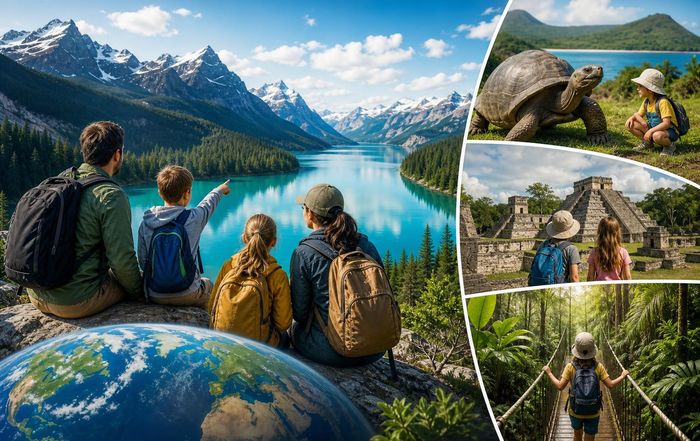
Best Family Destinations for Nature, Learning and Adventure
Family travel is evolving into something richer than a simple holiday; for many households it has become a shared journey of discovery that blends nature, learning and adventure in ways that shape children's worldviews for life. As parents look beyond theme parks and shopping malls, destinations that combine wilderness, culture, science, wellbeing and genuine local connection are moving to the top of family wish lists. For WorldWeTravel, which speaks to globally curious families seeking depth as well as delight, this shift is an opportunity to highlight places where younger travelers can explore with wide-eyed wonder while adults feel inspired, safe and genuinely restored.
In recent years, tourism boards, conservation organizations and education-focused travel providers have invested heavily in family-friendly infrastructure, from interactive museums and wildlife centers to car-free trails and accessible national parks. At the same time, climate awareness and community-based tourism are reshaping what responsible family travel looks like, encouraging visitors to support local economies, respect fragile ecosystems and embrace low-impact transport wherever possible. Within this context, the best family destinations for nature, learning and adventure are those that invite everyone, from toddlers to grandparents, to participate in experiences that are both joyful and meaningful.
North America: Wild Spaces, Science Cities and Coastal Adventures
North America remains one of the most versatile regions for families who want to pair outdoor adventure with world-class learning experiences. The continent's vast protected areas, renowned science museums and well-developed infrastructure make it particularly appealing for multi-generational trips, road journeys and first-time international travel with children.
In the United States, the national parks system overseen by the U.S. National Park Service offers a model for accessible family adventure. Places such as Yellowstone National Park, Yosemite, Acadia and Great Smoky Mountains provide clearly marked trails, junior ranger programs and visitor centers that translate geology, wildlife biology and conservation into engaging stories for young minds. Families can learn more about park-specific programs through the National Park Service and then design itineraries that balance short hikes, ranger talks and unstructured time by lakes or meadows. For travel planning that connects several parks with nearby towns and accommodations, the destination insights at WorldWeTravel Destinations help parents compare regions and seasons.
Beyond the parks, American cities like Washington, D.C., San Francisco and Chicago combine urban culture with hands-on science and nature experiences. The Smithsonian Institution in Washington, D.C., which includes the National Museum of Natural History and the National Air and Space Museum, offers free admission and regularly updated exhibits that make topics from paleontology to planetary exploration accessible to children; detailed information is available at the Smithsonian. In San Francisco, families can explore the California Academy of Sciences, which unites an aquarium, planetarium and natural history museum under a living roof, and then cross the bay to hike in Muir Woods National Monument, where coastal redwoods tower above stroller-friendly trails. Parents who wish to combine city experiences with quieter stays can explore hotel options at WorldWeTravel Hotels, which highlight properties close to parks, waterfronts and transit lines.
Canada offers a different flavor of family adventure, with an emphasis on wilderness, wildlife and outdoor sports supported by thoughtful interpretation. Parks Canada manages national parks such as Banff, Jasper, Cape Breton Highlands and Gros Morne, each with visitor centers that explain glaciation, marine ecosystems or mountain ecology in accessible language. The official Parks Canada site outlines family-focused activities ranging from guided tide-pool walks to dark-sky stargazing in certified reserves. Cities like Vancouver and Toronto complement this natural abundance with attractions such as the Vancouver Aquarium, which participates in marine research and rescue, and the Royal Ontario Museum, where children can explore galleries on dinosaurs, biodiversity and world cultures; more details are available through the Vancouver Aquarium and the Royal Ontario Museum.
For families who want to weave in practical travel advice, from packing strategies for variable climates to navigating border crossings by car, the editorial team at WorldWeTravel Travel and WorldWeTravel Tips curates guidance grounded in real-world experience, emphasizing safety, flexibility and age-appropriate pacing.
Europe: Culture-Rich Landscapes and Outdoor Learning
Europe's compact geography, efficient transport and dense layering of history make it particularly well suited to family trips that combine outdoor exploration with cultural immersion. Many European countries prioritize public access to nature through national parks, long-distance walking and cycling routes, and protected coastlines, while museums and heritage sites increasingly design exhibits with younger visitors in mind.
In the United Kingdom, families can move seamlessly from the green spaces of London to the wild coasts and moorlands of Cornwall, Wales and Scotland. The Natural History Museum in London, renowned for its dinosaur skeletons and Earth galleries, offers free entry and family trails that encourage children to investigate specimens more closely; details are available at the Natural History Museum. Britain's network of National Parks, including the Lake District, Snowdonia (Eryri) and the Cairngorms, provides waymarked routes, visitor centers and, in many cases, ranger-led experiences focused on local wildlife, geology and rural life. The UK National Parks portal helps families choose regions based on interests such as lakeside walks, castle ruins or dark-sky stargazing.
Germany offers a blend of forests, rivers and meticulously curated museums that appeal strongly to school-age children. The Black Forest region invites gentle hiking, cycling and winter sports in landscapes that inspired traditional tales, while cities such as Berlin and Munich host science and technology museums with interactive exhibits. The Deutsches Museum in Munich, one of the world's largest science and technology museums, includes sections designed for children to experiment with physics, energy and communication technologies; more information is provided by the Deutsches Museum. Families interested in eco-conscious travel can learn more about sustainable transport and accommodation options through the German National Tourist Board, which highlights green-certified providers on its Germany Travel site.
The Nordic countries, particularly Norway, Sweden, Finland and Denmark, are widely recognized for their emphasis on outdoor life, or friluftsliv, and for their family-friendly infrastructure. Norway's fjord regions around Bergen and Ålesund, as well as the Lofoten Islands, offer accessible hikes, kayaking and wildlife watching, while urban centers like Oslo provide cultural learning in institutions such as the Norwegian Museum of Science and Technology. Sweden's Skansen in Stockholm, an open-air museum and zoo, allows children to encounter Nordic animals and traditional crafts in a single visit; details can be found via Skansen. For families planning multi-country itineraries across Europe, the practical overviews at WorldWeTravel Global and WorldWeTravel Culture can help balance city stays with time in national parks, coastal regions and rural villages.
In southern Europe, countries such as Italy, Spain and France offer sun-drenched beaches, mountain landscapes and archaeological sites that bring ancient civilizations to life. The Cinque Terre and Dolomites in Italy, the Costa Brava and Pyrenees in Spain, and France's Provence and Alps regions all provide opportunities for gentle hikes, cycling and water sports that can be tailored to different ages and abilities. Families interested in Roman history might explore Pompeii and Herculaneum with licensed guides trained in working with children, while those drawn to art and science can visit institutions such as La Cité des Sciences et de l'Industrie in Paris, which maintains dedicated spaces for young learners; further information is available through Cité des Sciences.
Asia-Pacific: Biodiversity, Cultural Immersion and Soft Adventure
Across Asia and the Pacific, family travel increasingly centers on biodiversity, cultural encounters and outdoor activities that range from gentle to adventurous, supported by improving safety standards and hospitality infrastructure. Many destinations in this vast region are actively promoting sustainable tourism practices, which can help families model responsible behavior for children.
Japan has emerged as a favorite for families who appreciate a blend of high-tech cities, tranquil countryside and strong public safety. Tokyo's interactive science museums, such as the Miraikan - The National Museum of Emerging Science and Innovation, offer immersive exhibits on robotics, space exploration and environmental science; more details can be found at Miraikan. Outside the cities, regions like Hakone, Nikko and the Japanese Alps provide hot springs, forest walks and traditional inns where families can experience Japanese hospitality and cuisine. Japan's extensive rail network, including the Shinkansen bullet trains, simplifies travel between regions, and the Japan National Tourism Organization provides multilingual resources for family itineraries on its official Japan Travel site.
In Southeast Asia, Thailand and Malaysia stand out for their combination of beaches, rainforests and cultural diversity. Northern Thailand around Chiang Mai offers ethical elephant sanctuaries, hill-country trekking and cooking classes that introduce children to local ingredients and traditions; families are encouraged to verify that sanctuaries follow welfare guidelines, with organizations such as World Animal Protection providing criteria and case studies on their World Animal Protection portal. Southern Thailand's islands and coasts, along with Malaysia's Langkawi and Borneo, invite snorkeling, mangrove tours and visits to conservation centers that protect sea turtles and orangutans. The Borneo Orangutan Survival Foundation and similar groups share updates on rehabilitation efforts through sites such as BOS Foundation.
Australia and New Zealand continue to attract families with their emphasis on outdoor life, wildlife and adventure sports that can be scaled to different comfort levels. In Australia, the Great Barrier Reef, Daintree Rainforest and national parks near Sydney and Melbourne provide opportunities to learn about marine ecology, ancient rainforests and Aboriginal culture, with interpretive centers and guided tours that highlight both scientific and Indigenous perspectives. The Great Barrier Reef Marine Park Authority offers educational materials and updates on reef health at the GBRMPA site, which can help families choose operators committed to reef-friendly practices. New Zealand's Department of Conservation manages an extensive network of tracks, campsites and visitor centers that facilitate family-friendly hiking and wildlife watching; detailed information is available through the New Zealand Department of Conservation.
For families balancing school calendars and long-haul flights, the planning resources at WorldWeTravel Family and WorldWeTravel Retreat offer ideas for combining adventure with rest, such as pairing a week of outdoor activities with a few days at a wellness-oriented lodge that caters to both adults and children.
Africa and the Middle East: Wildlife, Desert Landscapes and Living History
Africa and parts of the Middle East provide some of the planet's most memorable nature and learning experiences, particularly for families interested in wildlife, astronomy, archaeology and cross-cultural understanding. While distances can be significant and some regions require careful security assessment, many countries have invested in family-friendly lodges, guided experiences and conservation education.
In Southern and East Africa, countries such as South Africa, Kenya, Tanzania and Namibia are prominent for safaris and wildlife observation. South Africa's Kruger National Park and surrounding private reserves, for example, feature lodges that welcome children with junior ranger programs, bushcraft lessons and tailored game drives that focus on animal behavior and conservation rather than simply ticking off sightings. The official South African National Parks site outlines family facilities and safety guidelines. Kenya's Maasai Mara and Tanzania's Serengeti offer seasonal spectacles such as the great migration, while community conservancies and cultural visits provide opportunities to learn about Maasai and other local traditions; the Kenya Wildlife Service and Tanzania National Parks Authority share updates and conservation initiatives via KWS and TANAPA.
In North Africa, Morocco combines accessible desert landscapes, mountains and historic cities. Families can explore the Atlas Mountains on guided hikes or mule treks, camp under the stars near the fringes of the Sahara and wander through the medinas of Marrakech and Fes, where artisanship and architecture provide a living classroom in design and history. The Moroccan National Tourist Office provides overviews and practical advice on its Visit Morocco platform. For those interested in ancient civilizations, Egypt offers the pyramids of Giza, the temples of Luxor and the collections of the Grand Egyptian Museum, which has been opening in phases with a focus on modern exhibition design and conservation; updates can be followed through the Grand Egyptian Museum.
The Middle East also presents opportunities for nature-focused family travel in countries such as Jordan and the United Arab Emirates. Jordan's Wadi Rum desert and Dana Biosphere Reserve feature guided hikes, jeep tours and stargazing in landscapes that feel both otherworldly and deeply rooted in human history, while Petra offers an iconic archaeological site that fascinates children and adults alike; the Jordan Tourism Board shares visitor information on Visit Jordan. In the UAE, cities like Dubai and Abu Dhabi have invested in cultural and scientific institutions such as the Louvre Abu Dhabi and the Mohammed Bin Rashid Space Centre, which runs educational outreach programs about space exploration; more details are available via Louvre Abu Dhabi and MBRSC.
For families considering these regions, it is prudent to consult up-to-date travel advisories from government sources such as the U.S. Department of State or the UK Foreign, Commonwealth & Development Office, and then use the planning tools at WorldWeTravel Travel to integrate safety, seasonality and health considerations into a balanced itinerary.
Latin America: Rainforests, Volcanoes and Community-Based Learning
Latin America offers some of the most immersive nature and learning experiences available to families, particularly for those interested in biodiversity, volcanology, marine life and cultural exchange. Many destinations in this region are at the forefront of community-based and eco-conscious tourism, which can help families ensure that their spending supports local livelihoods and conservation.
Costa Rica has become a leading example of how a small country can prioritize both conservation and family tourism. National parks such as Manuel Antonio, Arenal Volcano, Monteverde Cloud Forest and Tortuguero provide guided walks, canopy tours and wildlife observation opportunities that introduce children to sloths, monkeys, toucans and complex forest ecosystems. The Costa Rican Tourism Board highlights sustainable accommodations and operators on its Visit Costa Rica site, while organizations such as the Organization for Tropical Studies share research and educational programs that deepen understanding of tropical ecology through OTS. Families can complement outdoor activities with visits to chocolate farms, coffee plantations and community projects that explain agricultural practices and local culture.
Brazil, with its vast Amazon basin, Atlantic rainforest and coastal ecosystems, offers powerful encounters with nature, though travel logistics and safety considerations require more careful planning. The Pantanal, one of the world's largest wetlands, is increasingly recognized as a family-friendly wildlife destination, with lodges offering boat safaris and walks that focus on birdlife, capybaras and, in some areas, the possibility of spotting jaguars from a respectful distance. The Brazilian Ministry of Tourism provides overviews and regional information at Visit Brasil. In the Amazon, responsible operators emphasize low-impact river travel, community engagement and education about deforestation and climate change, with some collaborating with research institutions and NGOs to monitor biodiversity.
In the Andean region, countries such as Peru and Ecuador combine mountain landscapes, Indigenous cultures and rich biodiversity. Peru's Sacred Valley and the route to Machu Picchu can be adapted for families by focusing on shorter hikes, train journeys and village visits that highlight farming, weaving and local markets, rather than attempting the full Inca Trail with younger children. The Peru Travel portal maintained by PROMPERÚ at Peru Travel offers guidance on age-appropriate activities and altitude considerations. Ecuador's Galápagos Islands, overseen by the Galápagos National Park Directorate, provide unparalleled opportunities to learn about evolution, marine ecology and conservation, although strict visitor regulations and higher costs mean that families need to plan well in advance and choose licensed operators; more information is available through the Galápagos National Park.
For those interested in combining Latin American adventures with remote work or extended stays, WorldWeTravel Work and WorldWeTravel Economy offer perspectives on local cost of living, connectivity and the growing ecosystem of family-friendly co-living and learning spaces.
Health, Sustainability and the Future of Family Travel
As families plan nature- and learning-focused trips in 2026 and beyond, health, sustainability and digital technology increasingly shape both the choices they make and the experiences they encounter on the ground. Global health organizations such as the World Health Organization offer evolving guidance on travel-related health considerations, including vaccinations, vector-borne diseases and mental wellbeing on the WHO Travel and Health pages. Many parents now integrate pre-trip consultations with pediatricians and travel clinics into their planning, particularly when visiting high-altitude regions, tropical areas or destinations that require specific immunizations.
Sustainability has moved from a niche concern to a central pillar of responsible family travel. Families are more frequently choosing destinations and providers that demonstrate measurable commitments to reducing emissions, protecting biodiversity and supporting local communities. Certification schemes such as those recognized by the Global Sustainable Tourism Council provide frameworks and standards that help travelers identify credible eco-conscious options, with detailed criteria available through the GSTC. Platforms like WorldWeTravel Eco highlight lodges, tours and regions that align with these principles, encouraging practices such as traveling by train where feasible, minimizing single-use plastics and participating in citizen science projects.
Digital technology, meanwhile, is enabling more personalized and educational experiences. Museums, parks and heritage sites increasingly offer augmented reality apps, interactive maps and audio guides that allow children to visualize historical events or identify plants and animals in real time. Organizations such as UNESCO maintain digital resources about World Heritage Sites on UNESCO World Heritage, which families can explore before or during visits to deepen understanding of cultural and natural significance. At the same time, many parents are consciously balancing screen time with offline engagement, using digital tools primarily as gateways to richer in-person experiences rather than as distractions.
Within this evolving landscape, WorldWeTravel positions itself as a trusted companion for families seeking destinations where nature, learning and adventure intersect. Through its sections on health and wellbeing, technology in travel and inspirational retreats, the platform encourages travelers to see each journey not only as a break from routine but as a chance to strengthen family bonds, nurture curiosity and contribute positively to the places they visit.
Ultimately, the best family destinations are not defined solely by famous landmarks or adrenaline-filled activities, but by the quality of shared experiences and the values they reinforce. Whether a family is watching geysers erupt in a U.S. national park, cycling through Dutch polder landscapes, snorkeling above a coral reef, tracing ancient petroglyphs in a desert canyon or listening to stories from community guides in a rainforest village, the most lasting memories often come from moments when nature, culture and learning converge. By choosing destinations thoughtfully, traveling with respect and curiosity, and drawing on reliable resources such as WorldWeTravel and reputable international organizations, families can craft journeys that are as enriching as they are exhilarating, leaving both children and adults more connected to the wider world they share.