

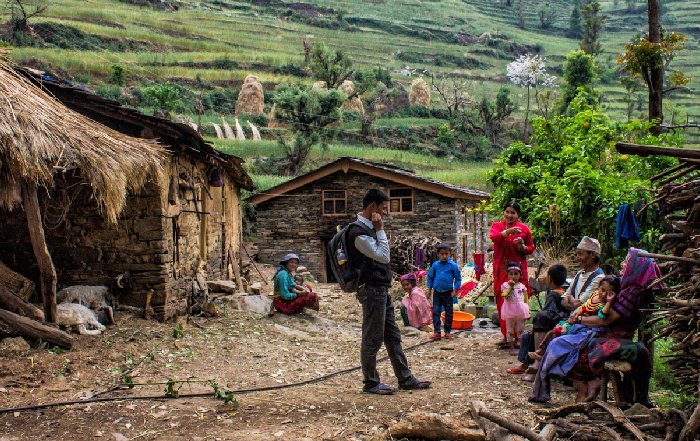
Off-the-Grid Destinations: How Remote Travel Became the New Global Luxury
The Rise of Remote Travel in a Hyper-Connected World
As global connectivity reaches almost ubiquitous levels and business leaders work seamlessly across time zones, an apparently paradoxical trend has taken firm hold: the deliberate pursuit of places where there is almost no connection at all. Off-the-grid destinations, once the domain of hardcore adventurers and survival enthusiasts, have evolved into a sophisticated, highly curated segment of the global travel economy, attracting executives, entrepreneurs, families and digital professionals who are seeking not only escape, but also clarity, creativity and renewal.
For a readership that turns to WorldWeTravel.com for informed guidance on destinations, travel strategy and lifestyle decisions, off-the-grid travel has become less about "disappearing" and more about recalibrating. In an era when the World Health Organization highlights stress and burnout as major global health issues, and when productivity research from institutions such as Harvard Business Review emphasizes the cognitive benefits of deep rest and uninterrupted focus, the decision to step away from always-on culture is increasingly understood as an investment in long-term performance and wellbeing rather than an indulgence. These journeys are reshaping how individuals and organizations think about work, family life and leadership, and they are redefining what it means to travel well in a world where almost everywhere is reachable, but very few places still feel truly remote.
What "Off-the-Grid" Really Means in 2026
The term "off-the-grid" has been used loosely for years, but in 2026 it has acquired more precise meaning in the travel and hospitality sectors. Traditionally referring to locations not connected to public utilities, it now also encapsulates destinations that are physically remote, digitally quiet and environmentally self-reliant, often powered by renewable energy and designed for minimal ecological footprint. From solar-powered eco-lodges in the Nordic Arctic to regenerative farms in rural South America, off-the-grid destinations combine isolation with intentional design, enabling visitors to disconnect from digital overload while reconnecting with local culture, nature and themselves.
Travelers exploring remote experiences through WorldWeTravel.com increasingly seek clarity on the level of remoteness and self-sufficiency they can expect. Some want complete digital detox, with no cellular reception and limited electricity, while others prefer a soft disconnection in which connectivity is available only in designated areas or during limited hours. Organizations such as Global Sustainable Tourism Council have begun to influence standards for sustainable infrastructure, encouraging operators to integrate renewable power, water stewardship and waste reduction into their business models. At the same time, technology companies like Starlink have blurred the boundaries of remoteness by extending satellite internet into previously unreachable regions, forcing travelers and hosts to make deliberate choices about when and how connectivity should be available.
This evolving definition matters for business leaders and families alike. For executives planning strategy retreats or innovation offsites, the right balance between isolation and minimal connectivity can determine the success of a program. For families seeking meaningful time together, the degree of digital separation can shape how children and teenagers experience nature, culture and shared memory. In response, curated platforms such as the WorldWeTravel Off-the-Grid Collection on the site's destinations hub help travelers understand precisely what kind of disconnection they are choosing, and why it matters.
Global Hotspots: Remote, Resilient and Surprisingly Accessible
Although off-the-grid travel often conjures images of rugged wilderness in far-flung corners of the globe, the reality in 2026 is more nuanced. Remote destinations now exist on a spectrum that spans continents and climates, from the high Arctic to subtropical islands and high-altitude deserts. For globally mobile readers across the United States, Europe, Asia-Pacific and beyond, these locations are not only aspirational but increasingly accessible through thoughtful itinerary design and improved transport links.
In the Nordic region, for instance, remote cabins in Norway, Sweden and Finland have evolved from simple huts into architect-designed retreats, many of them powered by geothermal or solar energy and built with locally sourced timber. Visitors can explore the Scandinavian concept of "friluftsliv," or open-air life, which emphasizes time in nature as a foundation for health and happiness. Organizations like Visit Norway and Visit Sweden provide detailed guidance for travelers seeking remote hiking, skiing and coastal archipelagos, while WorldWeTravel.com offers complementary insights on how to integrate these experiences into broader global travel strategies that balance business commitments with restorative time outdoors.
Across the Southern Hemisphere, off-the-grid destinations in New Zealand and Australia have gained prominence for their combination of wilderness and world-class hospitality. In New Zealand, remote lodges on the South Island's West Coast and in Fiordland National Park offer immersive experiences that align closely with the country's "Tiaki" promise of guardianship for the land, as promoted by Tourism New Zealand. In Australia, off-grid eco-camps in the Northern Territory and Western Australia provide access to Indigenous cultural experiences, dark-sky stargazing and conservation programs that support fragile ecosystems. Travelers can deepen their understanding of these landscapes through resources from Parks Australia, while using WorldWeTravel.com's eco-travel section to identify operators whose sustainability credentials match their expectations.
Other regions have emerged as compelling alternatives for travelers seeking remoteness with cultural depth. In Japan, lesser-known rural prefectures such as Shimane and Tottori offer off-the-beaten-path ryokan stays and forest retreats, complementing the more familiar urban centers of Tokyo and Osaka. In South America, remote estancias in Patagonia and regenerative projects in Brazil's Atlantic Forest provide opportunities to engage with conservation science and community-based tourism. Africa continues to lead in high-end, low-impact safaris, with countries such as South Africa, Kenya and Botswana supporting lodges that integrate wildlife protection, local employment and off-grid infrastructure. Organizations like UNESCO highlight many of these regions as World Heritage Sites, underscoring their ecological and cultural significance and reinforcing the responsibility of travelers to engage respectfully and sustainably.
The Business Case for Going Off-the-Grid
For a business-oriented audience, the most compelling argument for off-the-grid travel may not be the scenery, but the measurable impact on performance, innovation and leadership. As hybrid work and distributed teams have become standard across industries, the boundaries between professional and personal time have blurred, making intentional disconnection a strategic asset rather than a luxury. Research published by McKinsey & Company and Deloitte has repeatedly shown that leaders who carve out uninterrupted time for strategic thinking, reflection and recovery are more effective in navigating volatility and driving long-term value creation.
Off-the-grid destinations provide a unique environment for this kind of deep work and deep rest. Strategy retreats held at remote lodges, wilderness camps or island eco-resorts remove the constant interruptions of email, messaging platforms and back-to-back virtual meetings, enabling leadership teams to focus on scenario planning, innovation and culture. Facilitated sessions that blend outdoor activity with structured dialogue can unlock creativity in ways that traditional hotel conference rooms rarely achieve. At the same time, the physical challenge of hiking, kayaking or simply navigating a landscape far from urban centers can foster resilience, humility and genuine collaboration among senior executives.
On WorldWeTravel.com's business travel section, decision-makers can explore case studies of companies that have integrated off-the-grid retreats into their annual planning cycles, often reporting improved alignment, clearer priorities and stronger cross-functional relationships. These experiences are increasingly framed as part of broader human capital strategies, aligned with guidance from organizations such as the World Economic Forum, which has emphasized wellbeing, resilience and lifelong learning as core elements of the future of work. For firms competing globally from hubs in the United States, United Kingdom, Germany, Singapore or South Korea, the ability to offer high-potential leaders transformative, off-the-grid experiences has become a differentiator in both retention and executive development.
Family and Multigenerational Travel in Remote Places
Off-the-grid travel is not limited to executives and entrepreneurs; it has also become a powerful way for families to reconnect across generations. As children and teenagers in North America, Europe and Asia grow up with unprecedented access to devices and social media, many parents and grandparents are actively seeking environments where shared experience replaces screen time and where curiosity about the natural world can be nurtured without constant digital distraction.
Remote farm stays in Italy, Spain or France, for example, allow families to participate in seasonal harvests, learn traditional cooking techniques and understand local food systems in a hands-on way. Mountain refuges in Switzerland or Austria provide multi-day hiking experiences that require cooperation, planning and resilience, fostering a sense of joint accomplishment that is difficult to replicate in urban settings. In Canada and the United States, wilderness lodges in national and provincial parks offer guided programs that introduce children to wildlife tracking, astronomy and basic survival skills, often drawing on educational frameworks from organizations like the National Park Service and Parks Canada.
For readers seeking to plan such experiences, WorldWeTravel.com's family travel hub provides tailored guidance on age-appropriate itineraries, safety considerations and the practical realities of taking children off the grid, from managing expectations around connectivity to preparing for basic outdoor challenges. Health-related concerns, including vaccinations, emergency planning and mental wellbeing, can be explored in parallel through the platform's dedicated health and travel section, which aligns its recommendations with evidence-based guidance from bodies such as the Centers for Disease Control and Prevention and the Mayo Clinic. In this way, families can design journeys that are both inspiring and responsibly managed, balancing adventure with duty of care.
Technology, Remote Work and the Paradox of Disconnection
The growth of off-the-grid travel in 2026 cannot be understood without acknowledging the simultaneous rise of location-independent work and digital nomadism. Professionals in fields ranging from software engineering and design to consulting and media have embraced the flexibility offered by remote work, often choosing to live and work in different countries throughout the year. Yet many of these same individuals now actively seek intervals of complete disconnection, recognizing that creativity and focus can be eroded by constant online presence.
This paradox has given rise to a new category of travel experiences that sit at the intersection of technology and intentional disconnection. Some remote retreats offer structured "digital sabbaticals," where participants hand over devices for a defined period, combining mindfulness practices, coaching and outdoor activity. Others incorporate minimal, time-boxed connectivity windows, allowing essential communication with clients or teams while preserving long stretches of offline time. Organizations like Mindful.org and Greater Good Science Center have documented the psychological benefits of such practices, highlighting reductions in anxiety, improvements in sleep and enhanced capacity for sustained attention.
For professionals designing their own balance between work and off-the-grid travel, WorldWeTravel.com's work and travel insights and technology trends section offer practical frameworks. These include guidance on managing stakeholder expectations, setting clear out-of-office boundaries, and using tools such as asynchronous communication and task-based workflows to reduce the need for constant real-time availability. By approaching off-the-grid time as a planned, strategic element of their work year, rather than an ad-hoc escape, professionals can align personal wellbeing with the performance expectations of globally distributed teams.
Health, Burnout and the Science of Stepping Away
The health implications of off-the-grid travel extend beyond relaxation and scenic enjoyment. In recent years, medical and psychological research has increasingly supported the idea that periods of deep rest, exposure to nature and removal from digital stimuli can have measurable benefits for both physical and mental health. Studies summarized by institutions such as Stanford Medicine and Cleveland Clinic have linked time in nature to reduced cortisol levels, lower blood pressure, improved mood and enhanced immune function. In parallel, research on burnout, including work highlighted by The Lancet, has underscored the cumulative impact of chronic stress and overwork on cardiovascular health, sleep quality and cognitive performance.
Off-the-grid environments can amplify these benefits by reducing the constant micro-stressors associated with urban life and digital overload. The absence of notifications, traffic noise and artificial lighting encourages deeper sleep, while physical activity in natural settings supports cardiovascular fitness and metabolic health. Many remote retreats now integrate evidence-based wellness programs that include breathwork, yoga, cold-water immersion and nutrition tailored to local, seasonal produce. These programs are often designed in consultation with medical advisors or aligned with frameworks from organizations like the Global Wellness Institute, ensuring that they go beyond trend-driven offerings and deliver genuine therapeutic value.
Readers of WorldWeTravel.com exploring the retreat and wellness section can identify destinations that place health outcomes at the center of their proposition, whether through medically supervised programs, partnerships with research institutions or transparent reporting on guest wellbeing metrics. For leaders concerned about the health of their teams, incorporating such experiences into corporate wellbeing strategies can be a powerful signal that mental health and sustainable performance are valued, not just productivity metrics. At the same time, the platform's broader travel guidance helps ensure that logistical details, from insurance to emergency evacuation planning in remote regions, are carefully considered.
Sustainability, Culture and the Ethics of Remote Travel
As interest in off-the-grid destinations grows, so too does the responsibility to ensure that these fragile environments and communities are not harmed by increased visitation. Remote ecosystems, from Arctic tundra and coral reefs to high-altitude forests and desert oases, are often highly sensitive to climate change, pollution and overuse. Indigenous and rural communities may face complex trade-offs between economic opportunity and cultural integrity. Organizations such as the United Nations Environment Programme and IUCN have repeatedly emphasized that tourism, if poorly managed, can accelerate biodiversity loss, strain water resources and disrupt traditional ways of life.
In 2026, the most credible off-the-grid operators are those that integrate sustainability and cultural respect into every aspect of their business model. This may include renewable energy systems, closed-loop water and waste management, strict visitor caps, locally sourced materials and food, and long-term partnerships with community organizations. Travelers can evaluate these claims by looking for independent certifications and by consulting resources from bodies such as Rainforest Alliance and B Corp, which provide frameworks for assessing environmental and social performance. At the same time, cultural sensitivity training and pre-trip briefings help visitors understand local customs, language basics and respectful behavior, reducing the risk of unintentional harm.
For the WorldWeTravel.com community, the eco and sustainability hub and culture and destinations section offer curated insights into how to engage responsibly with off-the-grid locations, whether in the highlands of Southeast Asia, the islands of the Pacific, the mountains of Europe or the rural heartlands of North America. Travelers are encouraged to view their spending as a form of impact investment, supporting businesses and initiatives that align with global goals such as the UN Sustainable Development Goals, particularly those related to climate action, life on land, life below water and decent work for local communities. In doing so, off-the-grid travel becomes not just a personal or corporate benefit, but also a contribution to the resilience of some of the planet's most vulnerable places.
Practical Considerations: Risk, Cost and Long-Term Value
While the appeal of remote destinations is clear, a business-minded audience must also consider the practicalities: risk management, cost structures and long-term value. Off-the-grid travel typically involves higher logistical complexity, from multi-leg journeys and specialized equipment to permits and insurance. It may also entail higher per-day costs than conventional city breaks or resort stays, reflecting limited capacity, specialized staff and sustainable infrastructure investments. However, when evaluated against outcomes such as reduced burnout, enhanced creativity, stronger family bonds and improved team cohesion, many travelers and organizations now view these journeys as high-return investments rather than discretionary expenses.
Risk management is central to this assessment. Travelers should evaluate the medical infrastructure of remote regions, the safety protocols of operators, and contingency plans for severe weather, political instability or health emergencies. Resources from organizations like the International SOS and government travel advisories provided by entities such as Gov.uk and Travel.State.Gov can inform these decisions. On WorldWeTravel.com, the travel tips section and global risk and economy insights help readers contextualize these factors, particularly in regions where infrastructure or regulatory frameworks may differ significantly from those in the United States, United Kingdom, Germany, Canada, Singapore or Japan.
From a financial perspective, off-the-grid travel can be integrated into broader lifestyle and career planning. Executives may align retreats with sabbaticals or transitions between roles, while families might link remote journeys to educational milestones or gap years. As more organizations incorporate flexible work policies and wellbeing budgets, there is scope for co-funded experiences that benefit both individuals and employers. Over time, the cumulative impact of these breaks-on health, decision quality, creativity and relationships-can justify the upfront costs in ways that are increasingly recognized by progressive companies and forward-thinking individuals.
Off-the-Grid as a Choice for an Independent / Connected Future
Now off-the-grid destinations stand at the intersection of multiple global trends: the rise of remote and hybrid work, growing awareness of mental health, accelerating climate risk and a renewed appreciation for authentic cultural encounter. In this context, choosing to spend time in remote, low-connectivity environments is less an act of escape and more a strategic recalibration of how to live, work and lead in a world that will only become more complex and interconnected.
For the international audience that relies on WorldWeTravel.com-from business leaders in London, New York and Singapore to families in Sydney, Toronto and Berlin, and remote professionals navigating lives across continents-off-the-grid travel offers a way to align ambition with sustainability, performance with wellbeing and global reach with local depth. By leveraging the platform's integrated resources across destinations, travel strategy, business and work and health and retreat planning, readers can design journeys that are not only memorable but also meaningful, rooted in expertise, guided by trust and attuned to the needs of a rapidly changing world.
In the years ahead, the most successful travelers and organizations may be those who understand that true competitive advantage lies not in being always connected, but in knowing when-and where-to disconnect with purpose. Off-the-grid destinations, thoughtfully chosen and responsibly engaged, offer precisely that opportunity.