

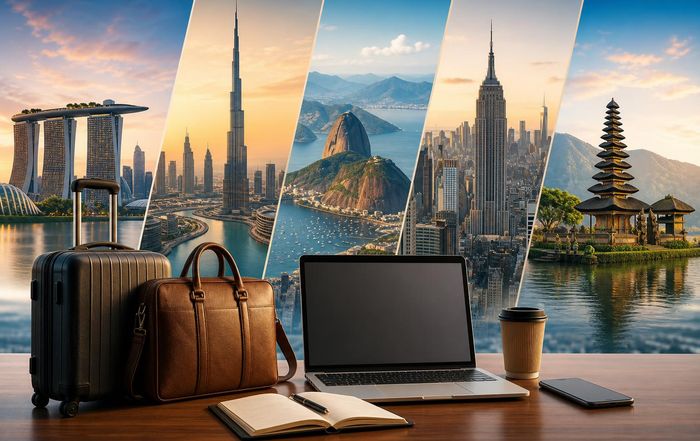
Best Business Travel Destinations for Work and Leisure
Business travel has always been about more than boardrooms and briefings. As digital connectivity, flexible work policies and a renewed focus on well-being reshape professional life, a growing number of executives, entrepreneurs and remote professionals are seeking destinations that combine commercial opportunity with memorable cultural and leisure experiences. For WorldWeTravel, which curates journeys for globally minded travelers, the question is no longer simply where the deals are done, but where productive work, restorative downtime and meaningful connection can coexist.
In this landscape, the best business travel destinations are not just financial hubs; they are cities and regions that offer strong infrastructure, diverse accommodation, rich cultural scenes, accessible nature, and a commitment to sustainability and liveability. Drawing on recent data from international travel bodies, economic forums and tourism organizations, this article explores leading global cities where work and leisure blend seamlessly, while also highlighting how travelers can design more intentional, rewarding itineraries.
The Rise of "Bleisure" and the New Business Traveler
Research from organizations such as the Global Business Travel Association and McKinsey & Company indicates that while traditional corporate travel has shifted since the pandemic era, trips that combine business and leisure-often called "bleisure"-have grown steadily. Many professionals now extend stays to explore local neighborhoods, visit family-friendly attractions, or work remotely for a few extra days. According to the World Travel & Tourism Council (WTTC), this blending of purposes is reshaping how destinations invest in infrastructure and how companies structure travel policies, particularly as hybrid work becomes normal in many industries.
Modern business travelers place high value on reliable connectivity, flexible accommodation, wellness amenities and authentic local experiences. They are also more conscious of sustainability, often looking for destinations and hotels with credible environmental credentials, such as Green Key or LEED certifications, or alignment with the UN World Tourism Organization's guidelines on responsible travel. Many of these preferences are reflected in the itineraries curated on WorldWeTravel, where business itineraries increasingly include cultural excursions, wellness retreats and eco-friendly options alongside meetings and conferences.
North America: Innovation Hubs with Lifestyle Appeal
New York City and the United States' Coastal Powerhouses
New York City remains one of the world's premier business travel destinations, driven by its role in finance, media, technology and the arts. With three major airports, extensive public transit and a dense concentration of hotels and serviced apartments, the city caters easily to tight meeting schedules while offering an almost endless variety of leisure options, from Broadway and the Metropolitan Museum of Art (Met Museum) to waterfront walks along the Hudson. Neighborhoods such as Brooklyn's Dumbo or Manhattan's Flatiron District also appeal to the startup and creative communities, where co-working spaces and boutique hotels allow professionals to stay connected and productive.
Other United States coastal hubs, including San Francisco and Los Angeles, blend business and leisure in distinct ways. San Francisco's proximity to Silicon Valley makes it a magnet for technology and venture capital, while its hills, waterfront and nearby wine regions provide restorative escapes. Los Angeles, with its expanding tech and media sectors and its iconic beaches, offers a different rhythm, where business lunches may segue into sunset meetings on the Pacific. Travelers looking to optimize time across multiple American cities can consult WorldWeTravel's destinations guide at worldwetravel.com/destinations.html to align flights, hotels and local experiences efficiently.
Toronto and Vancouver: Canada's Balanced Urban Gateways
In Canada, Toronto and Vancouver consistently rank high in global liveability and quality-of-life indexes published by organizations such as The Economist Intelligence Unit and Mercer. Toronto's financial district, thriving technology sector and multicultural neighborhoods make it a strong base for meetings across North America and Europe. Its extensive PATH underground network, reliable public transit and modern convention centers support large-scale events, while neighborhoods like Queen West and the Distillery District offer galleries, cafes and restaurants ideal for informal networking.
Vancouver, framed by mountains and ocean, is a favored destination for professionals seeking outdoor recreation alongside meetings. It has become a significant hub for film, gaming and clean technology, supported by the Vancouver Convention Centre (Vancouver Convention Centre) and a growing number of boutique and wellness-focused hotels. Business travelers can easily add a weekend of hiking, skiing or sailing, demonstrating how nature-rich cities can serve as both productive and restorative environments. For visitors planning multi-city North American itineraries, WorldWeTravel's travel planning section at worldwetravel.com/travel.html offers guidance on connecting flights, rail options and regional stays.
Europe: Culture, Connectivity and Corporate Clout
London: A Global Capital for Finance, Culture and Ideas
London remains one of the world's most influential business destinations, with deep strengths in finance, legal services, technology and creative industries. Its position across time zones makes it a strategic base for meetings with both American and Asian partners, while Heathrow Airport and Gatwick Airport provide extensive international connections. The city's hotel landscape has diversified significantly, with luxury brands, design-driven boutique properties and extended-stay residences all competing for business travelers.
Leisure opportunities are nearly limitless, from the British Museum and Tate Modern (Tate Modern) to West End theatre, historic pubs and riverside walks along the Thames. Areas like Shoreditch, King's Cross and Southbank have become hotspots for co-working spaces and tech firms, reflecting London's ongoing evolution as a digital innovation hub. For those combining professional commitments with family travel, London's museums, parks and free cultural institutions make it especially attractive; WorldWeTravel's family travel resources at worldwetravel.com/family.html provide suggestions for balancing meetings with child-friendly activities.
Berlin, Frankfurt and Munich: Germany's Triad of Business Strength
In Germany, Berlin, Frankfurt and Munich form a powerful trio for business travelers. Berlin has transformed into a leading startup and creative hub, supported by relatively affordable costs compared with some Western European capitals and a vibrant arts and nightlife scene. Co-working spaces, tech incubators and design-focused hotels are widespread, and the city's history and cultural institutions, such as the Berlin State Museums (Staatliche Museen zu Berlin), add depth to any visit.
Frankfurt, home to the European Central Bank and one of Europe's busiest airports, is a central node for finance and trade fairs. Its skyline and modern infrastructure make it a natural choice for conferences and high-level meetings, while the nearby Rhine Valley offers tranquil landscapes and historic towns for weekend excursions. Munich, known for engineering, automotive and technology industries, combines a strong corporate presence with proximity to the Alps, lakes and traditional Bavarian culture. This combination of efficient transport, corporate density and leisure potential makes Germany particularly well suited to the modern "work plus exploration" mindset that WorldWeTravel sees among its global audience.
Paris, Amsterdam and Zurich: Art, Commerce and Quality of Life
Paris continues to be a premier destination for fashion, luxury, technology and international diplomacy. The city's modern business districts, such as La Défense, coexist with historic neighborhoods, world-class museums like the Louvre (Louvre Museum), and renowned cuisine. High-speed rail links connect Paris to London, Brussels, Amsterdam and other European centers, encouraging multi-city itineraries that blend business meetings with cultural exploration.
Amsterdam has emerged as a major European tech and logistics hub, favored for its English-friendly environment, compact size and high quality of life. Its network of canals, cycling infrastructure and historic architecture creates a relaxed backdrop for work trips, while Schiphol Airport offers strong global connectivity. Zurich, often featured in global rankings for safety and liveability, provides a stable base for finance, insurance and technology professionals. The city's lakeside setting, nearby mountains and efficient public transport enable business travelers to incorporate outdoor activities and wellness into short stays, aligning with the growing emphasis on mental and physical health in corporate travel policies. Travelers seeking more inspiration on European culture and lifestyle can explore WorldWeTravel's culture hub at worldwetravel.com/culture.html.
Asia-Pacific: Dynamic Economies and World-Class Hospitality
Singapore and Hong Kong: Gateways to Asia
Singapore remains one of Asia's premier business destinations, known for its political stability, strong rule of law and strategic location between East and West. Its world-class airport, efficient public transport and multilingual population make it especially convenient for international visitors. The city-state has also invested heavily in green spaces, including Gardens by the Bay (Gardens by the Bay), and promotes itself as a sustainable urban model, aligning with the priorities of environmentally conscious travelers. Hotels and meeting venues often integrate wellness facilities and nature-inspired design, allowing professionals to decompress between intense schedules.
Hong Kong continues to serve as a major financial and logistics hub, with a dense network of banks, professional services firms and regional headquarters. Its iconic skyline, Victoria Harbour and dynamic dining scene offer compelling leisure experiences, while hiking trails on nearby islands and country parks provide respite from the urban core. Although geopolitical developments and evolving regulations have introduced new considerations for some organizations, many global companies still maintain significant operations there, and travelers benefit from the city's exceptional airport and transport infrastructure. Those planning multi-stop itineraries across Asia can find practical planning advice in WorldWeTravel's Asia-focused destination pages within worldwetravel.com/global.html.
Tokyo, Seoul and Bangkok: Technology, Culture and Hospitality
In Japan, Tokyo is a leading destination for technology, manufacturing, finance and creative industries. The city combines cutting-edge infrastructure with deep cultural traditions, from high-speed rail and advanced robotics to centuries-old temples and artisan districts. Neighborhoods such as Shibuya, Marunouchi and Roppongi host corporate headquarters, co-working spaces and luxury hotels, while areas like Asakusa and Yanaka offer glimpses of historical Tokyo. The city's reputation for safety, cleanliness and punctuality, supported by data from bodies such as the Japan National Tourism Organization (JNTO), makes it appealing for solo travelers and families accompanying business professionals.
Seoul has become a powerhouse in technology, entertainment and design, home to major conglomerates and a thriving startup ecosystem. Districts such as Gangnam and Jongno blend modern office towers with traditional palaces, markets and contemporary galleries. The Korean Wave, or Hallyu, has amplified global interest in Korean culture, leading many business travelers to extend trips to experience K-pop performances, film locations and culinary tours. Bangkok, meanwhile, serves as a regional center for Southeast Asia, with strong connections in trade, tourism and healthcare. Its renowned hospitality industry, diverse accommodation options and rich street-life culture make it a favorite for conference attendees and digital nomads alike. For those interested in wellness-oriented extensions, WorldWeTravel's retreat section at worldwetravel.com/retreat.html highlights spa, meditation and health-focused stays across Asia.
Sydney, Melbourne and Auckland: Work by the Water
In the broader Asia-Pacific region, Sydney, Melbourne and Auckland offer a distinctive blend of business sophistication and outdoor living. Sydney's central business district, financial services sector and technology clusters are complemented by its harbor, beaches and coastal walks. Melbourne, known for its arts, education and innovation sectors, provides a more European-style urban experience, with laneway cafes, galleries and festivals. Auckland serves as New Zealand's commercial gateway, with growing technology and creative industries and easy access to islands, vineyards and national parks.
These cities are particularly attractive for longer stays or remote work, as they combine strong digital infrastructure with environments that encourage work-life balance. National tourism organizations such as Tourism Australia (Tourism Australia) and Tourism New Zealand (Tourism New Zealand) have increasingly promoted business events and extended stays, emphasizing how visitors can transition from meetings to sailing, hiking or coastal relaxation within the same trip. WorldWeTravel's tips section at worldwetravel.com/tips.html offers practical advice on time-zone management and maximizing productivity on long-haul journeys to these regions.
Middle East and Africa: Strategic Hubs and Emerging Opportunities
Dubai and Doha: Connecting Continents
In the Middle East, Dubai and Doha have positioned themselves as major business and transit hubs connecting Europe, Asia and Africa. Dubai's free zones, modern infrastructure and extensive airline network, led by Emirates, attract multinational corporations and conference organizers. Iconic developments such as the Dubai International Financial Centre and the city's luxury hotel portfolio offer high-end venues for meetings and events, while leisure experiences range from desert excursions to art districts and waterfront promenades.
Doha, bolstered by investment in infrastructure and cultural institutions, including the Museum of Islamic Art (MIA Qatar), has expanded its profile as a destination for business events and high-level diplomacy. Both cities have focused on diversifying their economies and promoting sustainability initiatives, although analysts and environmental organizations continue to debate the pace and impact of these efforts. For travelers passing through these hubs en route to other continents, WorldWeTravel often recommends short stopovers that combine rest, cultural visits and strategic meetings.
Johannesburg, Cape Town and Nairobi: African Gateways with Distinct Identities
In Africa, Johannesburg, Cape Town and Nairobi stand out as key business travel destinations. Johannesburg is a financial and commercial center, hosting regional headquarters for many international firms and providing access to markets across southern Africa. Its evolving art and design scene, highlighted in districts like Maboneng, offers rich cultural experiences beyond the boardroom.
Cape Town combines a growing technology and creative sector with extraordinary natural beauty, including Table Mountain, coastal drives and nearby wine regions. This combination makes it particularly attractive for incentive travel and executive retreats, where teams can blend strategic sessions with outdoor activities and wellness experiences. Nairobi, often described as the "Silicon Savannah," is a hub for technology, development organizations and regional trade, supported by a young, entrepreneurial population. The city's proximity to national parks and wildlife reserves allows for unique leisure extensions, such as short safaris or conservation-focused visits. For responsible travelers interested in the intersection of business and sustainability, organizations like the World Wildlife Fund (WWF) and UN Environment Programme (UNEP) provide insights into conservation initiatives that can be integrated into itineraries, while WorldWeTravel's eco section at worldwetravel.com/eco.html highlights eco-conscious stays and tours.
Latin America: Creativity, Commerce and Cultural Depth
São Paulo, Mexico City and Santiago: Regional Powerhouses
In Latin America, São Paulo, Mexico City and Santiago are leading destinations for business travelers. São Paulo is Brazil's financial and corporate heart, home to major banks, multinational offices and a dynamic startup ecosystem. Its gastronomy, arts and nightlife scenes provide ample opportunities for networking and relaxation after meetings. Mexico City, one of the largest metropolitan areas in the world, serves as a central hub for manufacturing, technology, media and government. Its historic center, museums such as the National Museum of Anthropology (INAH), and diverse neighborhoods offer deep cultural immersion.
Santiago, Chile's capital, is recognized for its stability, financial services and growing technology sector. Its location near the Andes mountains and wine regions makes it particularly appealing for travelers who wish to add outdoor or culinary experiences to their professional agendas. International organizations, including the Inter-American Development Bank (IDB), often highlight these cities as key nodes in regional trade and innovation networks, underscoring their importance for companies expanding into Latin American markets. For those planning complex, multi-country itineraries in the region, WorldWeTravel's business travel section at worldwetravel.com/business.html offers frameworks for aligning meetings, logistics and downtime across borders.
Infrastructure, Hotels and the Future of Business Stays
While each destination has unique characteristics, successful business-leisure trips depend on a few common elements: reliable transport, high-speed connectivity, a range of accommodation, and access to health and wellness services. Many cities highlighted here have invested heavily in airports, public transit and digital infrastructure, often guided by international benchmarks and smart-city initiatives. Reports from bodies such as the World Economic Forum (WEF) and the International Air Transport Association (IATA) track these developments and help travelers assess connectivity and resilience.
The hotel landscape has also evolved significantly. Global brands and independent properties increasingly cater to remote and hybrid workers, offering flexible check-in times, co-working lounges, wellness programs and in-room technology that supports virtual meetings. At the same time, serviced apartments and alternative accommodations provide options for longer stays and family travel. WorldWeTravel's hotels section at worldwetravel.com/hotels.html showcases properties that prioritize both comfort and productivity, with a focus on trusted, guest-reviewed experiences.
Health and safety remain central considerations, with travelers paying close attention to local healthcare standards, emergency services and public health guidelines. Organizations such as the World Health Organization (WHO) and national health ministries provide up-to-date information on health conditions, vaccination requirements and travel advisories. For a more holistic view, including mental health, nutrition and fitness on the road, WorldWeTravel's health resources at worldwetravel.com/health.html offer strategies for maintaining well-being during intense travel schedules.
Practical Strategies for Combining Work and Leisure
For professionals and families using WorldWeTravel to plan their journeys, a few strategic approaches can maximize the value of business-leisure trips. Selecting destinations with robust public transport and walkable neighborhoods reduces transit time and allows travelers to experience local culture between meetings. Choosing accommodations that offer reliable Wi-Fi, quiet workspaces and proximity to meeting venues can significantly improve productivity, leaving more time for exploration.
Aligning travel dates with local festivals, exhibitions or industry events can add depth to a trip, but it is important to verify schedules through official tourism boards, such as VisitBritain (VisitBritain), Atout France (France.fr) or Singapore Tourism Board (Visit Singapore), as events sometimes change or rotate locations. Incorporating sustainable practices, such as using public transport, supporting locally owned businesses and choosing accommodations with credible environmental certifications, helps ensure that the benefits of business travel are shared more broadly and that destinations remain vibrant for future visitors.
Finally, as remote and hybrid work continue to redefine when and where work happens, many travelers are extending stays to spend more time with family or to work from inspiring locations. WorldWeTravel's work and remote-friendly travel section at worldwetravel.com/work.html provides insights into visas, co-working options and connectivity for those who want to transform a short trip into a more immersive experience, while its broader platform at worldwetravel.com brings together destination insights, cultural guidance and practical tips in one trusted place.
A World of Opportunity for the Global Professional
The best business travel destinations for work and leisure are not defined solely by skyscrapers or airport codes; they are places where infrastructure, culture, nature and people converge to create environments that support both professional achievement and personal growth. From New York and London to Singapore, Berlin, Tokyo, Dubai, Cape Town and beyond, cities around the globe are reimagining how visitors move, meet and unwind, often integrating sustainability and well-being into their long-term planning.
For the global community that turns to WorldWeTravel for guidance, this evolution offers remarkable opportunity. It is now possible to finalize a deal in a glass-walled meeting room and, within hours, be walking along a historic canal, hiking a mountain trail, exploring a museum or sharing a meal with local hosts. By choosing destinations thoughtfully, verifying information through credible sources, and traveling with curiosity and respect, today's professionals can turn every work trip into an experience that enriches both their careers and their lives, while contributing positively to the communities they visit.