

Australia's Urban Future: How Its Cities Shape Global Travel, Business, and Culture
Australia's cities have entered 2026 with a renewed sense of purpose, resilience, and ambition, standing at the intersection of global travel, digital innovation, sustainable development, and multicultural exchange. From the globally recognised harbour skyline of Sydney to the creative energy of Melbourne's laneways and the fast-growing innovation corridors of Brisbane and Perth, urban Australia now represents far more than a collection of attractive destinations; it has become a strategic hub for business travellers, families, remote professionals, and sustainability-focused explorers who rely on WorldWeTravel.com to navigate an increasingly complex global landscape. In an era defined by shifting economic conditions, climate pressures, and rapid advances in technology, these cities illustrate how a nation can leverage its distinctive geography and cultural diversity to build urban environments that are both highly liveable and globally competitive.
For readers planning multi-city itineraries, corporate retreats, or long-stay workations, understanding how Australia's major centres function in 2026 is critical. Each city offers a different balance of lifestyle, economic opportunity, cultural depth, and environmental stewardship, and this diversity underpins the way WorldWeTravel.com curates its insights across destinations, business travel, family experiences, and global trends.
Sydney: Global Harbour, Global Ambition
Sydney remains Australia's most internationally recognised city, and in 2026 it continues to function as a gateway for travellers from the United States, United Kingdom, Europe, and Asia-Pacific. Its deep natural harbour, thriving financial sector, and high-profile cultural institutions combine to make it a city where leisure and business are inseparable.
At the heart of Sydney's identity stands the Sydney Opera House, whose distinctive silhouette continues to define the city's visual brand across the world. Recognised by UNESCO as a World Heritage Site, the building is more than a photogenic landmark; it is a sophisticated multi-venue performing arts centre that attracts global artists, corporate events, and high-value visitors who often combine attendance at performances with extended stays in the city's luxury and boutique accommodation. Travellers and event planners evaluating cultural infrastructure in major cities can explore how such institutions drive urban economies by reviewing resources from organisations like UNESCO at whc.unesco.org.
Sydney's coastal lifestyle remains a powerful draw, particularly for visitors from Europe and North America seeking a combination of urban amenities and outdoor experiences during the northern winter. Bondi Beach, still one of the world's most recognisable stretches of sand, has evolved into a testbed for coastal resilience and ocean-friendly tourism, with local initiatives increasingly aligned to global best practice in marine protection and sustainable surf culture. Those interested in the broader environmental context can learn more about ocean health and climate impacts on coastal cities through organisations such as the Intergovernmental Panel on Climate Change at ipcc.ch.
For business travellers and remote professionals, Sydney's role as a regional financial and technology centre has only strengthened. The city's innovation districts, including Tech Central and various fintech clusters, benefit from Australia's stable regulatory environment and strong rule of law, themes frequently highlighted by institutions like the World Bank at worldbank.org. As a result, Sydney increasingly hosts hybrid conferences and executive offsites that combine harbour-side boardrooms with relaxed coastal networking. To align travel plans with this blend of work and leisure, visitors often rely on the integrated overviews provided by WorldWeTravel.com, particularly its dedicated sections on work and travel and hotels.
Melbourne: Culture, Creativity, and the Knowledge Economy
If Sydney projects a strong global brand through its harbour and skyline, Melbourne asserts its influence through ideas, creativity, and cultural depth. In 2026, the city continues to position itself as Australia's cultural and intellectual capital, with a dense ecosystem of universities, galleries, performance venues, and co-working spaces spread across a walkable and tram-connected urban core.
The National Gallery of Victoria remains a central institution in this landscape, curating ambitious exhibitions that attract both domestic and international visitors and reinforcing Melbourne's reputation as a serious cultural destination. For travellers planning art-focused itineraries through Europe and Asia as well as Australia, resources like Google Arts & Culture at artsandculture.google.com can help contextualise Melbourne's collections within a global canon.
Melbourne's laneways, including Hosier Lane and Degraves Street, have matured from quirky side streets into carefully managed yet still authentic expressions of urban creativity. Street art, independent boutiques, and an advanced cafe culture make these spaces ideal for informal business meetings, remote work sessions, and networking among creative professionals. The city's coffee scene, widely benchmarked against global leaders in cities like London, Berlin, and New York, has also become a case study in how small hospitality businesses can build resilient micro-economies. Entrepreneurs and hospitality executives looking to replicate such models in other markets may find it useful to explore global small business insights from organisations like the Organisation for Economic Co-operation and Development at oecd.org.
Melbourne's strength in education and research also matters for families and professionals considering medium- to long-term stays. With multiple universities ranked highly on international league tables, the city hosts a significant population of international students from China, India, Southeast Asia, and Europe. This concentration of young, globally connected residents supports a vibrant cultural calendar, including the Melbourne International Comedy Festival and various film, design, and food festivals. Travellers seeking to combine study, work, and exploration can use the travel and tips resources on WorldWeTravel.com to structure extended itineraries that maximise both professional development and cultural immersion.
Brisbane: Riverfront Growth and Asia-Pacific Connectivity
Brisbane has transformed over the last decade from a relaxed regional centre into a confident, outward-facing city that serves as a critical node between Australia and the broader Asia-Pacific region. Its subtropical climate, riverfront regeneration, and expanding infrastructure base have made it increasingly attractive for conferences, sports events, and corporate relocations.
The South Bank precinct, with its parklands, cultural institutions, and inner-city beach, illustrates how Brisbane integrates leisure, culture, and commerce. The presence of major performing arts venues and museums along the river aligns with global trends in waterfront revitalisation, a topic often explored by urban development organisations and think tanks such as UN-Habitat, accessible at unhabitat.org. For visitors, South Bank offers a concentrated experience of Brisbane's lifestyle, while also providing convenient access to the central business district and a growing network of co-working and innovation spaces.
Economically, Brisbane has benefited from sustained investment in technology, logistics, and education. The city's universities and research institutes play a crucial role in developing skills aligned with digital transformation and climate adaptation, areas that are increasingly important for multinational companies and remote workers. With the city preparing for and leveraging major international sporting events, infrastructure projects such as the Brisbane Metro are designed to improve connectivity and reduce congestion, reinforcing Brisbane's role as a liveable base for regional operations. Those assessing infrastructure quality and urban competitiveness across different countries may find comparative data from the World Economic Forum at weforum.org helpful when benchmarking cities like Brisbane against peers in Europe, North America, and Asia.
Perth: Western Gateway and Resource-Driven Innovation
Perth's geographic isolation has long been a defining characteristic, but in 2026 it increasingly functions as a strategic advantage, positioning the city as a western gateway between Australia, Africa, the Middle East, and Europe. Its time zone alignment with key Asian markets also supports cross-border collaboration for companies operating across multiple continents.
The city's economy has historically been shaped by the resources sector, with mining and energy companies using Perth as a headquarters for operations across Western Australia and beyond. While commodity cycles continue to influence local conditions, the city has diversified into technology, renewable energy, and advanced services, leveraging the expertise developed through decades of complex resource projects. Executives and investors tracking global energy transitions may wish to consult organisations such as the International Energy Agency at iea.org to understand how shifts in demand and regulation are influencing cities like Perth.
At the same time, Perth maintains a strong lifestyle proposition built around its beaches, rivers, and expansive parklands. Cottesloe Beach, Kings Park, and the Swan River remain central to the city's identity, offering residents and visitors opportunities for outdoor recreation within minutes of the central business district. For families and professionals considering extended stays, this balance of economic opportunity and natural amenity is a key factor, and it aligns directly with the type of holistic destination assessments provided in the eco and health sections of WorldWeTravel.com.
Adelaide: Human-Scale Planning and Culinary Excellence
Adelaide distinguishes itself among Australian capitals through its human-scale urban design, encircling parklands, and proximity to world-class wine regions. This combination makes it particularly appealing for travellers and organisations seeking quieter, high-quality environments for retreats, strategic planning sessions, and family-friendly stays.
The city's grid layout and surrounding green belt reflect early commitments to thoughtful urban planning, and these principles are increasingly relevant as cities worldwide grapple with congestion, housing affordability, and the need for accessible public spaces. Urban planners and policy professionals comparing different models of city design can explore international best practice through platforms such as C40 Cities at c40.org, which highlight how mid-sized cities contribute to global climate and sustainability goals.
Culturally, Adelaide punches above its weight. Events such as the Adelaide Festival and WOMADelaide attract artists and audiences from across Europe, Asia, and the Americas, reinforcing the city's reputation as an artistic hub. Its proximity to the Barossa Valley, McLaren Vale, and Adelaide Hills integrates urban and rural experiences, allowing visitors to move easily between city-based conferences and vineyard-based retreats. This pattern aligns closely with the growing interest among corporate groups in combining strategic offsites with wellness and culinary experiences, a theme explored in WorldWeTravel.com's dedicated retreat and culture coverage.
Canberra: Designed Capital and Policy Centre
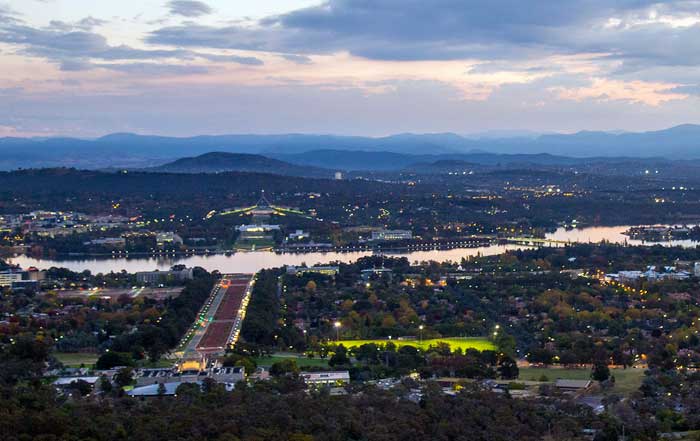
Canberra, as the purpose-built national capital, occupies a unique position in Australia's urban system. Designed by Walter Burley Griffin and Marion Mahony Griffin, the city exemplifies the garden city movement, with axial vistas, geometric planning, and extensive green spaces framing national institutions.
As the seat of the Australian Parliament, the High Court, and multiple federal agencies, Canberra is central to policy formation, regulatory development, and national strategy. This makes it a frequent destination for diplomats, policy analysts, corporate affairs teams, and international delegations. Those seeking to understand how national capitals operate as policy ecosystems can draw on resources from organisations like the International Institute for Democracy and Electoral Assistance at idea.int, which provide comparative perspectives on governance structures worldwide.
For visitors, Canberra offers a concentrated experience of Australian political history, culture, and science, with institutions such as the National Gallery of Australia, the National Museum of Australia, and the Australian War Memorial providing deep insights into the country's evolving identity. The city's lakes, bike paths, and surrounding nature reserves also make it well suited to families and professionals who value access to outdoor activities while attending meetings or conferences.
Hobart: Heritage, Art, and the Southern Ocean
Hobart, capital of Tasmania, has emerged over the last decade as one of Australia's most distinctive small cities, combining well-preserved colonial architecture, a cutting-edge contemporary art scene, and a strong connection to the Southern Ocean and Antarctica.
The city's waterfront warehouses, many of which have been converted into hotels, galleries, and restaurants, create an atmospheric base for visitors exploring Tasmania's wilderness and culinary offerings. The influence of institutions such as the Museum of Old and New Art (MONA) has extended Hobart's reach far beyond its size, drawing global attention to the city's capacity for artistic experimentation and cultural tourism. For those examining how cultural investment can transform regional cities, reports and case studies from bodies like the UN World Tourism Organization at unwto.org offer useful context.
Hobart's role as a gateway to Antarctica also gives it strategic importance. Scientific expeditions and research programmes operated by national and international organisations depart from its port, linking the city to global networks focused on climate science, marine ecosystems, and polar logistics. Professionals and travellers interested in polar research and environmental change may wish to explore resources from the Scientific Committee on Antarctic Research at scar.org to better understand the work being coordinated through Hobart and comparable cities in other regions.
Darwin: Tropical Crossroads and Indigenous Heritage
Darwin, located closer to Southeast Asia than to many other Australian capitals, functions as a tropical crossroads where Indigenous cultures, Asian influences, and strategic defence interests converge. Its compact urban core and waterfront developments provide a relaxed yet globally connected environment that appeals to adventurous travellers and regionally focused businesses.
The city's significant Indigenous population and proximity to remote communities ensure that Aboriginal culture is not presented as an afterthought but as a living, contemporary presence. Markets such as the Mindil Beach Sunset Market, along with galleries and cultural centres, introduce visitors to both traditional and modern expressions of Indigenous art and storytelling. Those seeking to deepen their understanding of Indigenous rights and cultural preservation can explore materials from the United Nations Permanent Forum on Indigenous Issues at un.org/development/desa/indigenouspeoples.
Darwin's location also gives it strategic value in terms of defence cooperation, border protection, and regional security partnerships, particularly with partners such as the United States, Japan, and Southeast Asian nations. Analysts and policy professionals tracking these dynamics may find it useful to consult regional security research from the Lowy Institute at lowyinstitute.org, which frequently examines Northern Australia's evolving role.
Sustainability, Smart Cities, and the Future of Urban Travel
Across all these cities, a common thread in 2026 is the emphasis on sustainability, resilience, and smart infrastructure. Australian urban centres are investing in low-emission transport, renewable energy integration, green building standards, and data-driven planning tools to enhance liveability while meeting international climate commitments.
National initiatives such as the Australian Government's Smart Cities agenda, detailed at infrastructure.gov.au, encourage local governments to adopt digital technologies that improve transport efficiency, energy management, and service delivery. For travellers and businesses, these changes manifest in more reliable public transport, better cycling and walking infrastructure, and increasingly seamless digital services, from real-time transit data to integrated ticketing and smart accommodation platforms.
Sustainability is no longer a peripheral concern for visitors either. Corporate travel policies, family priorities, and individual values increasingly favour destinations that demonstrate credible climate action and social responsibility. Organisations such as the Global Sustainable Tourism Council at gstcouncil.org provide frameworks that help assess destinations and operators against recognised sustainability criteria. For readers of WorldWeTravel.com, the eco and economy sections are designed to translate these frameworks into practical guidance, helping travellers make informed choices about airlines, hotels, tour providers, and local experiences.
Housing, Infrastructure, and the Challenge of Growth
Despite their many strengths, Australia's cities face significant structural challenges that directly affect visitors, expatriates, and local residents alike. Housing affordability in Sydney, Melbourne, and increasingly Brisbane continues to be a concern, with demand outstripping supply in many inner-city and well-serviced suburban areas. This has implications for medium-term stays, corporate relocations, and digital nomads seeking stable accommodation at predictable price points.
Governments at federal, state, and local levels are pursuing a range of responses, including higher-density developments near transport hubs, incentives for build-to-rent projects, and reforms to planning systems. Those interested in comparative housing policy can review analyses from organisations such as Habitat for Humanity's policy and research programmes at habitat.org, which highlight global approaches to affordability and inclusive growth.
Infrastructure investment remains another critical theme. Major projects such as the Sydney Metro and Melbourne's level crossing removals are designed to increase capacity, reduce congestion, and support continued urban expansion. As these projects progress, they shape where new hotels, co-working spaces, and cultural venues emerge, influencing the way travellers experience each city. To stay ahead of such shifts, WorldWeTravel.com continually updates its technology and global coverage, ensuring that business leaders, families, and independent travellers can align their plans with evolving urban realities.
How WorldWeTravel.com Connects Travellers to Australia's Urban Landscape
In 2026, navigating Australia's diverse cities requires more than a list of attractions; it demands an integrated understanding of how destinations intersect with global economic trends, technological change, health considerations, and environmental pressures. WorldWeTravel.com positions itself as a trusted partner in this process, curating insights that reflect on-the-ground realities in Sydney, Melbourne, Brisbane, Perth, Adelaide, Canberra, Hobart, and Darwin, while also connecting these cities to broader regional and international contexts.
For families, the platform's family travel guidance highlights neighbourhoods, activities, and accommodation types that balance safety, education, and enjoyment. For corporate decision-makers and remote professionals, the business and work sections analyse connectivity, co-working ecosystems, and regulatory environments, helping organisations evaluate where to host events, establish regional offices, or base distributed teams. Health-conscious travellers can draw on dedicated health and retreat-focused content to identify wellness-oriented hotels, nature-based escapes, and restorative experiences within easy reach of major urban centres.
As Australia's cities continue to evolve under the combined influence of technology, climate adaptation, demographic change, and global mobility, they offer a living laboratory for how urban environments can remain vibrant, inclusive, and competitive. By integrating authoritative external research with its own destination expertise, WorldWeTravel.com aims to provide the clarity and confidence that modern travellers, families, and businesses require when choosing where to go, where to stay, and how to engage with the complex, compelling urban landscapes of Australia in 2026 and beyond.